

UAE In-Focus: SHUAA launches new Shariah-compliant funds; MoU signed for waste-to-hydrogen plant 

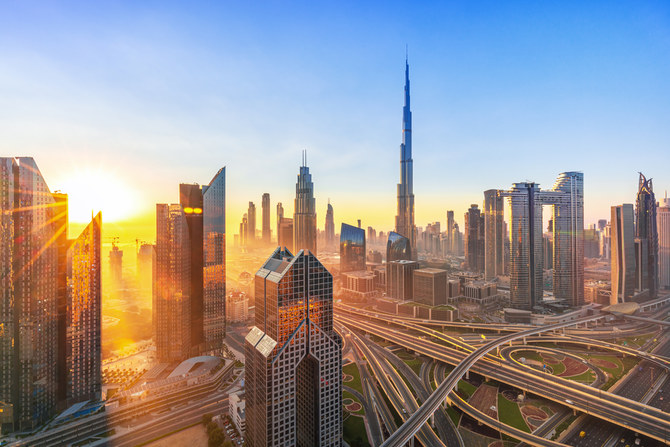
Dubai’s total residential transaction volumes stood at 10,505 in November. (Shutterstock)
Short Url
Updated 13 December 2022
Follow

UAE In-Focus: SHUAA launches new Shariah-compliant funds; MoU signed for waste-to-hydrogen plant 

RIYADH: UAE-based investment banking firm SHUAA Capital has launched three new Shariah-compliant funds in a move to offer more investment choices to institutional high-net-worth individuals and corporate investors.

The new funds, which include SHUAA Global Sukuk Fund, SHUAA Global Equity Fund, and SHUAA North America Equity Fund, were launched under the Incorporated Cell Co. umbrella, the company said in a press release.  

SHUAA Global Sukuk Fund will seek to maximize total return over the medium to long term through a combination of capital growth and income by investing in sukuk and other Shariah-compliant debt instruments, it said. 

Whereas, SHUAA Global Equity Fund will primarily invest in global Shariah-compliant equities, and SHUAA North America Equity Fund will focus on North American Shariah-compliant equities.   

Funds are managed by SHUAA GMC, a wholly owned regulated subsidiary of SHUAA, which established the ICC fund structure in the Abu Dhabi Global Market in 2020 to launch differentiated fund strategies under the ICC platform.  

SHUAA GMC, which now manages a total of $200 million in assets under management, spanning five different funds under the ICC umbrella, is working to launch three additional funds in the first quarter of 2023. With these new funds, its assets under management under the ICC platform are expected to exceed $400 million. 

As part of its new fund pipeline, SHUAA said it also plans to add Saudi Arabia and Gulf Cooperation Council-focused funds to its ICC platform. 

Mideast’s first waste-to-hydrogen plant  

Three companies from the UAE, the UK and Japan have signed a memorandum of understanding as a first step to forming a consortium that will advance progress on the Middle East’s first waste-to-hydrogen plant in Sharjah.  

The MoU was signed between UAE’s BEEAH Group, Japanese conglomerate Air Water and Chinook Sciences, a UK-based innovator in waste-to-fuel technologies, to produce fuel cell-grade hydrogen from waste wood and plastic. 

BEEAH has expertise in waste management and material recovery, Chinook Sciences patented the world’s only universal thermal treatment system and gasification process, and  Japanese firm Air Water has Hydrogen Refinement technology. 

The waste-to-hydrogen plant will use these companies’ expertise to transform waste wood and plastic into fuel-cell-grade green hydrogen. 

The plans for the waste-to-hydrogen plant include an on-site green hydrogen dispensing station capable of fuelling several vehicles, according to a press release.  

The UAE last year announced the Net Zero by 2050 Strategic Initiative following COP26 in Glasgow, making it the first nation in the Middle East to announce a net-zero emissions strategy.  

The waste-to-hydrogen plant in Sharjah was first announced by BEEAH Group and Chinook Sciences Green in May 2021 and was formalized later in the same year with the commencement of development plans.  

Dubai residential market volumes spike in November 

Dubai’s total residential transaction volumes stood at 10,505 in November, recording an increase of 60.8 percent compared to the previous year, according to global property consultant CBRE. 

The spike in volumes was supported by a 63.3 percent rise in off-plan transactions and a 58.4 percent rise in secondary market transactions, it added. In the year to date to November 2022, Dubai recorded a total of 81,919 residential transactions, surpassing the record highs registered in 2009 over the same period. 

This is despite the fact that Dubai’s average residential prices increased by 9.5 percent in the 12 months to November. Over this period, the CBRE report showed that the emirate’s average apartment and villa prices increased by 9 percent and 12.7 percent, respectively.  

This comes as Dubai’s average apartment prices stood at 1,161 dirhams ($316) per square foot, while average villa prices stood at 1,374 dirhams per square foot. CBRE noted that these average rates for apartments and villas remain below the highs recorded in 2014 by 22 percent and 4.9 percent, respectively.


Saudi Aramco bolsters global oil market stability amid rising regional tensions

Updated 4 sec ago
Follow

Saudi Aramco bolsters global oil market stability amid rising regional tensions

RIYADH: Amid growing logistical challenges facing the energy sector, operational moves by Saudi Aramco are emerging as a stabilizing factor in global oil supply.

The company has offered additional crude shipments on the spot market, a step analysts see as aimed at absorbing supply shocks and ensuring the continued flow of oil through key energy corridors.

The move aligns with Saudi Arabia’s long-standing role as a leading global producer and is intended to limit price volatility and maintain balance between supply and demand at a time of heightened geopolitical uncertainty.

Reuters reported that Aramco has offered more than 4 million barrels of Saudi crude through rare spot tenders, as tensions between the US and Iran disrupt Middle Eastern exports.

Mohammad Al-Sabban, former senior adviser to the Saudi energy minister, said the current surge in oil prices does not necessarily reflect an immediate shortage of supply. Instead, it is largely driven by what energy markets call a “geopolitical risk premium.”

Speaking to Asharq Al-Awsat, Al-Sabban said prices remaining above $100 per barrel reflect global anxiety that the conflict could expand and threaten future supply security.

He noted that higher prices, while boosting short-term revenues and fiscal surpluses for oil-exporting countries, also bring hidden costs. These include increased spending on security measures to protect oil infrastructure — costs that rise in a volatile regional environment where Gulf states face mounting security pressures.

Al-Sabban also pointed out that spot market sales are currently generating greater returns than long-term futures contracts. The uncertainty surrounding the conflict has led buyers to pay premiums for immediate deliveries, making spot transactions more attractive during the current crisis.

Strategic chokepoint

Shipping through the Strait of Hormuz, which carries roughly 20 percent of global oil supply, remains central to the crisis.

Al-Sabban warned that even a temporary closure of the waterway would inevitably reduce available supplies, potentially triggering panic in markets and forcing countries to draw from strategic reserves.

He recalled historical precedents, noting that during the Iran-Iraq war, energy markets became a hub for speculation, with negative economic consequences emerging later.

Asked whether the conflict represents a short-term economic opportunity or a broader risk for regional economies, Al-Sabban said the reality is a mix of both. High prices may offer temporary gains as long as oil remains above $100 a barrel, but a prolonged conflict could ultimately impose heavier economic burdens through rising logistical and security costs.

Flexible response

Financial and economic adviser Hussein Al-Attas said Aramco’s decision to release additional cargoes on the spot market reflects significant flexibility in managing supply and responding quickly to market shifts amid rising demand and concerns about potential shortages.

He told Asharq Al-Awsat that the move sends an important signal to global markets that Saudi Arabia continues to play the role of a swing producer, capable of intervening to maintain market balance and ease fears about supply security.

Al-Attas added that the recent surge in oil prices is largely tied to geopolitical tensions in a region that represents the heart of global energy supply.

While Brent crude could remain above $100 in the short term if supply concerns persist, he noted that history shows price spikes driven by political tensions are often temporary unless they lead to a prolonged disruption in supply.

Higher oil prices naturally increase revenues for exporting countries, potentially strengthening fiscal balances and enabling governments to finance spending and development projects, Al-Attas remarked.

Gulf states, particularly Saudi Arabia and the United Arab Emirates, may therefore benefit financially in the short term.

However, he cautioned that such gains are usually temporary rather than structural. Prolonged high energy prices can slow global economic growth by fueling inflation, which may eventually reduce demand for oil. As a result, the current price surge may represent a temporary financial opportunity rather than a lasting shift in oil revenues.

Ultimately, Al-Attas said the crisis carries two opposing dynamics: Gulf countries may benefit financially in the short term, but any wider regional conflict could pose greater risks to economic and commercial stability.

For that reason, he added, the region’s strategic interest ultimately lies in stable energy markets and uninterrupted oil flows, which are essential for sustaining global demand and supporting long-term economic growth.