
ISLAMABAD: British High Commissioner to Pakistan Dr. Christian Turner CMG has been posted to London as Director General Geopolitical at the UK’s Foreign Commonwealth and Development Office (FCDO), the British Foreign Office said on Monday.
The position is equivalent to the Under Secretary of State.
Turner has been High Commissioner to Pakistan since December 2019 and is expected to depart the country and take up his new role in London by mid-January 2023. This follows the end of a standard three year diplomatic posting.
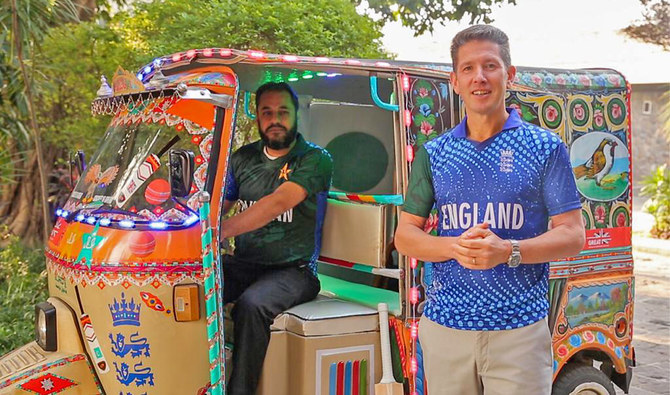
Over his three years as High Commissioner, Turner oversaw the UK’s COVID-19 repatriation efforts, welcomed a UK Foreign Secretary visit, lobbied for and secured direct flights from the UK to Pakistan, initiated a drive to double UK-Pakistan trade by 2025, ensured that the UK was at the forefront of the international Pakistan flood crisis response and played a pivotal role in the promotion of sports diplomacy and the return of the England Men’s cricket team to Pakistan following a 17-year absence.
“The last three years have been some of the most rewarding of my life, both professionally and personally,” Turner said in a statement. “I will continue closely to follow Pakistan’s future in my new role in London.”
The position of Political Director is traditionally seen as the UK’s second most senior diplomat who is responsible for bringing together the UK government’s cross-cutting geopolitical work on security, international architecture and alliances, as well as UK values.
No announcement has been made regarding the appointment of a new High Commissioner to Pakistan. The Deputy High Commissioner, Andrew Dalgleish, will take on the role of chargé d’affaires to cover the interim gap until a new High Commissioner arrives.
Prior to his appointment as High Commissioner to Pakistan, Turner was the Prime Minister’s International Affairs Adviser and Deputy National Security Adviser from April 2017 to July 2019. He previously served as the Director General, Political (Acting) and Director General for the Middle East and Africa, leading the UK organization of the London Syria Conference in February 2016.
From 2012 to 2015, Turker was British High Commissioner to Kenya, and from 2009 to 2012 he was FCO’s Director for the Middle East and North Africa. Between 1997 and 2008 he held various positions in the Foreign Office, the Cabinet Office and 10 Downing Street, including as Private Secretary to the Prime Minister, in the Prime Minister’s Strategy Unit, as Secretary to the Economic & Domestic Committees of Cabinet, and as First Secretary in the British Embassy in Washington from 2002-2006.
Before joining the government, Turner made television documentaries, following the completion of his PhD. He is married with two children.