- Group of 134 states led by flood-battered Pakistan presented united front at UN summit
- Details on how fund will operate, where it will source money will be worked out by a committee
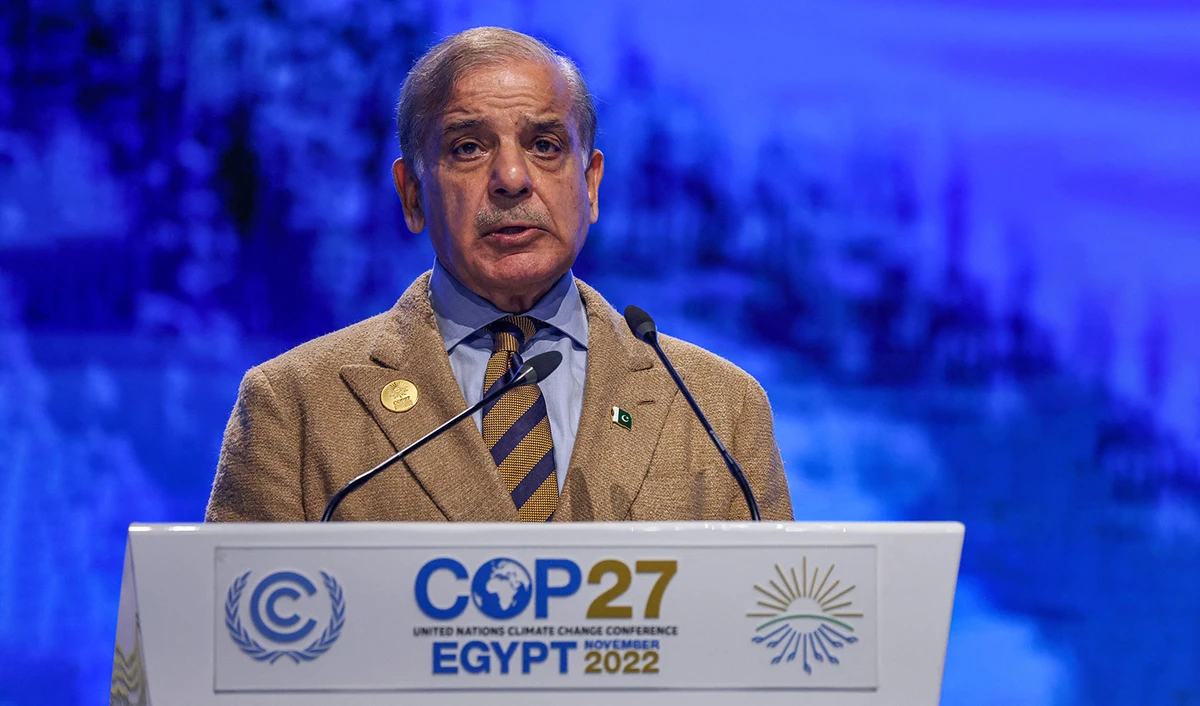
ISLAMABAD: Pakistani Prime Minister Shehbaz Sharif has said Pakistan had led the effort at last month’s UN climate summit to get a deal approved for funding arrangements for climate change impacts suffered by vulnerable countries, but now the world needed to “deliver” on the landmark development.
Two-week talks in the Egyptian resort town of Sharm el-Sheikh ended last month with a deal to establish a ‘loss and damage’ fund to help vulnerable countries pay their rising costs of climate damage. The details on how the fund will operate and how it will source money will be worked out by a committee in the coming year.
A group of 134 African, Asian and Latin American states and small island nations, led by flood-battered Pakistan, presented a united front to push through the controversial fund.
“Pakistan ably led the Global South in crafting a consensus towards climate justice. The journey has only begun,” Sharif said on Twitter.
“The world needed to continue with a win-win approach to deliver on the landmark development. Transitional Committee has its plate full with time running out fast. We have to build on the hope by resetting our priorities for a bright future.”
While climate activists have broadly welcomed the new fund, they are cautious that many aspects of its governance are still to be resolved, and it is unclear how much money it will be able to raise and from where.
The United States, European governments and other industrialised countries had swung their weight behind the fund after years of resistance, their opposition rooted in fears of being held financially liable for the impacts of their historically high greenhouse gas emissions.
But that line became tougher to hold amid the "growing gravity, scope and frequency in all regions of loss and damage associated with the adverse effects of climate change," as the final "Sharm el-Sheikh Implementation Plan" noted.
Climate "loss and damage" includes not just harm to people, their homes and infrastructure from disasters such as floods, droughts and storms but also forced displacement from slower impacts such as sea level rise, as well as losses of cultural heritage and community livelihoods, it added.
The new fund will differ from other UN-backed climate funds because it will gather money from a far wider range of sources, including development banks and innovative sources of finance such as taxes on fossil fuels or airlines.
Traditional donor governments, including European Union (EU) members and the United States, insisted on this as a condition for supporting the fund.
They faced push-back from China and other emerging economies, so the thorny issue of who exactly will pay into the fund was put off to be settled later.
The United States and other nations have argued that China, as the world's biggest climate polluter since 2006, should have a role in contributing to the fund, which Beijing has rejected.