


CAIRO: The fourth Arab Water Conference titled “Arab Water Security for Life, Development and Peace,” organized by Palestine, the Arab League and the Arab Water Experts Network in Cairo, kicked off on Nov. 30.
The two-day conference was held under the auspices of Palestinian President Mahmoud Abbas, with the participation of ministers of water resources as well as delegations from Arab countries and concerned regional organizations.
The conference on Wednesday and Thursday included working sessions and presentations of scientific papers dealing with issues related to water scarcity, drought and climate change.
Among the topics addressed were challenges posed by water scarcity and solutions to these, water demand and drought management, climate change, shared water resources and water diplomacy.
The conference also covered water desalination technology, the management of groundwater resources, the financing of and investment in the water sector, and challenges related to water in the Arab region.
Abbas, in a speech delivered on his behalf by Deputy Prime Minister Ziad Abu Amr, stressed that resolving the issue of water shortage in the Arab world requires developing a unified and comprehensive strategy that defends the right to water in the face of occupation, exploitation, or encroachment. It also entails the development of plans to confront water and food deficits due to existing challenges.
Abbas said: “Arab water security poses a major challenge to nearly 453 million Arab citizens, and it is an issue that captures the attention of Arab countries, as represented by the Arab League’s decision to establish the Council of Arab Water Ministers.”
He added that the transnational waters of the Arab world are a matter of security.
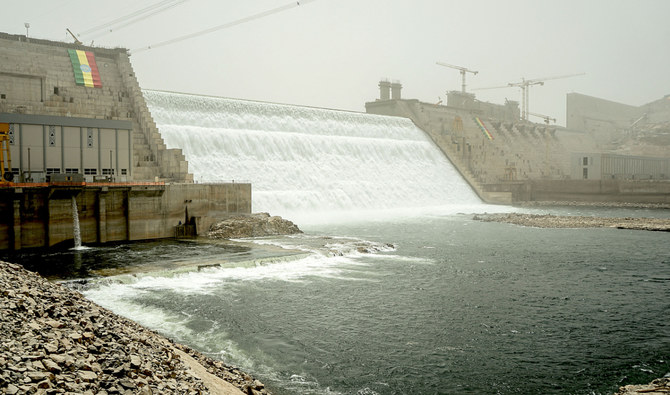
“We stand with our brothers in Egypt and Sudan in their demands on everything related to the issue of the Grand Ethiopian Renaissance Dam and in ensuring that their water, agricultural or energy-related security is not compromised,” Abbas said.
He called for reaching a binding legal agreement between Egypt, Sudan and Ethiopia, in line with the statement issued by the UN Security Council in September 2021, in a manner that perpetuates cooperation and consolidates common interests among the peoples of the region.
He also called for joint Arab cooperation to find alternative sources of water for major projects that benefit everyone in light of the severe water shortage in Arab countries.
Hani Sweilem, Egyptian minister of water resources and irrigation, affirmed that the water issue in Egypt is one of the most important pillars of Egyptian national security and a major axis in achieving sustainable development.
He said Egypt is one of the driest countries in the world, as rainfall in the country is estimated to be 1.3 billion cubic meters annually.
He said 97 percent of Egypt’s water depends on the Nile, which comes from outside its borders.
Over the years, the per capita share of water in Egypt decreased to about 560 cubic meters annually, compared to the global water poverty line, which determines the per capita share at 1,000 cubic meters annually, Sweilem said.


