Egypt’s net foreign assets continue to fall as currency devaluation hurts economy

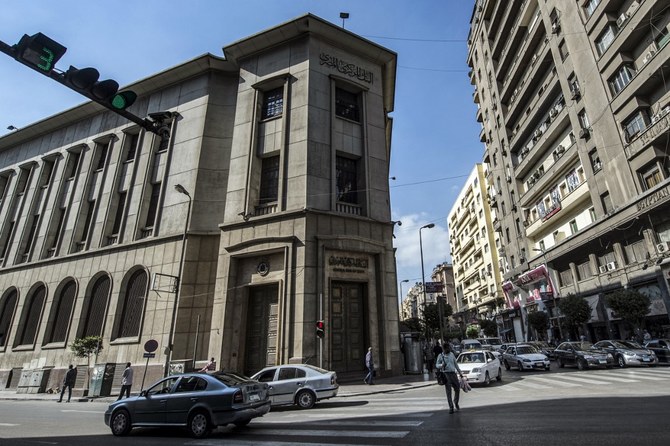
The Central Bank of Egypt in October had been allowing the pound to fall in increments of about 0.01 pounds per working day. (AFP)
Short Url
Updated 01 December 2022
Follow

Egypt’s net foreign assets continue to fall as currency devaluation hurts economy

RIYADH: Egypt’s net foreign assets fell by 109.9 billion Egyptian pounds ($4.47 billion) in October, extending a decline that began in September 2021, central bank data showed. 

The decrease works out to about $228 million after calculating for devaluations during October, Reuters reported. 

NFAs represent banking system assets that are owned by its non-residents minus liabilities, and foreign assets held by the central bank. Egypt has been relying on its NFAs to steady its devaluing currency.  

Egypt has been facing a currency crisis following Russia's invasion of Ukraine in February, prompting the North African country to begin negotiating with the International Monetary Fund for a financial assistance package. 

In October, the IMF agreed to a 46-month, $3 billion Extended Fund Facility with Egypt, welcoming a move to “durable exchange rate flexibility” and commitments to boosting social protections, according to Reuters. 

The arrangement was aimed at catalyzing a large multi-year financing package, including about $5 billion in the financial year ending in June 2023, reflecting broad international and regional support for Egypt, the IMF said in a statement. 

The Central Bank of Egypt in October had been allowing the pound to fall in increments of about 0.01 pounds per working day, but on Oct. 27 devalued it by 14.5 percent in one go as part of the $3 billion support package it concluded with the IMF last month. 

NFAs fell to a negative 551.0 billion pounds at the end of October from a negative 441.1 billion pounds a month earlier, according to the central bank data. 

NFAs stood at a positive 248 billion pounds in September 2021, before the decline began. Russia's invasion of Ukraine in February sparked further investor unease, unleashing an even bigger flood of outflows. 

Changes in the amount of NFAs represent net transactions of the banking system with the foreign sector, including those of the central bank, according to the bank. 

On Nov. 29, Saudi Arabia extended the term for a $5 billion deposit the Kingdom made to Egypt’s central bank in March after the North African country came under increasing financial pressure following Russia’s invasion of Ukraine, Saudi Press Agency reported. 

This came as the two countries want to enhance coordination, especially with regard to pumping numerous investments in foreign currencies into the Egyptian market in addition to Saudi deposits, SPA said. 

It is hoped that these investments will contribute to opening new funding channels with regional and international organizations, SPA added. 


Saudi Arabia, Japan trade rises 38% between 2016 and 2024, minister says

Updated 11 January 2026
Follow

Saudi Arabia, Japan trade rises 38% between 2016 and 2024, minister says

RIYADH: Trade between Saudi Arabia and Japan has increased by 38 percent between 2016 and 2024 to reach SR138 billion ($36 billion), the Kingdom’s investment minister revealed.

Speaking at the Saudi-Japanese Ministerial Investment Forum 2026, Khalid Al-Falih explained that this makes the Asian country the Kingdom’s third-largest trading partner, according to Asharq Bloomberg.

This falls in line with the fact that Saudi Arabia has been a very important country for Japan from the viewpoint of its energy security, having been a stable supplier of crude oil for many years.

It also aligns well with how Japan is fully committed to supporting Vision 2030 by sharing its knowledge and advanced technologies.

“This trade is dominated by the Kingdom's exports of energy products, specifically oil, gas, and their derivatives. We certainly look forward to the Saudi private sector increasing trade with Japan, particularly in high-tech Japanese products,” Al-Falih said.

He added: “As for investment, Japanese investment in the Kingdom is good and strong, but we look forward to raising the level of Japanese investments in the Kingdom. Today, the Kingdom offers promising opportunities for Japanese companies in several fields, including the traditional sector that links the two economies: energy.”

The minister went on to note that additional sectors that both countries can also collaborate in include green and blue hydrogen, investments in advanced industries, health, food security, innovation, entrepreneurship, among others.

During his speech, Al-Falih shed light on how the Kingdom’s pavilion at Expo 2025 in Osaka achieved remarkable success, with the exhibition receiving more than 3 million visitors, reflecting the Japanese public’s interest in Saudi Arabia.

“The pavilion also organized approximately 700 new business events, several each day, including 88 major investment events led by the Ministry of Investment. Today, as we prepare for the upcoming Expo 2030, we look forward to building upon Japan’s achievements,” he said.

The minister added: “During our visit to Japan, we agreed to establish a partnership to transfer the remarkable Japanese experience from Expo Osaka 2025 to Expo Riyadh 2030. I am certain that the Japanese pavilion at Expo Riyadh will rival the Saudi pavilion at Expo Osaka in terms of organization, innovation, and visitor turnout.”

Al-Falih also shed light on how Saudi-Japanese relations celebrated their 70th anniversary last year, and today marks the 71st year of these relations as well as how they have flourished over the decades, moving from one strategic level to an even higher one.