

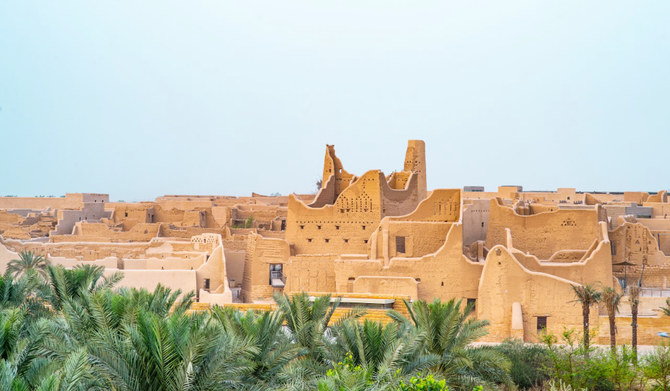


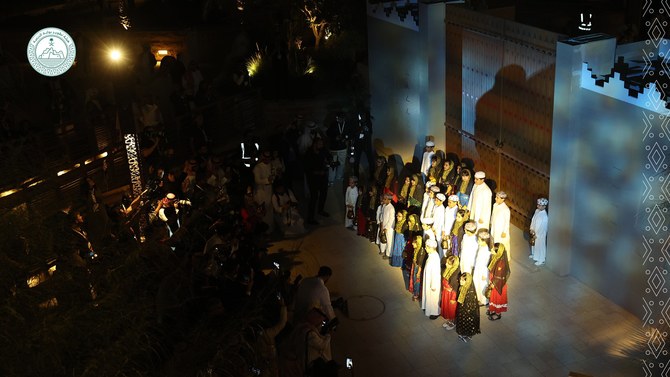

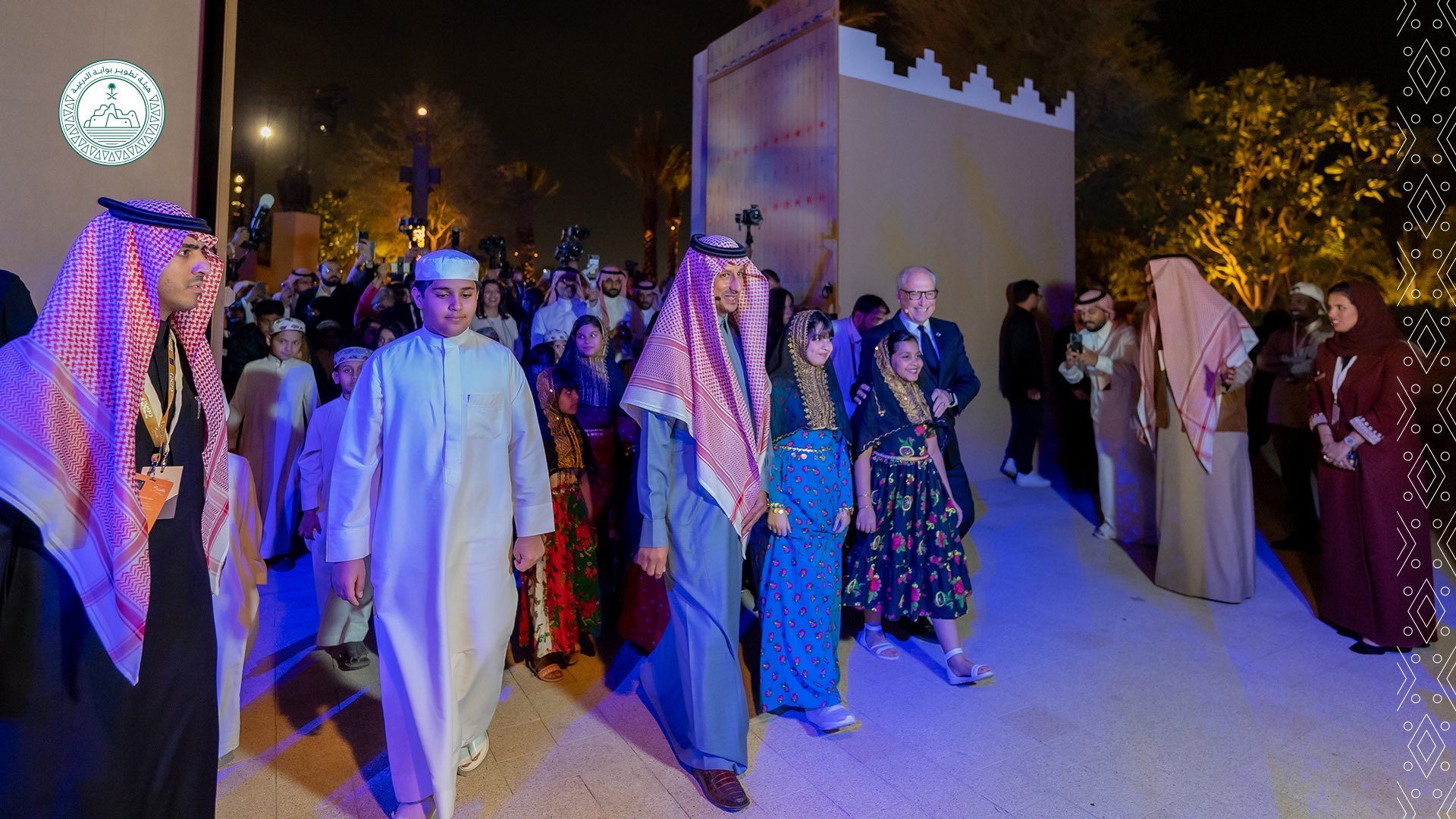
RIYADH: Saudi Tourism Minister Ahmed Al-Khateeb inaugurated the UNESCO World Heritage sites At-Turaif and the Bujairi Terrace in Diriyah on Monday.
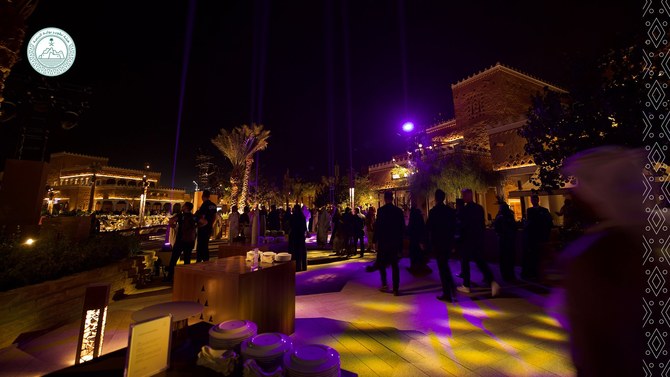
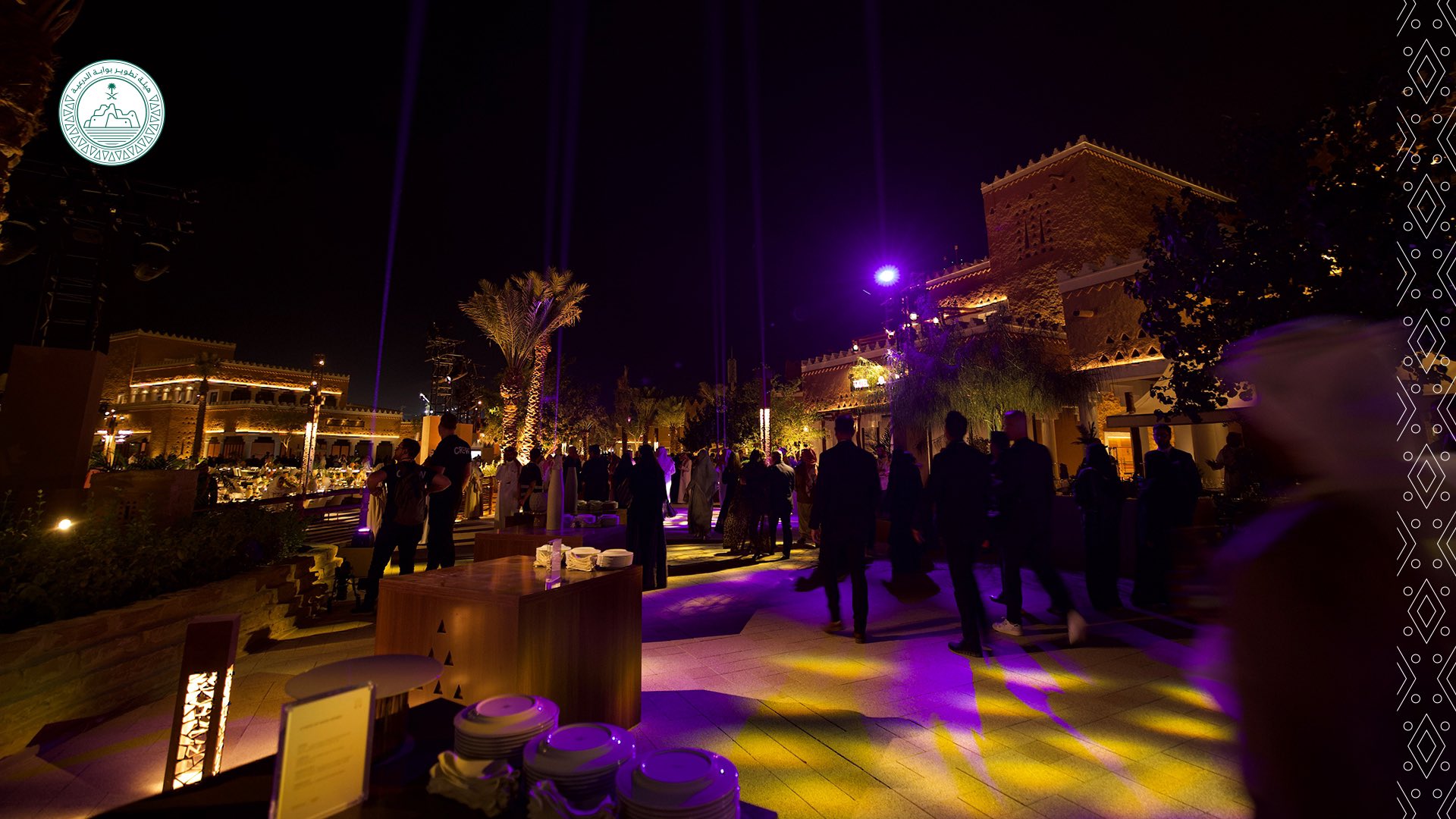
The DGDA held a special gala dinner for a number of World Travel and Tourism Council delegates who were present in Riyadh for the 22nd WTTC Global Summit.
The summit is taking place for the first time in the Kingdom in Riyadh from Nov. 28 to Dec. 1 at the King Abdulaziz International Conference Center.

Uniting a wide range of key industry players, this year’s edition of the WTTC Summit showcased Saudi Arabia’s pioneering efforts to reshape the world’s tourism map in a still-recovering, post-COVID world. As one of the industry’s largest events, the annual forum aspires to implement travel sustainability on a global scale.
The At-Turaif and Bujairi Terrace opening gala dinner was attended by Saudi Tourism Minister Ahmed Al-Khateeb, Chair of WTTC Arnold Donald, President and CEO of WTTC Julia Simpson, Group Chief Executive Officer of DGDA Jerry Inzerillo, and a broad list of other high profile industry leaders.
HIGHLIGHT
As a part of its opening, At- Turaif will offer 75-minute guided walking tours in both Arabic and English that will take visitors through the original seat of power, built in the 1700s, of the Kingdom’s Al-Saud family.
In the upcoming week, visitors will have the opportunity to explore the UNESCO World Heritage Site of At-Turaif, the home of the first Saudi State, and dine at some of the world’s finest Michelin-star restaurants at the Bujairi Terrace.
Visitors will take a step back in time as they walk through the mudbrick palaces and pathways of At-Turaif that perfectly highlight the traditional Najdi architecture.
As a part of its opening, At-Turaif will offer 75-minute guided walking tours in both Arabic and English that will take visitors through the original seat of power, built in the 1700s, of the Kingdom’s Al-Saud family.
Upon its opening, visitors will be able to explore At-Turaif's Salwa Palace, a 10,000-square-meter complex whose first phases were built by Mohammed ibn Saud, the first ruler of the First Saudi State.
At-Turaif's palaces, pathways and detailed carvings in the Najdi architecture provide a glimpse into the past and a reminder of the origin of Saudi Arabia.
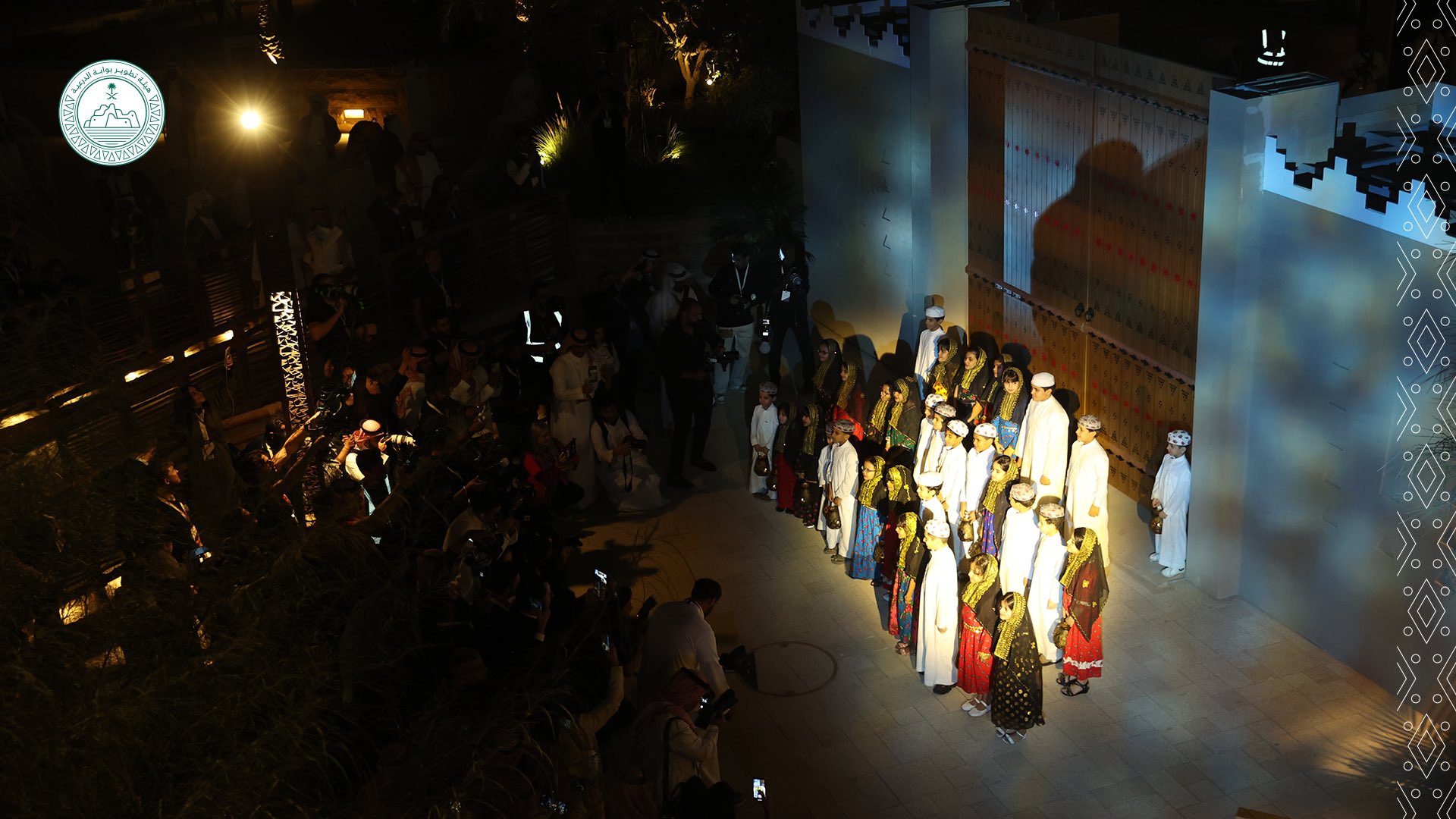
Along with the announcement of At-Turaif's opening, the DGDA will also host a variety of activities for the public, including theatrical performances, an Arabian horse show, calligraphy sessions, mudbrick-making shows and Saudi coffee experiences.
On Al-Nuzul Street, 13 buildings will host daily immersive theatrical performances that will take visitors back in time to experience life in At-Turaif during the First Saudi State.
Following the opening At-Turaif, Diriyah is also set to host a calendar full of events and activities for the public during the winter 2022 season.
Bujairi Terrace is also set to open its doors to the public on Dec. 4 with the aim of becoming the foremost luxury dining destination in the Kingdom of Saudi Arabia. Located in Wadi Hanifah, Bujairi Terrace will offer 20 restaurants and coffee shops, several of which are Michelin-star restaurants, including Chez Bruno, Hakkasan, Long Chim and Tatel, overlooking At-Turaif.
Some of the international brands located in Bujairi Terrace include Angelina, Brunch & Cake, Café De Lésplanade, Cova / Cova Pasticceria, Flamingo Room, Joe & the Juice, Sarabeth’s and Villa Mamas.
Some of the local brands include TAKYA, Altopiano, Somewhere / Somewhere Dessert Bae, Sum + Things, and Hi.
Built from the same mud, water and straw used to construct At-Turaif, Bujairi Terrace will merge culture, history and luxury through live shows, historical programs, interactive entertainment and traditional performances from Saudi artists and musicians.
Earlier this week, some 1,500 employees at the DGDA put their signatures on mud bricks to be used to restore At-Turaif, the original home of the Saudi royal family and the country’s first capital.
DGDA Group CEO Jerry Inzerillo told Arab News: “Three hundred years ago, the birthplace of the Kingdom was At-Turaif. We give all our love and praise to the Custodian of the Two Holy Mosques, King Salman, to restore At-Turaif, which was built by Saudis brick by brick, but no one knows their names.
“Now we are building the new Diriyah, transforming it, using the same material, same mud, same straw, same palm trees, but now we know everybody’s name.
“So the next 300 years of this will be built by all these people and will remain very emotional and very special to them.”
The DGDA aims to develop the birthplace of the Kingdom into a world-class tourism, entertainment and cultural destination. Upon its completion, Diriyah will be a $50 billion giga-project featuring some of the world’s most luxurious restaurants and hotels built in the traditional Najdi architectural style.
This is merely the first phase of Diryah’s opening. Once complete, Diriyah will offer more than 150 fine-dining restaurants and premium cafes, 28 luxury hotels and resorts, and 400 luxury and lifestyle brands.


