


ISLAMABAD: Pakistan’s defense minister Khawaja Muhammad Asif said on Thursday he was hopeful that President Arif Alvi would endorse Prime Minister Shehbaz Sharif's selection for new army chief.
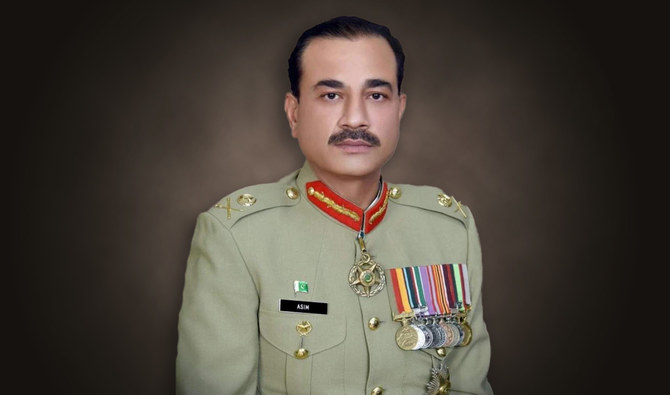
Sharif picked Lt. Gen. Asim Munir to replace outgoing General Qamar Javed Bajwa to lead the country’s all-powerful army.
Lt. Gen. Sahir Shamshad Mirza has also been appointed chairman of the joint chiefs of staff committee.
The wait for the president, a key ally of Sharif's main political rival and ex-premier Imran Khan, to sign off on the new chief's selection heightened an already tense political landscape in Pakistan.
“The summary has been sent to the president and we hope he will not create any hurdle in it as the appointment has been done according to the constitution and law,” the defense minister said during a media interaction in Islamabad.
He added he was optimistic the president would not make the appointment “controversial and end this political anxiety and uncertainty in the country.”
As the government announced the new chief, some experts raised concerns Alvi might not immediately ratify the summary and try to drag the process.
The fears have come in the backdrop of Khan saying in an interview on Wednesday that the president, was in contact with him and would consult him on the appointment of the top slots in the military.
Since his ouster from power in April via a parliamentary vote of no-confidence, Khan has been demanding fresh elections and has accused the government of wanting to pick an army chief of its choice instead of considering merit.
“This advice of the prime minister is binding and the president should not act on any other advice,” the defense minister said, adding that Alvi should fulfill his responsibility to allow the country and its economy to move ahead.
Asked about the government’s future strategy if the president stopped the summary, he said the ruling administration would weigh its options once such a situation came up.
Meanwhile, Alvi held a meeting with the PTI chairman at his residence in Lahore this afternoon to discuss the overall situation and Khan’s next move over the matter.
“The meeting between President Arif Alvi and Imran Khan continued for 45 minutes,” confirmed senior PTI vice president Chaudhry Fawad Hussain. “Both leaders discussed political, constitutional and legal matters related the appointment of the new army chief.”
Hussain said it was decided in the meeting that the matter would be handled within the legal and constitutional ambit, though he did not provide information on any decisions taken by both leaders.
“The presidency will issue a handout containing details of the meeting between President Arif Alvi and Imran Khan,” he said.
Speaking to Arab News, some analysts said political stability and economic situation would be the main challenges facing the new military leadership.
“The new army chief will have to do a lot of damage control and need to do something to bring the political temperature in Pakistan down by making sure that some consensus is reached,” Dr. Huma Baqai, a defense expert, said.
She noted that the political turmoil surrounding the army chief’s appointment was not over which was clear from the recent statements made by Khan.
“The prime concern of the new army chief will be to ensure the economy gets on the right track because that is a major concern right now and has become an issue for Pakistan’s shrinking sovereignty,” she added.
Policy analyst Syed Muhammad Ali said the country was facing huge governance challenges and was still suffering from the disastrous impact of the recent floods.
He said it was imperative to deal with such problems by restoring political stability and ensuring better civil-military relations.
“It is essential for Pakistan’s new military leaders to focus their energies and efforts to improve political stability in the country without which the nation’s economy cannot be revived or governance improved,” Ali told Arab News.


