


KYIV: Ukraine urged residents of Kyiv and several other areas to limit electricity use as it seeks to recover from Russian strikes on the power grid while the elderly and vulnerable were preparing for a voluntary evacuation of war-ravaged Kherson.
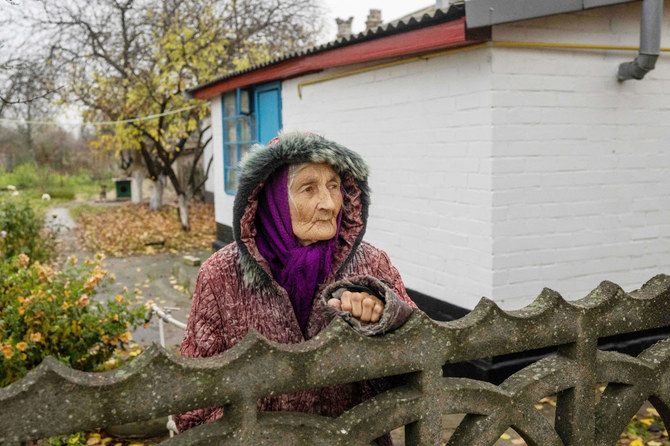
Citizens in the recently liberated southern city of Kherson, where Kyiv says Russian troops destroyed critical infrastructure before leaving earlier this month, can apply to be relocated to areas where security and heating issues are less acute.
Ukrainians are most likely to live with blackouts — a daily occurrence across the country — at least until the end of March, the head of a major energy provider said on Monday.
Russia’s response to military setbacks in recent weeks has included a barrage of missile strikes against power facilities that left millions without electricity as winter sets in and temperatures drop below freezing.
President Volodymyr Zelensky has said that half of the country’s power capacity had been knocked out by Russian rockets.
In his nightly video address, he urged people to conserve energy, particularly in hard-hit areas such as Kyiv, Vinnytsia in the southwest, Sumy in the north and Odesa on the Black Sea.
“The systematic damage to our energy system from strikes by the Russian terrorists is so considerable that all our people and businesses should be mindful and redistribute their consumption throughout the day,” he said.
.”..Try to limit your personal consumption of electricity.”
In a Telegram message for Kherson residents — especially the elderly, women with children and those who are ill or disabled — Deputy Prime Minister Iryna Vereshchuk posted a number of ways residents can express interest in leaving. “You can be evacuated for the winter period to safer regions of the country,” she wrote, citing both security and infrastructure problems.
Kremlin spokesman Dmitry Peskov said that the blackouts and Russia’s strikes on energy infrastructure are the consequences of Kyiv being unwilling to negotiate, the state TASS news agency reported late last week. On Monday evening, Ukrainian presidential adviser Mykhailo Podolyak said that Russia was bombarding Kherson from across the Dnipro River, now that its troops had fled.
“There is no military logic: they just want to take revenge on the locals,” he tweeted.
Moscow denies intentionally targeting civilians in what it calls a “special military operation” to rid Ukraine of nationalists and protect Russian-speaking communities.
Kyiv and the West describe Russia’s actions as an unprovoked war of aggression.
Battles continued to rage in the east following Russian troop movements into the industrial Donbas region from around Kherson in the south.
Ukraine’s military said late on Monday that Russian forces had tried to make advances around Bakhmut and Avdiivka in Donetsk, and bombarded nearby towns.
Moscow has been reinforcing the areas it still holds and pressing an offensive of its own along a stretch of front line west of the city of Donetsk held by its proxies since 2014.
NUCLEAR PLANT SHELLING
Russia and Ukraine on Monday traded blame for at least a dozen explosions at Ukraine’s Zaporizhzhia nuclear power station, which has been under Russian control since soon after it invaded the country on Feb. 24 but is across the Dnipro River from areas controlled by Kyiv.
Ukraine narrowly escaped disaster during fighting at the weekend that rocked the plant, Europe’s largest, with a barrage of shells. Some fell near reactors and damaged a radioactive waste storage building, the UN nuclear watchdog said.
Zelensky urged NATO members to guarantee protection from “Russian sabotage” at nuclear facilities.
The head of Russia’s state-run nuclear energy agency, Rosatom, said it had discussed Sunday’s shelling with the IAEA, and said there was a risk of a nuclear accident.
IAEA experts toured the site on Monday, and the agency said they found widespread damage but nothing that compromised the plant’s essential systems.
The reactors are shut down but there is a risk that nuclear fuel could overheat if the power driving the cooling systems is cut. Shelling has repeatedly cut power lines.
Russia’s defense ministry said Ukraine fired at power lines supplying the plant.
Ukraine’s nuclear energy firm Energoatom said Russia’s military shelled the site, accusing it of nuclear blackmail and actions that were “endangering the whole world.”
Reuters could not immediately verify which side was responsible.
Repeated shelling of the plant during the war has raised concern about a grave disaster in the country that suffered the world’s worst nuclear accident, the 1986 Chornobyl meltdown.


