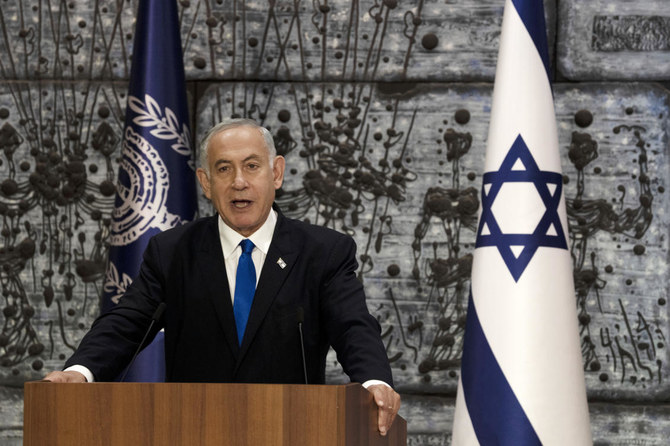
JERUSALEM: Israeli Prime Minister-designate Benjamin Netanyahu’s efforts to swiftly form a government faltered on Sunday as a prospective far-right coalition partner demanded the cabinet role of defense minister.
A clear right-wing victory in the Nov. 1 ballot — ending nearly four years of political deadlock — raised expectations within Netanyahu’s conservative Likud of speedy alliances with like-minded religious-nationalist parties.
But fissures have emerged between Likud and the powerful Religious Zionism party whose hard-line settler leaders oppose Palestinian statehood and want the occupied West Bank annexed — views in direct opposition to successive US administrations.
Religious Zionism lawmakers are demanding party leader Betzalel Smotrich become defense minister in order to impact policy in the West Bank, more than half of which is under full Israeli military control and which the Palestinians want for a future state. Likud wants to keep the key post.
“There was still misunderstandings and disagreements on the matter of Smotrich. I hope this will be worked out soon,” Likud lawmaker Miki Zohar told Kan radio, adding that defense was “the most important portfolio” for Likud.
One Religious Zionism lawmaker, Orit Strock, said her party would also accept the finance portfolio but was unwilling to accept anything that would not allow it to wield “true influence” on settlement development in the West Bank.
“He (Netanyahu) is not treating us as partners, but as excess baggage,” Strock told Kansas
Even the finance role would present problems for Netanyahu, who had said before the election that Likud would keep the big three portfolios: defense, finance and foreign affairs.
Most countries view the settlements as illegal, a view Israel disputes, and the Palestinians say their expansion denies them a viable state.
Whichever portfolio Religious Zionism lands, the incoming government looks to be the most right-wing in Israel’s history, forcing Netanyahu into a diplomatic balancing act between his coalition and Western allies.


![]()

Israeli far-right’s demand for defense post hinders Netanyahu’s coalition bid
Short Url
https://arab.news/magga
Israeli far-right’s demand for defense post hinders Netanyahu’s coalition bid
- Religious Zionism lawmakers are demanding party leader Betzalel Smotrich become defense minister in order to impact policy in the West Bank


Latest updates


© 2026 SAUDI RESEARCH & PUBLISHING COMPANY, All Rights Reserved And subject to Terms of Use Agreement.