

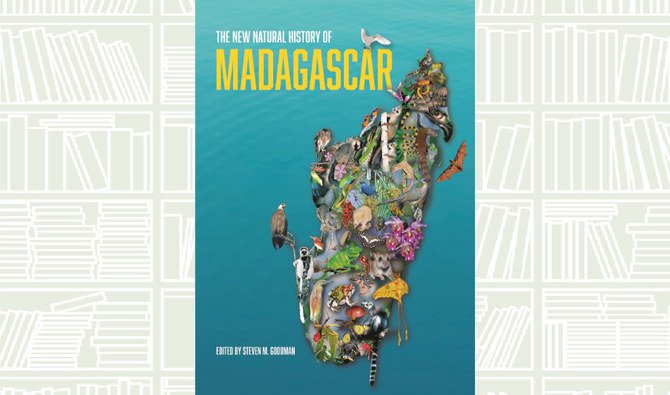
What We Are Reading Today: The New Natural History of Madagascar

Short Url
Updated 15 November 2022
Follow

What We Are Reading Today: The New Natural History of Madagascar

Author: Steven M. Goodman 

Separated from Africa’s mainland for tens of millions of years, Madagascar has evolved a breathtaking wealth of biodiversity, becoming home to thousands of species found nowhere else on the planet.

The New Natural History of Madagascar provides the most comprehensive, up-to-date synthesis available of this island nation’s priceless biological treasures.

Now fully revised and expanded, this beautifully illustrated compendium features contributions by more than 600 globally renowned experts who cover the history of scientific exploration in Madagascar, as well as the island’s geology and soils, climate, forest ecology, human ecology, marine and coastal ecosystems, plants, invertebrates, fish, amphibians, reptiles, birds, and mammals.


What We Are Reading Today: Making Waste by Sophie Gee

Updated 02 March 2026
Follow

What We Are Reading Today: Making Waste by Sophie Gee

Why was 18th-century English culture so fascinated with the things its society discarded? Why did Restoration and Augustan writers such as Milton, Dryden, Swift, and Pope describe, catalog, and memorialize the waste matter that their social and political worlds wanted to get rid of—from the theological dregs in “Paradise Lost” to the excrements in “The Lady’s Dressing Room” and the corpses of “A Journal of the Plague Year?” In “Making Waste,” the first book about refuse and its place in Enlightenment literature and culture, Sophie Gee examines the meaning of waste at the moment when the early modern world was turning modern.

Gee explains how English writers used contemporary theological and philosophical texts about unwanted and leftover matter to explore secular, literary relationships between waste and value. She finds that, in the 18th century, waste was as culturally valuable as it was practically worthless—and that waste paradoxically revealed the things that the culture cherished most.