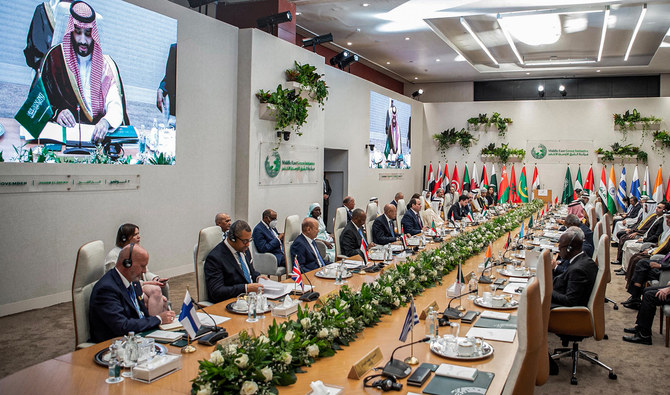

ISLAMABAD: Pakistani Prime Minister Shehbaz Sharif on Tuesday called the Middle East Green Initiative (MGI) a “landmark” reminder of Saudi efforts to combat climate change and tackle other areas vital for human survival.
The Middle East Green Initiative was launched by Saudi Arabia’s Crown Prince Mohammed bin Salman last year as part of efforts to reduce regional carbon emissions. On Monday, the crown prince said the kingdom would contribute $2.5 billion to the green initiative.
The second edition of the MGI Summit, which convened leaders from across the world in Egypt on Monday, is being held alongside the United Nations Climate Change Conference, or COP27, which started on Sunday in the seaside resort town of Sharm el-Sheikh, with delegates from nearly 200 countries.
“We value the primary vision of my dear brother Prince Muhammad bin Salman for undertaking the MGI, the first ecosystem initiative of its kind in the Middle East region,” Sharif said in an address to the green summit.
“This outstanding and wonderful endeavor is a landmark reminder of your Highness’s dynamic leadership in areas that are vital for human survival, regional rejuvenation, and a seed of much-needed hope for a world looking for a greener and more biodiverse future. I applaud your timely actions and leadership once again.”
Sharif applauded the Saudi Arabia for driving the green initiative and taking the lead to deal with climate change issues.
“I am heartened by your active interest in nature-based initiatives like afforestation which help countries build adaptive capabilities, sequester greenhouse gas emissions as well as avert and minimize loss and damage due to climate change at the national and regional level,” he added.
Nature-based solutions were also at the heart of Pakistan’s ambitious climate action agenda, the premier said.
“The MGI is aligned with the objectives of Pakistan’s national forest policy and the green Pakistan program which is focused on protecting, enhancing, and managing our forest, wildlife and ecosystem by 2030.,” he said.
“Pakistan expresses a keen willingness to provide and cooperate with all MGI member countries in sharing experience, and technical expertise related to the restoration of forests and dry land areas, mangroves, management of the protected areas, carbon stock assessment and establishment of forest monitoring systems.”
He said initiatives like the MGI were a “big step in the right direction.”
“Pakistan is fully committed to the broader objectives of the initiative and looks forward to working in close collaboration with member states, not just limited to this initiative but in every action needed to secure the planet against climate change impacts.”
Other than addressing the MGI summit on Tuesday, Sharif will also co-chair with his Norwegian counterpart an important roundtable on “Climate Change and Sustainability of Vulnerable Communities.”
The Pakistani premier will also participate in a meeting jointly hosted by the German chancellor and the president of Ghana on “Scaling Up Action and Support on Loss and Damage — Global Shield Against Climate Risk.”
On Monday, Sharif met with the Saudi crown prince and reviewed cooperation between the two countries to confront climate change. He also met the President of the United Arab Emirates (UAE) Mohammed bin Zayed Al-Nahyan, the Secretary General of the Arab League Ahmed Aboul Gheit, and other world leaders on the sidelines of the UN climate summit to discuss joint efforts to confront climate change.
“In my interaction with world leaders on the sidelines of #COP27, I explained the challenges of the post-flood reconstruction in Pakistan,” Sharif wrote on Twitter.
“I threw light on govt’s efforts & highlighted the urgent need for continued international support for rehabilitation of flood victims.”
Sharif and his team, which includes climate change minister Sherry Rehman, are attending COP27 with the aim to use the summit to get the world to commit to helping countries like Pakistan deal with growing climate-related “loss and damage.”