

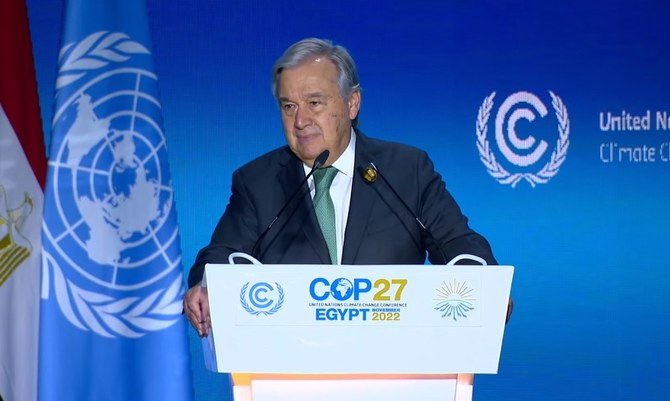

SHARM EL-SHEIKH: The world is on the “highway to climate hell,” the UN secretary-general warned as he delivered an impassioned speech on the opening day of the Climate Change Conference in Egypt.
Addressing world leaders gathered in Sharm El-Sheikh for COP27, Antonio Guterres insisted humanity must either cooperate in the fight against global warming, or perish.
Guterres was unafraid to call out the world’s two largest economies — the US and China — for not working together closely enough to tackle environmental issues.
He added his voice to the calls for a new pact between rich and poor countries to make deeper cuts in emissions with financial help and the phasing out of coal in wealthy nations by 2030 and elsewhere by 2040.
“At the beginning of COP27, I am calling for a historic pact between developed and emerging economies, a climate solidarity pact. A pact in which all countries make an extra effort to reduce emissions this decade in line with the 1.5-degree goal,” said Guterres.
Guterres said: “Humanity has a choice: cooperate or perish. It is either a climate solidarity pact — or a collective suicide pact.”
He said such a pact would allow countries and international financial institutions to work together to provide financial and technical assistance to help emerging economies speed up their transition to renewable energy.
He said it would also end dependence on fossil fuels and provide universal, affordable, and sustainable energy for all.
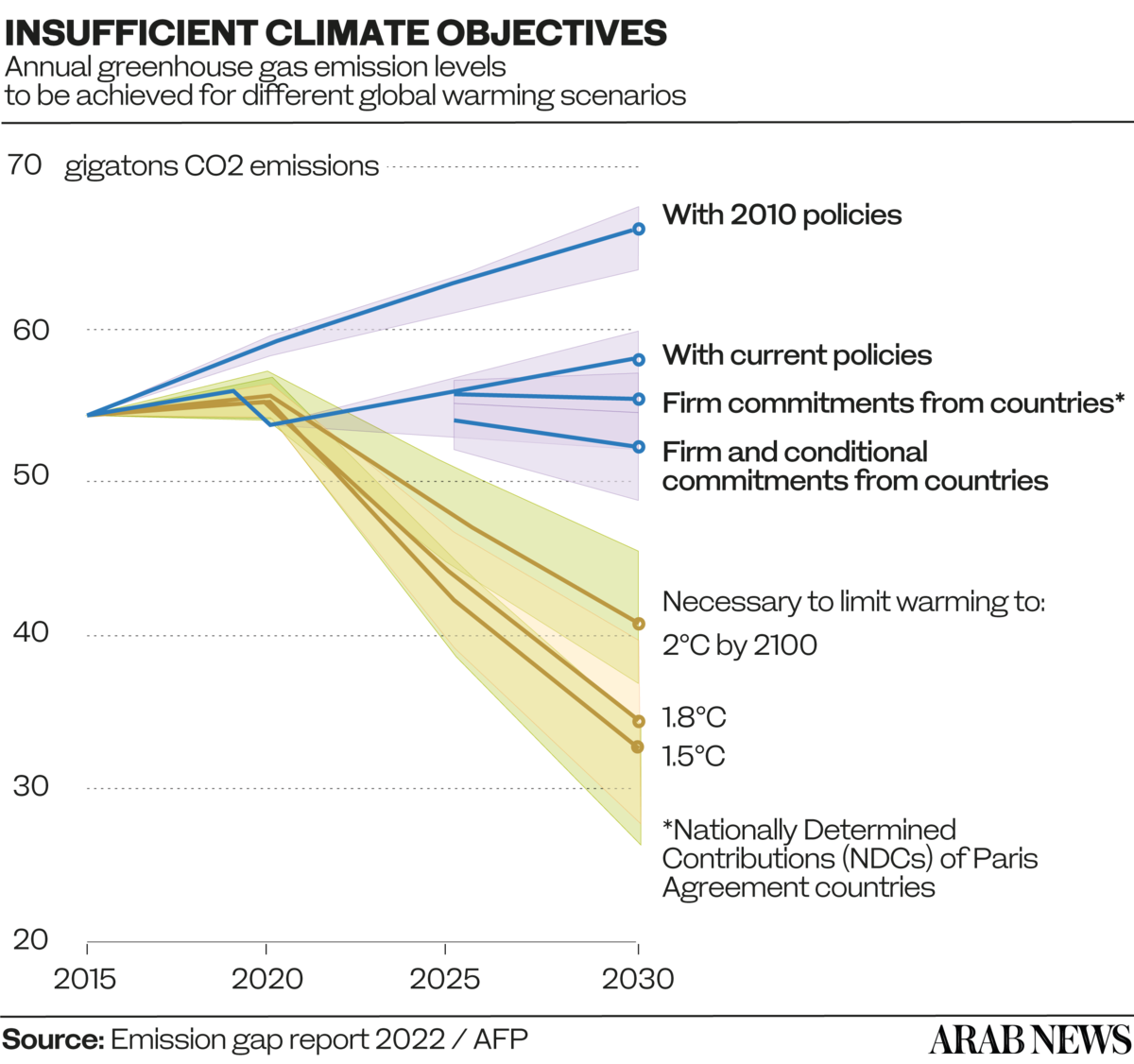
A UN climate change report released in advance of COP27 said that although countries were bending the global emissions curve downward, efforts are still insufficient to stop the global temperature rising to 1.5C above pre-industrial levels by the end of the century.
COP27, which will run until Nov. 18, is the largest annual gathering on climate action involving heads of state, ministers and negotiators, along with climate activists.
Wael Aboulmagd, special representative to the COP27 president, told Reuters that the event will focus on securing separate “loss and damage” funds, or compensation payments to vulnerable countries already suffering from climate-related weather extremes.
Last May, Egypt announced its intention to position itself as an impartial arbiter while hosting this year’s summit. “It is in the interest of the process that a perception of impartiality and equal distance from everyone is maintained,” said Aboulmagd.
Egyptian President Abdel Fattah El-Sisi used his opening address to urge countries to do more to build trust that environmental concerns are being taken seriously.
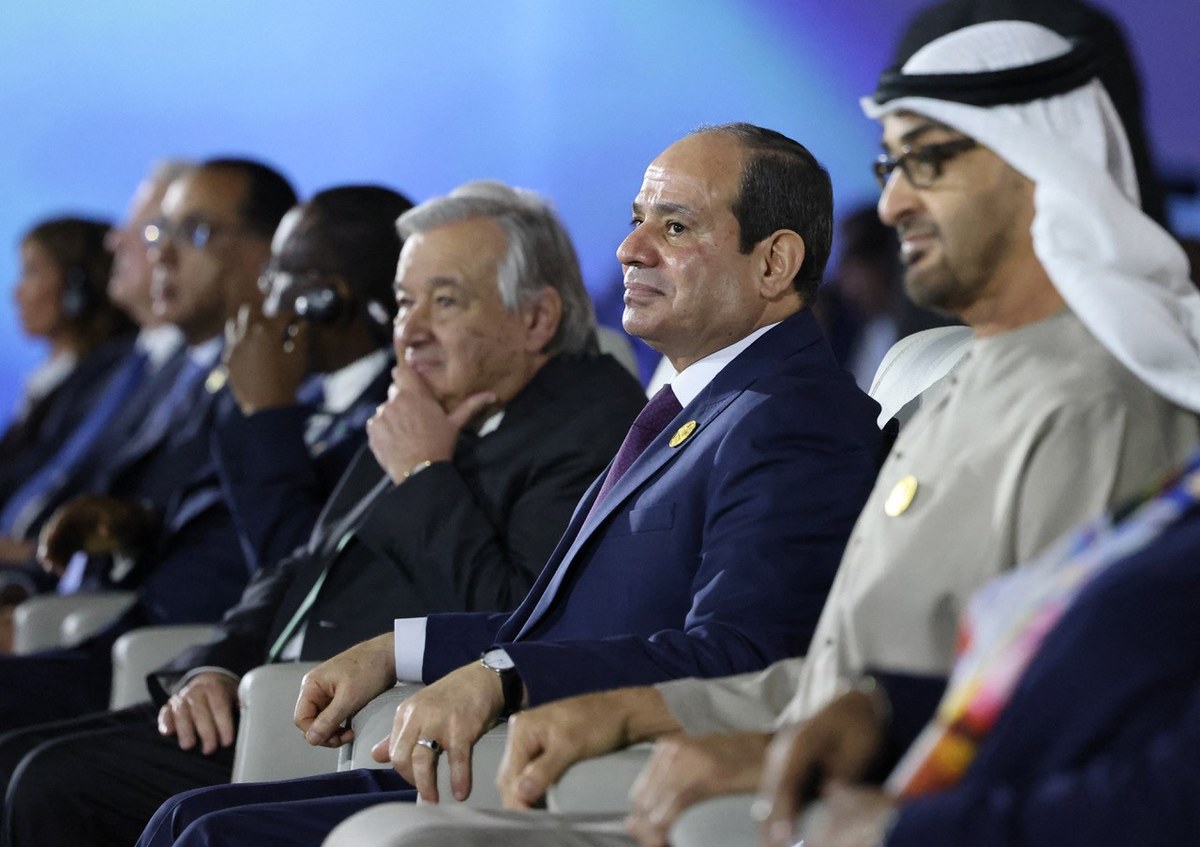
Abdel Fattah El-Sisi, president of host nation Egypt, at the opening address at COP27 in Sharm El-Sheikh on Monday. (Shady Francis)
“Trust will be the best guarantee of our success and progress and achieving our goals,” said El-Sisi.
He also called for action that would have tangible effects on global warming. “From this rostrum, I urge you to become the model that the world hopes,” he added.
El-Sisi said that humanity’s future is a shared one and that it had “one goal and one hope, that same hope we cherish also here.”
“Climate change will never stop without our intervention … Our time here is limited and we must use every second that we have,” El-Sisi added.
Sheikh Mohammed bin Zayed, president of the UAE, said in his address that climate change will magnify already intricate and complex challenges such as global stability and security.
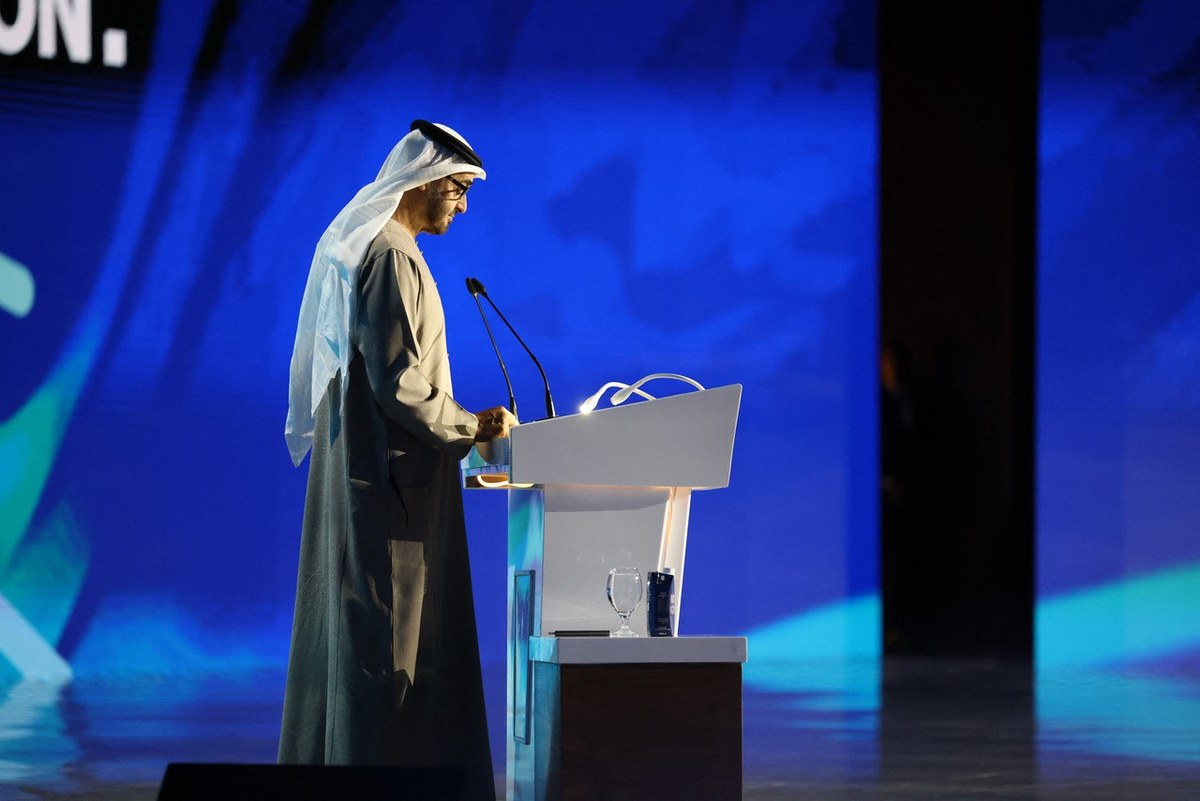
President Mohammed bin Zayed of the UAE on the opening day of COP27. (Shady Francis)
He said all must cooperate to tackle climate change and use it as an opportunity for innovation and building new economies.
“Since we only have one planet, it is essential that we bring together our efforts to address this challenge,” he said.
He said the UAE would continue to be a reliable producer of energy as long as it was needed. “The UAE is known as a responsible supplier of energy and will continue to play this role for as long as the world needs oil and gas.
“We will focus on lowering carbon emissions emanating from this sector.”
The UAE has announced a strategic initiative for carbon neutrality by 2050.
Sheikh Mohammed lauded his country’s recent agreement with the US to invest $100 billion in clean energy and produce 100 gigawatts of clean energy in various parts of the world.
The UAE will focus on supporting the implementation of the outcomes of the previous COPs as they prepare for COP28 in Dubai in 2023, he said.
Guterres said that around 3.5 billion people currently live in countries that are vulnerable to climate change.
“We desperately need progress on adaptation. In Glasgow (COP26 last year), developed countries promised to double adaptation support to $40 billion a year by 2025. And we must recognize that this is only a first step. Adaptation needs are set to grow to more than $300 billion a year by 2030,” he said.
He urged financial institutions and banks to aid the world’s transition away from fossil fuels, and invest in new technology.
Guterres added that the war in Ukraine exposed the profound risks of fossil fuel addiction.
“Human activity is the cause of the climate problem. Human action must be the solution. Action to re-establish ambition. And the action to rebuild trust between the north and the south,” he said.
He added that humans now have the financial and technological tools to achieve climate goals, and nations should come together and implement these targets.
“It is time for international solidarity across the board,” he said. “A solidarity that respects all human rights and guarantees a safe space for environmental defenders and all actors in society to contribute to our climate response.”




