


ANKARA: Egypt has halted its rapprochement with Turkiye because of the latter’s territorial and energy policy moves in Libya, and despite Ankara’s recent crackdown on journalists in the country affiliated with the Muslim Brotherhood, say analysts.
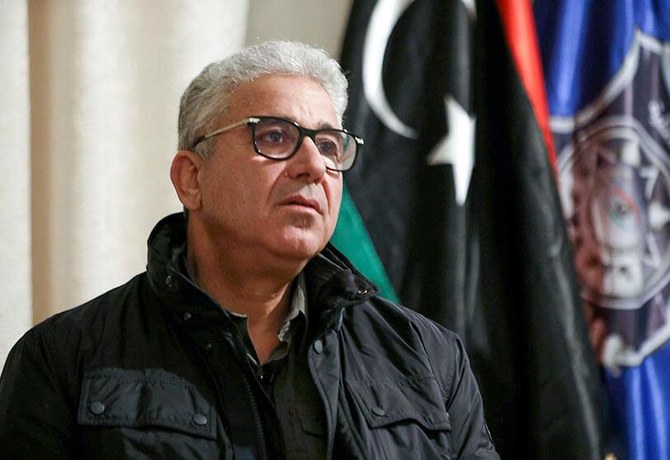
The crisis erupted when Egypt’s Foreign Minister Sameh Shoukry, in an interview with Al-Arabiya TV about the UN-brokered Skhirat agreement, urged all parties to deal with Fathi Bashagha’s government.
Turkiye, however, prefers lending support to the Tripoli-based Government of National Unity, led by Abdel Hamid Dbeibah, which signed a memorandum of understanding on energy and gas with Ankara in early October.
Egypt has argued that the mandate of the Dbeibah government, installed as part of a UN-led peace process, had expired and the administration was not authorized to sign deals to explore for gas and oil off the Libyan coast. Such agreements, Cairo had warned, would fuel tensions in the energy-rich region.
So far, Cairo and Ankara have held two rounds of talks at the level of deputy foreign ministers to draw up an action plan for normalizing their ruptured bilateral ties and reaching common understanding on regional issues.
However, no upgrade has been made at the diplomatic level, as both countries are still represented at the chargé d’affaires level.
Sami Hamdi, managing director at The International Interest, a global risk and intelligence firm based in London, thinks the crux of the issue is that Cairo believes that Turkiye’s President Recep Tayyip Erdogan is only seeking reconciliation because he is in difficult straits domestically and seeking to entrench Turkish gains in the Mediterranean.
“This is why Cairo has been stubborn in its demands as it seeks guarantees that this reconciliation is not merely a pursuit of a short-term political reprieve but rather a long-term change in Turkiye’s vision and political trajectory,” he told Arab News.
Since last year Turkiye has demanded that the Istanbul-based Egyptian opposition TV channels tone down their criticism of President Abdel Fattah El-Sisi amid the rapprochement between the two countries. They had also pushed journalists in exile to look for another “safe haven.”
Muslim Brotherhood supporters recently claimed that Hossam Al-Ghamri, the former editor-in-chief of Al-Sharq channel, was arrested in Turkiye and released after two days, although Ankara said the claims were not true.
Hamdi thinks that Cairo is pushing for the extradition of opposition figures as a sign of Ankara’s “sincerity.”
“Ankara, however, is concerned that any extradition would result in a body blow to its image and render itself prone to accusations of callously selling out its long-term allies for short-term political expediency,” he said.
According to Hamdi, Cairo also believes that Turkiye’s reconciliation bid is about seeking to buy time so that it can entrench its presence in Libya as opposed to finding a common framework that would benefit Egypt and repair ties.
“Egypt considers that the government in Tripoli survives solely because of the defense guarantee from Ankara, and that it would collapse otherwise. For this reason, Cairo has been particularly enraged at the economic and maritime agreements that it believes Turkiye would never be able to secure otherwise,” he said.
Jalel Harchaoui, a Libya expert with the Royal United Services Institute, thinks that the disagreement between Egypt and Turkiye has little to do with ideology.
“It has to do with territory, economic rewards, and basic geography,” he told Arab News.
“The hydrocarbon memorandum of understanding Ankara signed with Tripoli on Oct. 3 indicates that Turkish entities need to expand their presence in eastern Libya. Egypt considers eastern Libya part of its sphere of influence. As a result, Cairo views it profoundly unacceptable,” Harchaoui added.
Turkiye’s military presence in Libya has also drawn criticism from Cairo. During the Arab League summit in Algeria between Nov. 1-2, leaders rejected “foreign interference” in the domestic affairs of all nations.
Yet, the experts still believe it is possible for Cairo and Ankara to find common ground.
“Turkiye is increasingly demonstrating a commitment to silencing criticism of El-Sisi and proactively preventing incitement against him. Moreover, Turkiye is engaged in diplomatic efforts to unify the governments of Dbeibah and Egypt-backed Bashagha as a sign of goodwill that promises an avenue of cooperation in establishing a framework for the coexistence of interests. The process may be slow, but it is certainly moving,” Hamdi said.
Numan Telci, an expert on Turkiye-Egypt relations at Ankara-based think tank ORSAM, thinks that to rebuild ties between Ankara and Cairo, there is a need to end policies that would pose a threat to political stability in Libya.
“I hope elections, that was scheduled for last December but were never held, would bring permanent political stability to the country. This step would (help in) building dialogue between domestic political actors,” he told Arab News.
Telci also noted that Turkiye’s efforts in Libya is meant to boost democratic processes to give more authority to the legitimate political actors but says Egypt must also assist in the process.
“In return, Egypt should also reciprocate in (trust-building) steps towards Turkiye by turning into a reliable regional partner,” Telci said.
However, for Harchaoui, Turkiye’s alleged rapprochement efforts in Libya are not seen as genuine by Egypt.
“If I tell you I care about your demands or expectations, it is meaningless unless I undertake gestures that carry a cost to myself,” he said.


