Dispute over Libyan territory and energy undermining Turkiye, Egypt reconciliation, say experts

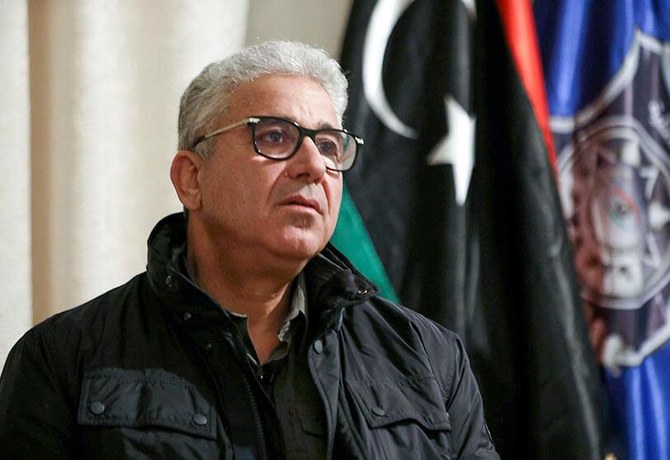
Fathi Bashagha is the Prime Minister of Libya’s Government of National Stability. (Reuters)
Short Url
Updated 06 November 2022
Follow

Dispute over Libyan territory and energy undermining Turkiye, Egypt reconciliation, say experts

  • Ankara, Tripoli group inked oil and gas deals
  • Cairo rejects pact, backs rival administration

ANKARA: Egypt has halted its rapprochement with Turkiye because of the latter’s territorial and energy policy moves in Libya, and despite Ankara’s recent crackdown on journalists in the country affiliated with the Muslim Brotherhood, say analysts.

The crisis erupted when Egypt’s Foreign Minister Sameh Shoukry, in an interview with Al-Arabiya TV about the UN-brokered Skhirat agreement, urged all parties to deal with Fathi Bashagha’s government.

Turkiye, however, prefers lending support to the Tripoli-based Government of National Unity, led by Abdel Hamid Dbeibah, which signed a memorandum of understanding on energy and gas with Ankara in early October.

Egypt has argued that the mandate of the Dbeibah government, installed as part of a UN-led peace process, had expired and the administration was not authorized to sign deals to explore for gas and oil off the Libyan coast. Such agreements, Cairo had warned, would fuel tensions in the energy-rich region.

So far, Cairo and Ankara have held two rounds of talks at the level of deputy foreign ministers to draw up an action plan for normalizing their ruptured bilateral ties and reaching common understanding on regional issues.

However, no upgrade has been made at the diplomatic level, as both countries are still represented at the chargé d’affaires level.

Sami Hamdi, managing director at The International Interest, a global risk and intelligence firm based in London, thinks the crux of the issue is that Cairo believes that Turkiye’s President Recep Tayyip Erdogan is only seeking reconciliation because he is in difficult straits domestically and seeking to entrench Turkish gains in the Mediterranean.

“This is why Cairo has been stubborn in its demands as it seeks guarantees that this reconciliation is not merely a pursuit of a short-term political reprieve but rather a long-term change in Turkiye’s vision and political trajectory,” he told Arab News.

Since last year Turkiye has demanded that the Istanbul-based Egyptian opposition TV channels tone down their criticism of President Abdel Fattah El-Sisi amid the rapprochement between the two countries. They had also pushed journalists in exile to look for another “safe haven.”

Muslim Brotherhood supporters recently claimed that Hossam Al-Ghamri, the former editor-in-chief of Al-Sharq channel, was arrested in Turkiye and released after two days, although Ankara said the claims were not true.

Hamdi thinks that Cairo is pushing for the extradition of opposition figures as a sign of Ankara’s “sincerity.”

“Ankara, however, is concerned that any extradition would result in a body blow to its image and render itself prone to accusations of callously selling out its long-term allies for short-term political expediency,” he said.

According to Hamdi, Cairo also believes that Turkiye’s reconciliation bid is about seeking to buy time so that it can entrench its presence in Libya as opposed to finding a common framework that would benefit Egypt and repair ties.

“Egypt considers that the government in Tripoli survives solely because of the defense guarantee from Ankara, and that it would collapse otherwise. For this reason, Cairo has been particularly enraged at the economic and maritime agreements that it believes Turkiye would never be able to secure otherwise,” he said.

Jalel Harchaoui, a Libya expert with the Royal United Services Institute, thinks that the disagreement between Egypt and Turkiye has little to do with ideology.

“It has to do with territory, economic rewards, and basic geography,” he told Arab News.

“The hydrocarbon memorandum of understanding Ankara signed with Tripoli on Oct. 3 indicates that Turkish entities need to expand their presence in eastern Libya. Egypt considers eastern Libya part of its sphere of influence. As a result, Cairo views it profoundly unacceptable,” Harchaoui added.

Turkiye’s military presence in Libya has also drawn criticism from Cairo. During the Arab League summit in Algeria between Nov. 1-2, leaders rejected “foreign interference” in the domestic affairs of all nations.

Yet, the experts still believe it is possible for Cairo and Ankara to find common ground.

“Turkiye is increasingly demonstrating a commitment to silencing criticism of El-Sisi and proactively preventing incitement against him. Moreover, Turkiye is engaged in diplomatic efforts to unify the governments of Dbeibah and Egypt-backed Bashagha as a sign of goodwill that promises an avenue of cooperation in establishing a framework for the coexistence of interests. The process may be slow, but it is certainly moving,” Hamdi said.

Numan Telci, an expert on Turkiye-Egypt relations at Ankara-based think tank ORSAM, thinks that to rebuild ties between Ankara and Cairo, there is a need to end policies that would pose a threat to political stability in Libya.

“I hope elections, that was scheduled for last December but were never held, would bring permanent political stability to the country. This step would (help in) building dialogue between domestic political actors,” he told Arab News.

Telci also noted that Turkiye’s efforts in Libya is meant to boost democratic processes to give more authority to the legitimate political actors but says Egypt must also assist in the process.

“In return, Egypt should also reciprocate in (trust-building) steps towards Turkiye by turning into a reliable regional partner,” Telci said.

However, for Harchaoui, Turkiye’s alleged rapprochement efforts in Libya are not seen as genuine by Egypt.

“If I tell you I care about your demands or expectations, it is meaningless unless I undertake gestures that carry a cost to myself,” he said.


Gaza ceasefire enters phase two despite unresolved issues

Updated 16 January 2026
Follow

Gaza ceasefire enters phase two despite unresolved issues

  • Under the second phase, Gaza is to be administered by a 15-member Palestinian technocratic committee operating under the supervision of a so-called “Board of Peace,” to be chaired by Trump

JERUSALEM: A US-backed plan to end the war in Gaza has entered its second phase despite unresolved disputes between Israel and Hamas over alleged ceasefire violations and issues unaddressed in the first stage.
The most contentious questions remain Hamas’s refusal to publicly commit to full disarmament, a non-negotiable demand from Israel, and Israel’s lack of clarity over whether it will fully withdraw its forces from Gaza.
The creation of a Palestinian technocratic committee, announced on Wednesday, is intended to manage day-to-day governance in post-war Gaza, but it leaves unresolved broader political and security questions.
Below is a breakdown of developments from phase one to the newly launched second stage.

Gains and gaps in phase one

The first phase of the plan, part of a 20-point proposal unveiled by US President Donald Trump, began on October 10 and aimed primarily to stop the fighting in the Gaza Strip, allow in aid and secure the return of all remaining living and deceased hostages held by Hamas and allied Palestinian militant groups.
All hostages have since been returned, except for the remains of one Israeli, Ran Gvili.
Israel has accused Hamas of delaying the handover of Gvili’s body, while Hamas has said widespread destruction in Gaza made locating the remains difficult.
Gvili’s family had urged mediators to delay the transition to phase two.
“Moving on breaks my heart. Have we given up? Ran did not give up on anyone,” his sister, Shira Gvili, said after mediators announced the move.
Israeli Prime Minister Benjamin Netanyahu said efforts to recover Gvili’s remains would continue but has not publicly commented on the launch of phase two.
Hamas has accused Israel of repeated ceasefire violations, including air strikes, firing on civilians and advancing the so-called “Yellow Line,” an informal boundary separating areas under Israeli military control from those under Hamas authority.
Gaza’s Hamas-run health ministry said Israeli forces had killed 451 people since the ceasefire took effect.
Israel’s military said it had targeted suspected militants who crossed into restricted zones near the Yellow Line, adding that three Israeli soldiers were also killed by militants during the same period.
Aid agencies say Israel has not allowed the volume of humanitarian assistance envisaged under phase one, a claim Israel rejects.
Gaza, whose borders and access points remain under Israeli control, continues to face severe shortages of food, clean water, medicine and fuel.
Israel and the United Nations have repeatedly disputed figures on the number of aid trucks permitted to enter the Palestinian territory.

Disarmament, governance in phase two

Under the second phase, Gaza is to be administered by a 15-member Palestinian technocratic committee operating under the supervision of a so-called “Board of Peace,” to be chaired by Trump.
“The ball is now in the court of the mediators, the American guarantor and the international community to empower the committee,” Bassem Naim, a senior Hamas leader, said in a statement on Thursday.
Trump on Thursday announced the board of peace had been formed and its members would be announced “shortly.”
Mediators Egypt, Turkiye and Qatar said Ali Shaath, a former deputy minister in the Ramallah-based Palestinian Authority, had been appointed to lead the committee.
Later on Thursday, Egyptian state television reported that all members of the committee had “arrived in Egypt and begun their meetings in preparation for entering the territory.”
Al-Qahera News, which is close to Egypt’s state intelligence services, said the members’ arrival followed US Middle East envoy Steve Witkoff’s announcement on Wednesday “of the start of the second phase and what was agreed upon at the meeting of Palestinian factions in Cairo yesterday.”
Shaath, in a recent interview, said the committee would rely on “brains rather than weapons” and would not coordinate with armed groups.
On Wednesday, Witkoff said phase two aims for the “full demilitarization and reconstruction of Gaza,” including the disarmament of all unauthorized armed factions.
Witkoff said Washington expected Hamas to fulfil its remaining obligations, including the return of Gvili’s body, warning that failure to do so would bring “serious consequences.”
The plan also calls for the deployment of an International Stabilization Force to help secure Gaza and train vetted Palestinian police units.
For Palestinians, the central issue remains Israel’s full military withdrawal from Gaza — a step included in the framework but for which no detailed timetable has been announced.
With fundamental disagreements persisting over disarmament, withdrawal and governance, diplomats say the success of phase two will depend on sustained pressure from mediators and whether both sides are willing — or able — to move beyond long-standing red lines.