

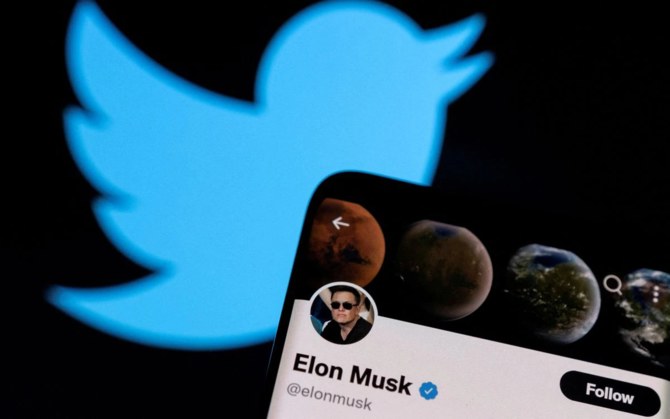

DUBAI: Since completing his takeover of Twitter last week, Elon Musk has been looking for possible ways to diversify the company’s revenue streams and his latest plan seems to be a paywall for access to some video content.
According to an internal company email obtained by The Washington Post, Twitter is working on a new feature called “paywalled video” that would allow users to charge others to view the videos they post, with the company taking a cut of the proceeds. Twitter is reportedly trying to rush through the launch of the feature but has acknowledged it is not without risks.
The email, sent by a member of Twitter’s Product Trust Team, notes there are “risks related to copyrighted content, creator/user trust issues, and legal compliance” and states that the feature will undergo a brief internal review of these issues before the project moves forward.
If implemented, the feature will give users the option of enabling a paywall when they add a video to a tweet. They would choose from a set list of prices for the content, for example $1, $2, $5 or $10, according to the email.
Musk is looking for ways in which the platform can generate income and become less reliant on advertising to keep the business running. Another option he recently announced he is considering is a monthly fee of $8 for users who have verified accounts. Currently free, these provide a way for celebrities and other high-profile users to reassure their followers that they are really in control of an account bearing their name.
After bestselling author Stephen King ridiculed the idea of paying for a verified account, and suggested that Twitter should pay him for being on the platform, Musk replied: “We need to pay the bills somehow! Twitter cannot rely entirely on advertisers.”
Musk also suggested that the move is designed, at least in part, to create a new revenue stream, some of which could be used to reward content creators, in a similar way to options already available on some other social media platforms.
However, some observers note that it also seems to point to the encouragement of adult content on the platform. Twitter itself has estimated that adult content constitutes 13 percent of all content on the platform, according to an internal presentation seen by Reuters.
It said internal research found that tweets about cryptocurrency, and posts containing NSFW (not safe for work) content, which includes nudity and pornography, were the highest-growing topics of interest among English-speaking heavy users of the platform.
Twitter’s plans to introduce adult content emerged this year when The Verge reported that the company had tested a new feature that would give creators of such content the ability to sell paid-for subscriptions, with Twitter keeping a share of the profits.
Before the launch, Twitter assembled a team to “pressure-test the decision” by looking at how Twitter could implement the feature “safely and responsibly,” according to documents obtained by The Verge and its interviews with Twitter employees.
The team concluded that it could not be safely implemented because Twitter could not accurately detect content that includes child sexual exploitation or non-consensual nudity at the scale required and so the project was shelved.
It is unclear whether the video paywall feature was already in development before Musk’s takeover.


