

YouGov reveals Saudi, UAE viewers’ attitudes around FIFA World Cup 2022

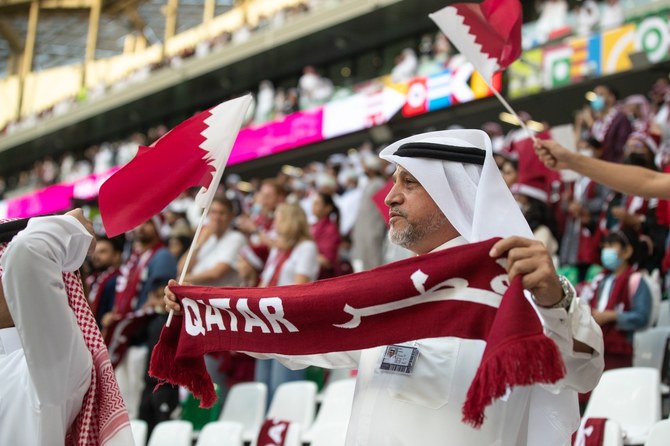
The UAE, Saudi Arabia and Qatar are among the top 10 purchasing countries of the tickets, FIFA’s World Cup Chief Operating Officer Colin Smith said. (Supplied/FIFA)
Short Url
Updated 31 October 2022
Follow

YouGov reveals Saudi, UAE viewers’ attitudes around FIFA World Cup 2022

  • 44 percent of Saudi and 42 percent of UAE residents who plan to watch the World Cup live or at home said that sponsorships can help keep companies socially relevant

DUBAI: As the first FIFA World Cup to be held in the Middle East gets ready to kick off in Qatar, the entire region is waiting in anticipation.

Ticket sales for the World Cup have already approached the 3 million mark, according to FIFA President Gianni Infantino and event organizers.

The UAE, Saudi Arabia and Qatar are among the top 10 purchasing countries of the tickets, FIFA’s World Cup Chief Operating Officer Colin Smith told a news conference in Doha.

As the region gears up for a massive boost to the travel, tourism and hospitality sector, YouGov ran a survey to learn more about UAE and Saudi consumers’ viewing and purchasing habits.

“After years of planning and with less than a month to go, it’s clear from our data that the impact of FIFA World Cup Qatar 2022 will stretch far beyond the host country itself,” Sam Dawson, commercial director at YouGov for the Middle East and North Africa, told Arab News.

“This presents an unrivaled opportunity for all companies to tap into and contribute to the excitement around the event,” he added.

The report analyzed the attitudes of consumers who will be watching from home, as well as watching the matches live.

YouGov’s data revealed that 43 percent of Saudi fans planning to watch FIFA live in the stadium are 35 to 44 years old, whereas 48 percent in the UAE are 24 to 35 years old. 

The top TV-on-demand and catch-up services regularly used in Saudi Arabia by viewers who plan to watch at home are Netflix (49 percent), Shahid (25 percent), Amazon Prime (20 percent), BeIN Connect (17 percent) and OSN Streaming (17 percent).

In the UAE, too, Netflix is in the lead (55 percent), followed by Amazon Prime (28 percent), Apple TV (9 percent), StarzPlay (7 percent) and Disney+ (6 percent).

When it comes to advertisements, in Saudi Arabia, 42 percent of viewers who plan to watch the World Cup live or at home said they notice ads in retail environments; 30 percent trust the advertising they see on posters/billboards; and nearly half (49 percent) pay attention to leaflets received in the mail.

In the UAE, over half (56 percent) of those who plan to watch the World Cup live or at home often notice ads at airports; 66 percent enjoy watching trailers at the cinema; and 39 percent enjoy watching ads with their favorite celebrities.

Sponsorships are a big part of all major sporting events, and the FIFA World Cup is no exception. Money spent globally on advertising the 2018 FIFA World Cup, for example, reached $2.4 billion, with brands expected to spend $200 million on an official sponsorship package, according to research from media company Zenith.

YouGov’s research found that fans are largely optimistic about sponsorships during the event.

Forty-four percent of Saudi and 42 percent of UAE residents who plan to watch the World Cup live or at home said that sponsorships can help keep companies socially relevant.

In Saudi, 40 percent said they take notice of who sponsors the sporting events they watch, and 32 percent like to support their favorite team by buying products from their sponsors.

In the UAE, 54 percent said they like brands that stick to sponsoring one team, and 46 percent said they would buy products from brands that support their favorite team.

Despite viewers’ receptiveness to advertising, Dawson cautioned: “It’s key to not apply a ‘one-size’ fits all approach when planning events, initiatives or campaigns.”


Tucker Carlson claims he was detained at Israeli airport

Updated 28 sec ago
Follow

Tucker Carlson claims he was detained at Israeli airport

DUBAI: Earlier this week, Tucker Carlson flew to Israel to interview US Ambassador to Israel Mike Huckabee, according to media reports.

Carlson, who reportedly refused to leave Tel Aviv’s Ben Gurion Airport complex, conducted the interview at the airport, after which he said he and his staff were detained and their passports were seized.

“Men who identified themselves as airport security took our passports, hauled our executive producer into a side room and then demanded to know what we spoke to Ambassador Huckabee about,” Carlson said in a statement to The New York Post.

However, Carlson’s claims have been contradicted by Huckabee and Israeli authorities.

Huckabee, a former Arkansas governor and Fox News host, said on social media platform X that “EVERYONE who comes in/out of Israel (every country for that matter) has passports checked & routinely asked security questions,” including himself, despite holding a diplomatic passport and visa.

The US Embassy in Israel also described the interaction as routine passport control procedures.

The Israel Airports Authority said in a statement that Carlson and his staff “were not detained, delayed, or interrogated.”

They were asked “a few routine questions, in accordance with standard procedures applied to many travelers,” and this conversation took place in a separate room within the VIP lounge to protect their privacy, the statement added.

“No unusual incident occurred, and the Israel Airports Authority firmly rejects any other claims.”

Carlson has faced criticism in recent years over his commentary on Israel, with critics accusing him of amplifying narratives that are hostile to Israel and, at times, antisemitic. He has also questioned Israel’s treatment of Christian communities in the region.

After Fox News canceled his show in April 2023, he launched his own program, “The Tucker Carlson Show” in 2024.

The show has featured controversial figures, including Darryl Cooper, who has made statements widely condemned as Holocaust denial, and white nationalist commentator Nick Fuentes.

In his interview with Fuentes, Carlson labeled Huckabee a “Christian Zionist.”

Carlson has also criticized Huckabee for not doing enough to protect Christian interests in the region. In one video, he said: “Why not go ahead and talk to Christians and find out their side of the story? Why aren’t American Christian leaders like Mike Huckabee or Ted Cruz, people who invoke the Christian Bible to justify what they’re doing, why haven’t they done this?”

Huckabee responded to the video on X, writing: “Instead of talking ABOUT me, why don’t you come talk TO me?  You seem to be generating a lot of heat about the Middle East. Why be afraid of the light?”

Carlson accepted the invitation, and their teams coordinated the interview, leading to his brief visit to Israel.