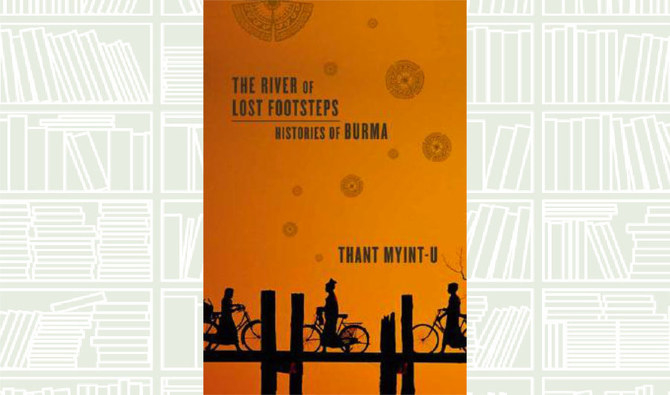
What We Are Reading Today: The River of Lost Footsteps by Thant Myint-U

Short Url
Updated 30 October 2022
Follow

What We Are Reading Today: The River of Lost Footsteps by Thant Myint-U

For nearly two decades Western governments and a growing activist community have been frustrated in their attempts to bring about a freer and more democratic Burma only to see an apparent slide toward even harsher dictatorship. What do we really know about Burma and its history?

In “The River of Lost Footsteps,” Thant Myint-U tells the story of modern Burma, in part through a telling of his own family’s history, in an interwoven narrative that is by turns lyrical, dramatic, and appalling, according to a review on goodreads.com.

The book is a work both personal and global, a distinctive contribution that makes Burma accessible and enthralling. Thant Myint-U, educated at Harvard and Cambridge, has served on three United Nations peacekeeping operations, in Cambodia and in the former Yugoslavia, and was more recently the head of policy planning in the UN’s Department of Political Affairs. He lives in New York City.


What We Are Reading Today: Three Roads Back by Robert D. Richardson

Updated 06 March 2026
Follow

What We Are Reading Today: Three Roads Back by Robert D. Richardson

In “Three Roads Back,” Robert Richardson, the author of magisterial biographies of Ralph Waldo Emerson, Henry David Thoreau, and William James, tells the connected stories of how these foundational American writers and thinkers dealt with personal tragedies early in their careers. 
For Emerson, it was the death of his young wife and, 11 years later, his five-year-old son; for Thoreau, it was the death of his brother; and for James, it was the death of his beloved cousin Minnie Temple. 

Filled with rich biographical detail and unforgettable passages from the journals and letters of Emerson, Thoreau, and James, these vivid and moving stories of loss and hard-fought resilience show how the writers’ responses to these deaths helped spur them on to their greatest work, influencing the birth and course of American literature and philosophy.
As Richardson shows, all three emerged from their grief with a new way of seeing, one shaped by a belief in what Emerson called “the deep remedial force that underlies all facts.”