

Red Sea Film Fest unveils 7 movies to screen as part of ‘Treasures’ category

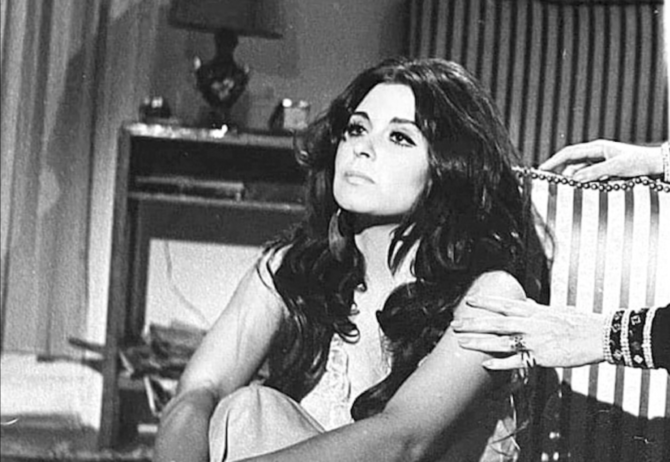
The Egyptian classic movie “Khali Balak Min Zouzou” will screen as part of the “Red Sea: Treasures” category. (Supplied)
Short Url
Updated 26 October 2022
Follow

Red Sea Film Fest unveils 7 movies to screen as part of ‘Treasures’ category

DUBAI: Saudi Arabia’s Red Sea International Film Festival has unveiled seven movies that will be part of this year’s “Red Sea: Treasures” category. 

The lineup includes soccer film “Bend it Like Beckham,” Jean Renoir’s 1937 movie “La Grande Illusion,” “Sambizanga” – about the anti-colonial struggle in 1970s Africa, Jim Jarmusch’s debut film “Stranger than Paradise,” historical war feature “Lion of the Desert” and the Egyptian classics “Khali Balak Min Zouzou” and “Gharam Fil Karnak.”

“Red Sea: Treasures is a celebration of some of the iconic and widely acclaimed cinematic storytelling ever to grace the screen,” said Antoine Khalife, the director of Arab Programs & Film Classics of the festival, in a released statement. “I’m thrilled that through the Red Sea Film Festival Foundation, we have been able to restore two Egyptian classics which have been meticulously restored for a new generation of audiences to enjoy.”

The director of the international programming for the RSIFF Kaleem Aftab said that the Red Sea: Treasures category is “designed to unlock film heritage and reintroduce a diverse selection of masterpieces that have made an important contribution to cinema history.”

“These influential films have impacted our lives, and we’re delighted to share them with new audiences,” he added. 

The festival will take place in Jeddah from Dec. 1 to 10. 


Mini op-ed: We need a ‘potluck’ culture of reading

Updated 10 March 2026
Follow

Mini op-ed: We need a ‘potluck’ culture of reading

DUBAI: The number of times we hear, “My kids don’t read,” “I don’t have the time,” or “Do people even read anymore?” is alarming.

With newspapers declared dead and YouTube summaries or ChatGPT reviews becoming the main course of words, I often wonder: have those asking these questions considered the role they play?

Each of us — school representatives, librarians, parents, educators, children, and even occasional readers — must ask whether we are helping create a culture where reaching for a book feels as natural as reaching for a smartphone.

Even the smallest effort counts. I think of a reading culture as a potluck where everyone brings something small, and together it becomes a wholesome meal. If you do not know where to begin, look around.

Purva Grover is an author, poet, playwright, stage director, TEDx speaker, and creative entrepreneur. (Supplied)

The UAE is rich in public libraries including in Sharjah and Dubai, such as the Mohammed Bin Rashid Library, which is proof that access is not the issue. 

Meanwhile, Saudi Arabia is embedding reading into its national identity under Vision 2030 through digital libraries, major book fairs, and daily school reading.

Not a reader? Events such as the Emirates Airline Festival of Literature or the Sharjah International Book Fair offer easy entry points for conversation, community and curiosity.

They are built on cultural blocks that subtly encourage even non-readers into reading spaces. You could even start a reading club. I run one in Dubai called The Reading Village and have seen its quiet magic.

Culture is built by saying yes. And no to pirated PDFs on WhatsApp, as well as unchecked screen habits.

Tiny habits can help build an environment where reading becomes as much a part of our lives as scrolling on Netflix to decide what to binge-watch next.

Purva Grover is an author, poet, playwright, stage director, TEDx speaker, and creative entrepreneur. She is the founder of The Reading Village, a Dubai-based community.