

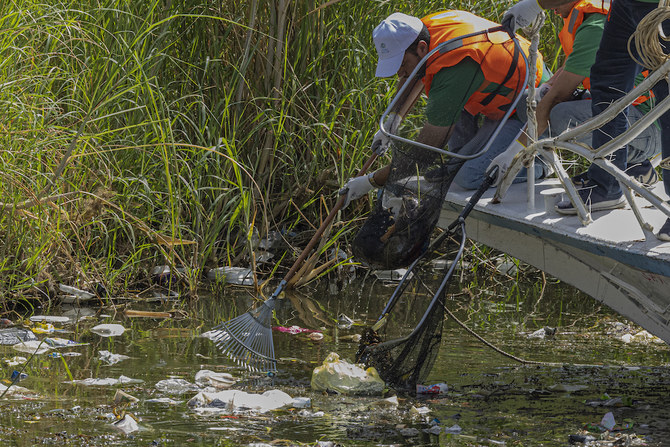

CAIRO: For millennia, the Nile River has nourished the great civilizations of Egypt with copious fresh water, rich deposits of silt, plentiful fish, and means of navigation and trade. However, nowadays, the river carries another far less appealing bounty – plastic waste.
According to the Egyptian Organisation for Human Rights, about 4.5 million tons of waste flow into the Nile annually.
The Helmholtz Centre for Environmental Research also found that the Nile is one of 10 rivers contributing to 90 percent of plastic waste entering the world’s oceans. Another study carried out by Sky News in 2021 found that 75 percent of the Nile’s fish contain microplastics.
To highlight both the environmental harm and the sheer ugliness of the floating trash heap, environmentalists and volunteers recently joined forces to build a giant pyramid – modeled on those of the nearby Giza Plateau – made entirely out of discarded plastic.
Built to coincide with World Cleanup Day on Sept. 17, the pyramid is made from more than 7,500 kg of plastic derived from around 250,000 upcycled bottles gathered from the Nile by a team of 60 fishermen over a period of 45 days.
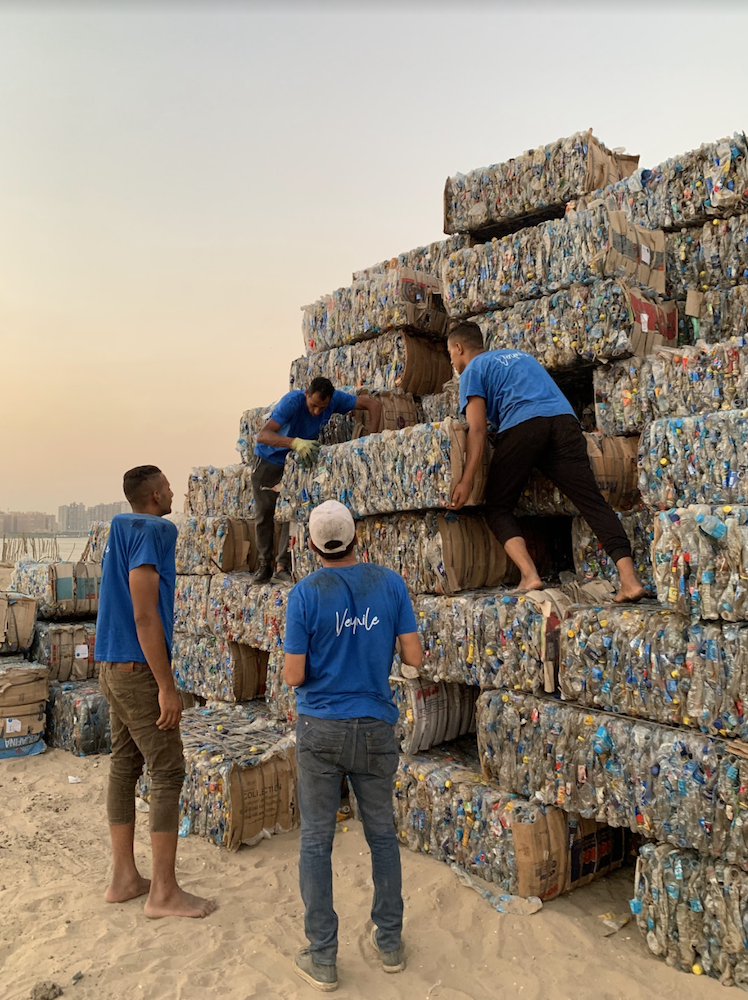
A pyramid of waste highlights the scale of the problem. (Supplied)
World Cleanup Day is a global movement that brings together millions of volunteers to remove trash and other mismanaged waste from the world’s beaches, rivers, forests, and streets.
Designed and built by the VeryNile eco-initiative, established five years ago, the pyramid consists of 170 blocks, each weighing roughly 45 kg.
By assembling these blocks into the shape and scale of a pyramid, organizers hoped to demonstrate the enormity of the plastic waste problem, encourage recycling and responsible waste management, and promote a reduction in single-use materials.
Furthermore, by imitating Egypt’s most recognizable monuments, organizers also hoped to show that the eyesore of plastic waste is a blight on the country’s beauty and heritage.
To mark World Cleanup Day, organizers held an event dubbed “Play by the World’s Largest Plastic Pyramid.” Volunteers, influencers, and celebrities participated in cleanup with kayaks, created art, and held recycling workshops using discarded single-use plastic bags.
The pyramid will eventually be disassembled and sent to a local factory, which uses plastic to make strings and covers for car seats.
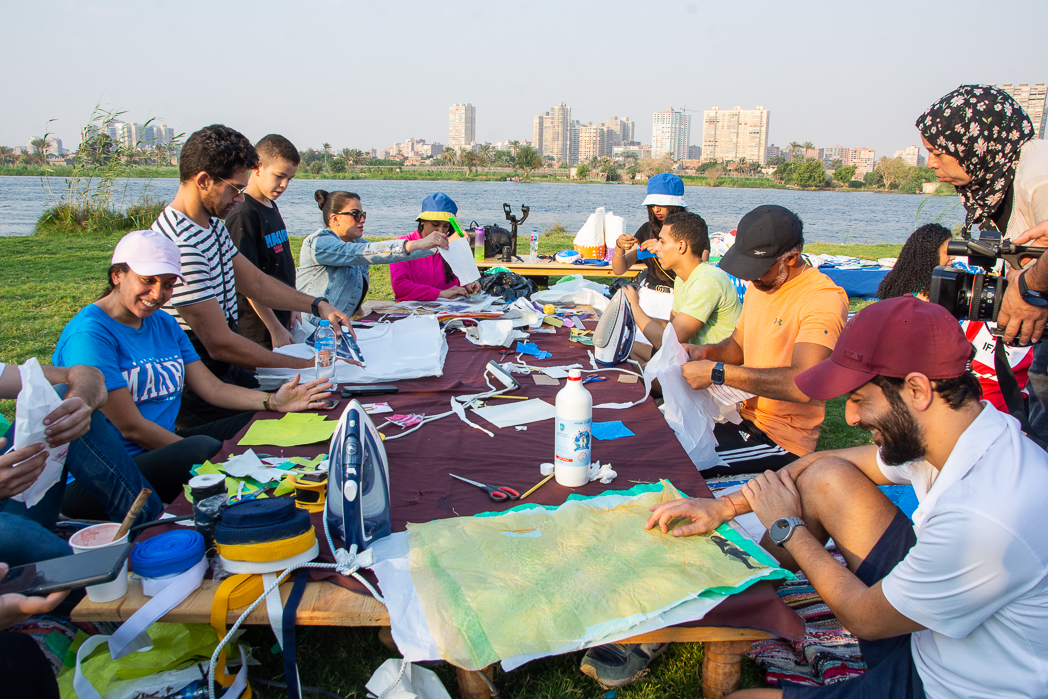
World Cleanup Day is a global movement that brings together millions of volunteers to remove trash and other mismanaged waste from the world’s beaches, rivers, forests, and streets. (Supplied)
“We are aiming to reach and clean every single inch of the River Nile in Egypt of plastic waste, as it really harms marine life, and fishermen can hardly find fish sometimes,” Hanaa Farouk, project manager at Bassita, the Egyptian social enterprise behind VeryNile, told Arab News.
“Our success over the past years would not have been the same without collaborating with our great team of local fishermen and talented women.”
To this day, fishermen rely on the river for their livelihoods. However, plastic waste kills off the Nile’s once plentiful fish stocks. That is why VeryNile is working to restore the fishing industry by making 40 local fishermen their Nile ambassadors on Qursaya Island, Cairo.
Qursaya Island, in the heart of the Nile, is today home to several recycling workshops and a workspace for local women to produce crocheted accessories, hats, bags, laptop cases, and other products from recycled single-use plastic bags.
VeryNile offers these communities financial assistance, paying fishermen 10 EGP (around $0.50) for every plastic bottle they collect. The initiative also hires fishermen to sort and compact these bottles before they are sent to factories for recycling and repurposing.
VeryNile raises environmental awareness through its clean-up events, which occur at different spots along the riverbank, both inside and outside Cairo, bringing together volunteers from various companies, banks, and other entities.
THENUMBER
7,500 - Kilograms of plastic derived from 250,000 upcycled bottles gathered from the Nile.
These events are done with kayaks or a cleaning boat, which is the first in Africa and can collect 500 kg of solid waste per week.
The Middle East and North Africa region faces a plethora of challenges in confronting the buildup of plastic waste; according to the World Bank, over 570,000 tons of plastic are thrown into the Mediterranean Sea every year, wreaking havoc on industries that rely on the sea, from fishing to tourism.
Additionally, widespread consumerism in Gulf countries has led to large amounts of discarded single-use plastic, with five Gulf Cooperation Council countries (Bahrain, Saudi Arabia, the UAE, Qatar, and Kuwait) ranking in the top 10 per capita generation of solid waste. Saudi Arabia produces 15 million tons of waste annually - only five percent recycled.
Egypt is not the only country tackling the plastic waste problem. Lebanon, Morocco, Jordan, Oman, Bahrain, the UAE, and Tunisia have all implemented local and national laws limiting the importation and use of single-use plastic bags. Sharjah, Dubai, and Abu Dhabi have all implemented fees on plastic bags and committed to banning them by 2024.
Kuwait, Egypt, Qatar, and Saudi Arabia have drafted laws or made policy recommendations to ban single-use plastic bags or replace them with biodegradable ones.
In line with Saudi Arabia’s Vision 2030 reform strategy, the Kingdom plans to invest over $6 billion into recycling by 2035. Saudi civil society groups also encourage people to recycle; the Mawakeb Alajer group has established recycling facilities where people can drop off everything from used paper to unwanted furniture and clothing.
The Saudi Investment Recycling Company, founded in 2017 to develop recycling capabilities in the Kingdom, plans to meet the objectives of Vision 2030 by enabling the creation of a circular economy – that is, an economy in which raw materials and finished products are re-used, repaired, and recycled for as long as possible.
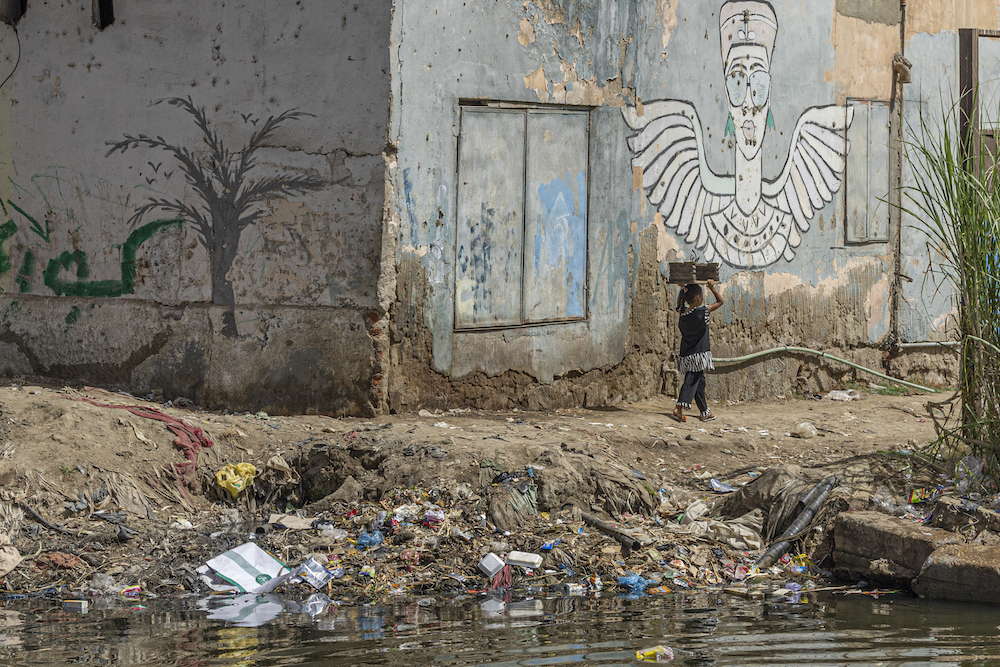
A picture taken on September 29, 2022 shows plastic and garbage floating on the bank of Nile River in Cairo. (AFP)
In March last year, Saudi Crown Prince Mohammed bin Salman announced the Green Saudi Initiative and the Green Middle East Initiative. Though they primarily focus on cutting carbon emissions, preserving and restoring natural habitats are high-priority goals.
The crown prince later announced the formation of a government body to oversee the violation of the Kingdom’s environmental regulations, vowing to hold polluters accountable.
Egypt is working on reducing plastic consumption in the upcoming years through a national strategy that aims to eliminate the negative impact of plastic on health, the environment, the economy, and society. The country aims to cut the consumption of plastic bags to 100 bags per person by 2025 and 50 bags per person by 2030.
The drive to ban single-use plastics often starts locally, as in Egypt’s Red Sea Governorate, which in June 2019 prohibited the single-use of plastic bags, plastic cutlery used in restaurants, coffee shops, supermarkets, groceries, butchers, fisheries, and pharmacies, and during safari and boat trips.
Following the steps of the Red Sea Governorate, South Sinai’s Dahab announced a ban on the use of plastic bags across the city in July 2021.
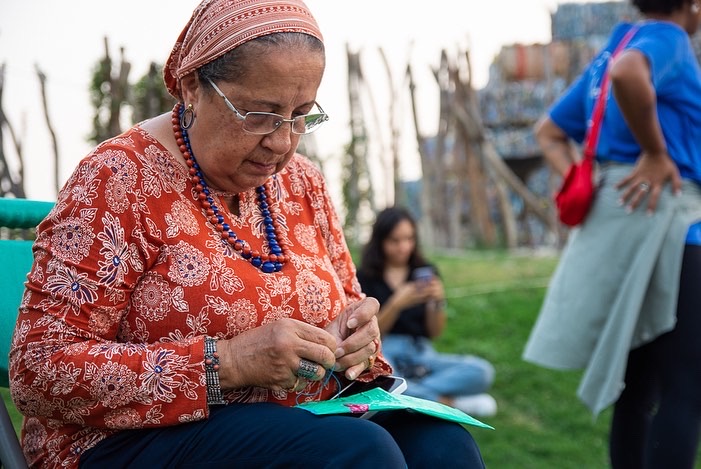
Women recycle singleuse plastics into fashion items and other products as part of a VeryNile eco-initiative. (Supplied)
VeryNile’s pyramid project comes just ahead of COP27, the UN Climate Change Conference, which will be held in Egypt’s Sharm El-Sheikh during the second week of November.
At COP26 in Glasgow last year, hundreds of countries pledged to support energy transitions and climate change mitigation in the world’s poorest countries – those which contribute very little to carbon emissions and pollution but are the most affected by climate change.
In May, Egyptian special representative to the COP27 president Wael Aboulmagd said that helping developing countries adapt to climate change would be a priority in the upcoming conference, despite wealthy nations saying they would not deliver the $100 billion per year promised for stated goals.
At the end of September, Egypt called on all nations participating in COP27 to put aside political differences. Some countries staged a walkout in June to protest Russia’s presence at a UN climate meeting in Bonn.
Though 90 heads of state have confirmed attendance at the conference, the global economic strain brought on by coronavirus recovery efforts and the conflict in Ukraine may put environmental concerns on the back burner.


