


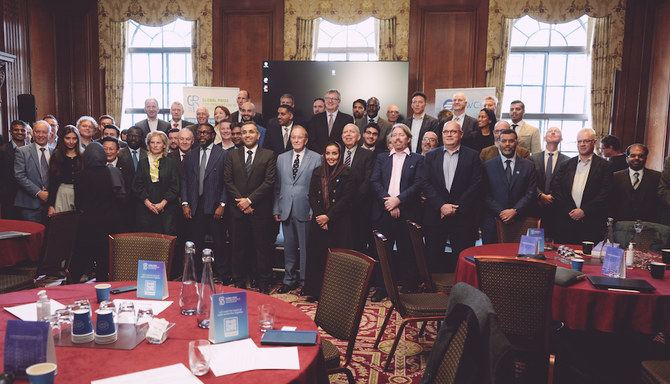

LONDON: Saudi Arabia’s Saline Water Conversion Corp. concluded a four-day visit to the UK capital to discuss and showcase its innovative desalination technologies and solutions to reduce cost and power consumption.
The visit, which concluded on Sunday and was headed by SWCC Gov. Abdulla Abdulkarim, included visits to universities around the country, meetings with leaders of the water industry, and a water innovation engagement forum, where the corporation announced a new $15 million global prize for innovation in desalination, set to be launched in January.
“Fifty years ago, Saudi Arabia, as a drought country, decided to serve their nation by spending, investing in life, creating an abundant source of water, and bringing this water from the coast to the cities where the people are living,” Abdulkarim told the forum. “This mission at that time was not easy.”
The SWCC is currently the largest desalination corporation in the world, providing water to over 34 million people. It has shifted its focus, Abdulkarim explained, to making water affordable and contributing to different sectors, including health care, industry, agriculture, mining, and renewable energy in order to help raise the Kingdom’s gross domestic product.
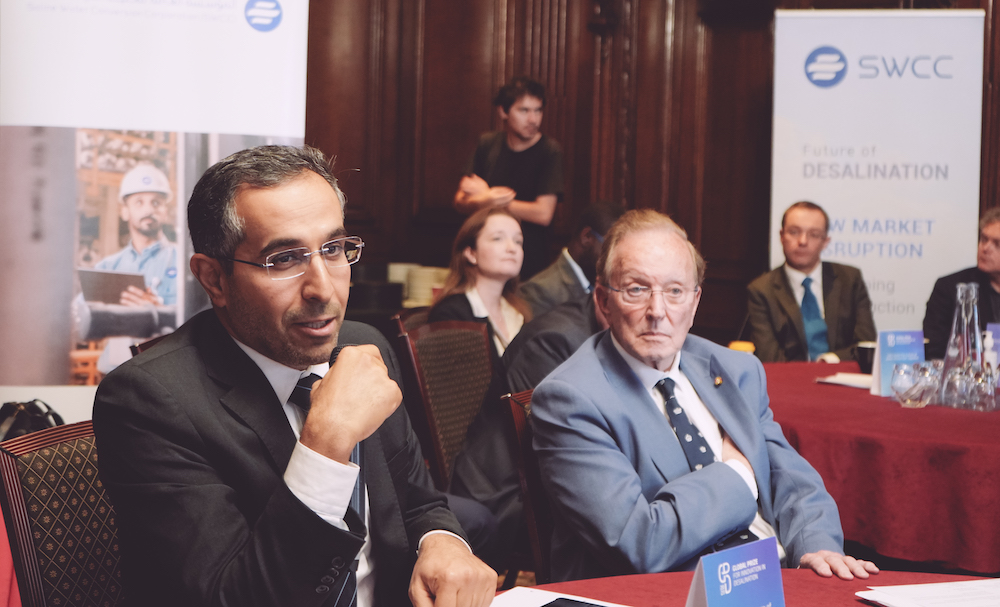
Abdulla Abdulkarim, governor of the Saudi Saline Water Conversion Corp., headed a delegation to London to share expertise and find solutions to water scarcity. (AN Photo)
“We carry on the responsibility to (make) fresh water…abundant, accessible, then affordable for the whole nation… to do the best for the next generation, but we will not do it by ourselves,” he said, adding the SWCC is partnering with the aforementioned sectors.
Abdulkarim said the SWCC, which is responsible for 20 percent of worldwide desalinated water production, continues to lead the global market by using the latest technology, noting the construction of a new plant in Jubail with a capacity of 1 million cubic meters, with further announcements to come.
Tariq Al-Ghaffari, acting president of the Desalination Technology Research Institute, said the aim of the UK visit was to address future challenges.
“The scarcity of water has been increasing, and our aim was to focus more on innovative ideas, to have a more efficient system and reduce power consumption. We covered a lot of great topics, including brine mining,” he told Arab News.
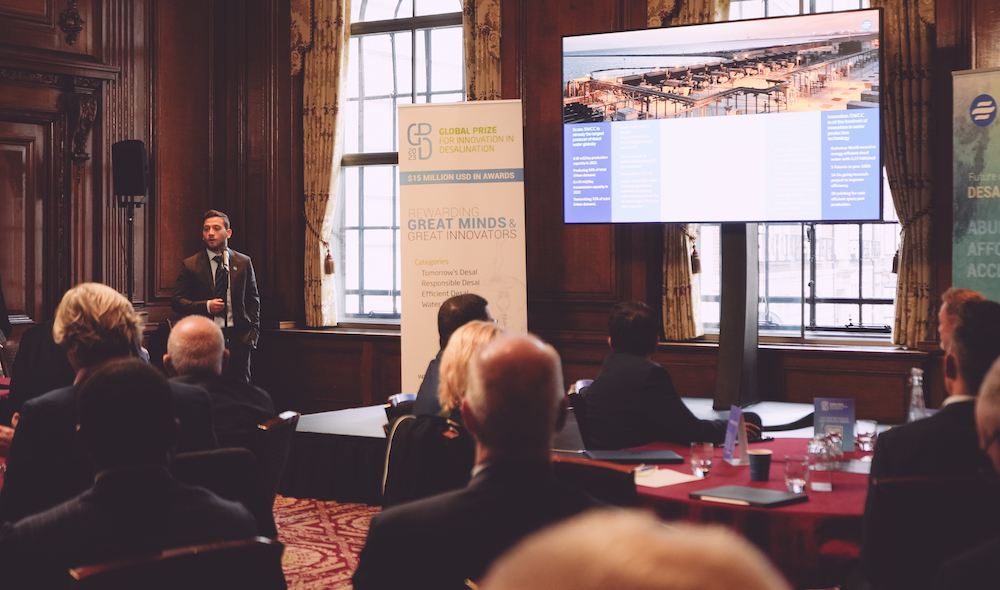
During the forum, which was held at the Institution of Civil Engineers, SWCC announced a new $15 million global prize for innovation in desalination. (AN Photo)
Al-Ghaffari said the SWCC is not only aligned with Saudi Vision 2030 but also with the whole world as the corporation’s research, development and innovations are consistent with market demands.
“We are committed to reducing carbon emissions by 34 million tons in the upcoming years, and this will have a big impact not only in the Kingdom but worldwide,” he added.
“I think the future is all about water. We need to (promote) a culture of people who understand the value of water, and that’s why we are seeking to share our experience with those people and talk to them about what we have and what we can bring for our bright upcoming future,” Al-Ghaffari said.
During the visit, the SWCC signed a memorandum of understanding with the International Water Association to develop a partnership with a view to pushing the boundaries of desalination, exchanging expertise, and supporting the SWCC in running events, said Kalanithy Vairavamoorthi, executive director of the IWA.
He said his organization was also keen to attend the forum to hear about the Desalination Innovation Award, which seeks creative ideas to develop the desalination industry.
“The IWA is very interested to hear more about that prize and to understand what is cutting edge in relation to desalination, and the SWCC is really the industry leader when it comes to that,” Vairavamoorthi said.
“We see this long-term relationship as trying to understand what the challenges are for water management in water-scarce regions, how desalination can be part of that portfolio of solutions, and what types of technologies have to be developed in order to make these systems sustainable moving forward,” he also said.
Saudi national Mohammed Hassan Al-Maghrabi, a researcher at the Oxford Thermofluid Institute, University of Oxford, said the SWCC visited the institute and met with the head of the lab and the principal investigators, who were inspired by the governor’s ideas and were ready to change their direction and focus.
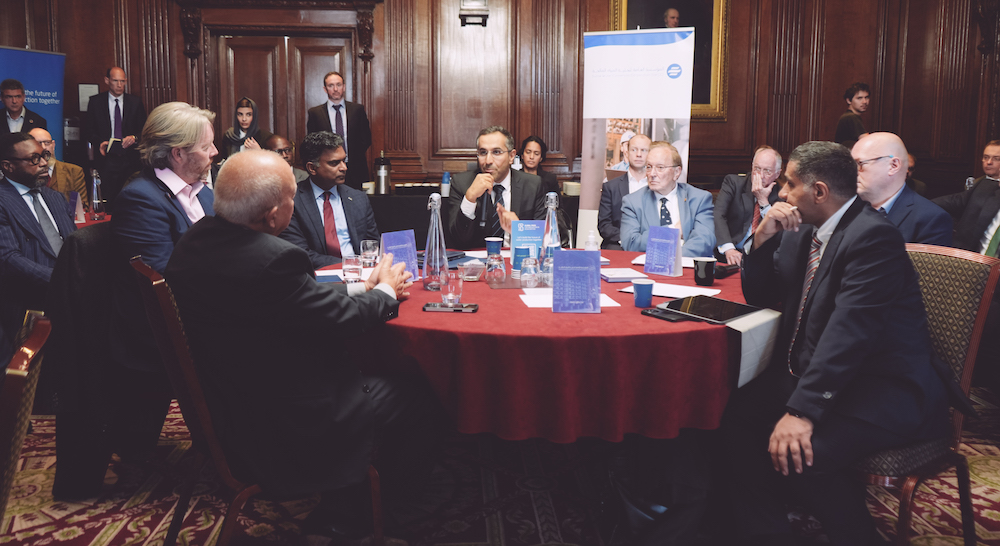
SWCC’s tour in the UK included visits to universities around the country and meetings with leaders of the water industry. (AN Photo)
“It was actually astonishing how they changed senior scientists’ minds and opinions about where their focus should be for the next couple of years; the opportunities are endless in the field of water,” he said.
Al-Maghrabi, a student in his last year, said it was “amazing” how Abdulkarim was driving this movement and “opening the door to the whole world” by investing in these projects and innovations.
Quoting the head of his lab, Al-Maghrabi said: “The SWCC will be the next Saudi Aramco, and it is the future,” which he added was “all about water, as water means life to the whole world.”
He added: “I am proud to be part of this country, part of this leadership that is leading the whole world now to be more sustainable and rely on renewable energies.”


