Palestinians welcome Australian rejection of Jerusalem as Israeli capital

1 / 2
Palestinian Prime Minister Mohammad Shtayyeh said that he hoped that Australia would now recognize the state of Palestine on the borders of June 4, 1967. (Reuters)
2 / 2
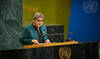
Australian Foreign Minister Penny Wong said that “Australia is committed to a two-state solution in which Israel and a future Palestinian state coexist, in peace and security.” (AP Photo)
Short Url
Updated 18 October 2022
Follow

Palestinians welcome Australian rejection of Jerusalem as Israeli capital

  • PM Mohammad Shtayyeh said that the decision was in line with international law and sent a message to Israel that the world does not accept its annexation of the Palestinian Territories
  • Shtayyeh praised the Australian PM Anthony Albanese for the “wise and courageous” decision

RAMALLAH: Australia has said it will no longer recognize Jerusalem as Israel’s capital, in a policy reversal criticized by Israel but welcomed by Palestinians.

Foreign Minister Penny Wong said that the city’s status should be decided by Israeli-Palestinian peace talks as she revoked a contentious decision by the previous conservative government.

“Australia is committed to a two-state solution in which Israel and a future Palestinian state coexist, in peace and security, within internationally recognized borders,” Wong said. “We will not support an approach that undermines this prospect.”

Palestinian Prime Minister Mohammad Shtayyeh said that the decision was in line with international law and sent a message to Israel that the world does not accept its annexation of the Palestinian Territories.

He praised the Australian Prime Minister Anthony Albanese for the “wise and courageous” decision, which he said proved “Australia’s respect and alignment with the values of truth, justice and freedom, and the legitimate rights of the Palestinian people.”

He said that he hoped that Australia would now recognize the state of Palestine on the borders of June 4, 1967 and that Jerusalem was its capital.

Hussein Al-Sheikh, a senior Palestine Liberation Organization official, tweeted: “We value Australia’s decision on Jerusalem and its call for a two-state solution under international legitimacy, and its assertion that the future of sovereignty over Jerusalem depends on the permanent solution based on international legitimacy, which is the two-state solution.”

The Israeli government said it was disappointed with the Australian reversal. 

Israel’s Foreign Ministry summoned the Australian ambassador to lodge its protest, while Prime Minister Yair Lapid said: “Jerusalem is Israel’s eternal and united capital, and nothing will ever change that.”

Ahmed Al-Deek, an adviser to the Palestinian foreign minister, told Arab News that the previous Australian government had committed a historic mistake.

“We are engaged in a diplomatic-political battle at the international level over Jerusalem, as Jerusalem constitutes the key to peace in the region, and there is no Palestinian state without Jerusalem,” he said.

“Israel is trying to persuade countries to transfer their embassies to Jerusalem and recognize it as the unified capital of Israel. We hope that the Australian move will end Israeli efforts in that context,” he added.

Al-Deek called for more reversals, as “there is almost an international consensus that Jerusalem is an integral part of the Palestinian Territories occupied in 1967. The issue is to be decided by negotiations, not by the occupation force.”

Basim Naeim, a Hamas official, said that his group considered the decision a step in the right direction for world peace and stability and “new evidence of the diplomatic failure of Israel.

“Jerusalem has been and will always be the core of the Palestinian people’s freedom struggle against the Israeli occupation,” he said.

“The Israeli occupation had been trying to impose a new reality to deny the Palestinians their rights, blatantly disregarding the international law regarding Jerusalem and its sanctities.”

He called on the international community to hold Israel’s leaders accountable for the “war crimes and crimes against humanity committed against our Palestinian people.”

Israel annexed East Jerusalem following the Six-Day War of 1967, and has declared the entire city its “eternal and indivisible capital.” Palestinians claim the eastern sector as the capital of their future state.

In 2017, the then-US President Donald Trump changed seven decades of American foreign policy by stating that Jerusalem was the capital of Israel. The US relocated its embassy from Tel Aviv to Jerusalem the following year. Several countries, including Australia, then followed Trump’s lead.


Israel confirms ban on 37 NGOs in Gaza

A Palestinian woman carries wood for fire in the Nuseirat refugee camp in the central Gaza Strip on December 31, 2025. (AFP)
Updated 3 sec ago
Follow

Israel confirms ban on 37 NGOs in Gaza

JERUSALEM: Israel on Thursday said 37 humanitarian agencies supplying aid in Gaza had not met a deadline to meet “security and transparency standards,” and would be banned from the territory, despite an international outcry.
The international NGOs, which had been ordered to disclose detailed information on their Palestinian staff, will now be required to cease operations by March 1.
The United Nations has warned that this will exacerbate the humanitarian crisis in the war-ravaged Palestinian territory.
“Organizations that have failed to meet required security and transparency standards will have their licenses suspended,” Israel’s Ministry of Diaspora Affairs and Combating Antisemitism said in a statement.
Several NGOS have said the requirements contravene international humanitarian law or endanger their independence.
Israel says the new regulation aims to prevent bodies it accuses of supporting terrorism from operating in the Palestinian territories.
Prominent humanitarian organizations hit by the ban include Doctors Without Borders (MSF), the Norwegian Refugee Council (NRC), World Vision International and Oxfam, according to a ministry list.
In MSF’s case, Israel accused it of having two employees who were members of Palestinian militant groups Islamic Jihad and Hamas.
MSF said this week the request to share a list of its staff “may be in violation of Israel’s obligations under international humanitarian law” and said it “would never knowingly employ people engaging in military activity.”
‘Critical requirement’ 
NRC spokesperson Shaina Low told AFP its local staff are “exhausted” and international staff “bring them an extra layer of help and security. Their presence is a protection.”
Submitting the names of local staff is “not negotiable,” she said. “We offered alternatives, they refused,” hse said, of the Israeli regulators.
The ministry said Thursday: “The primary failure identified was the refusal to provide complete and verifiable information regarding their employees, a critical requirement designed to prevent the infiltration of terrorist operatives into humanitarian structures.”
In March, Israel gave NGOs 10 months to comply with the new rules, which demand the “full disclosure of personnel, funding sources, and operational structures.”
The deadline expired on Wednesday.
The 37 NGOs “were formally notified that their licenses would be revoked as of January 1, 2026, and that they must complete the cessation of their activities by March 1, 2026,” the ministry said Thursday.
A ministry spokesperson told AFP that following the revocation of their licenses, aid groups could no longer bring assistance into Gaza from Thursday.
However, they could have their licenses reinstated if they submitted the required documents before March 1.
Minister of Diaspora Affairs and Combating Antisemitism Amichai Chikli said “the message is clear: humanitarian assistance is welcome — the exploitation of humanitarian frameworks for terrorism is not.”
‘Weaponization of bureaucracy’
On Thursday, 18 Israel-based left-wing NGOs denounced the decision to ban their international peers, saying “the new registration framework violates core humanitarian principles of independence and neutrality.”
“This weaponization of bureaucracy institutionalizes barriers to aid and forces vital organizations to suspend operations,” they said.
UN Palestinian refugee agency chief Philippe Lazzarini had said the move sets a “dangerous precedent.”
“Failing to push back against attempts to control the work of aid organizations will further undermine the basic humanitarian principles of neutrality, independence, impartiality and humanity underpinning aid work across the world,” he said on X.
On Tuesday, the foreign ministers of 10 countries, including France and Britain, urged Israel to “guarantee access” to aid in the Gaza Strip, where they said the humanitarian situation remains “catastrophic.”
A fragile ceasefire has been in place since October, following a deadly war waged by Israel in response to Hamas’s unprecedented October 7, 2023 attack on Israel.
Nearly 80 percent of buildings in Gaza have been destroyed or damaged by the war, according to UN data.
About 1.5 million of Gaza’s more than two million residents have lost their homes, said Amjad Al-Shawa, director of the Palestinian NGO Network in Gaza.