

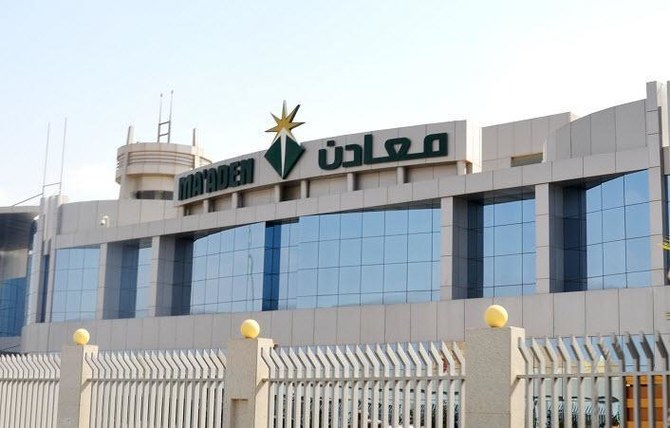
MENA Project Tracker — Ma’aden to increase phosphate production;  solar plant planned in Masdar City

Saudi Arabian Mining Co., known as Ma’aden, has decided to increase the capacity of its phosphate production complexes located in Waad Al-Shamal and Ras Al-Khair industrial hubs. 
Short Url
Updated 18 October 2022
Follow

MENA Project Tracker — Ma’aden to increase phosphate production;  solar plant planned in Masdar City

RIYADH: Saudi Arabian Mining Co., known as Ma’aden, has decided to increase the capacity of its phosphate production complexes located in Waad Al-Shamal and Ras Al-Khair industrial hubs. 

According to a MEED report, UK-headquartered Petrofac has secured the engineering, procurement and construction contracts for both facilities. 

“Ma’aden received bids for the packages in May and, presumably, is in the process of finalizing budgetary approvals and other sanctions (with the Saudi government) for the project,” one source told MEED. 

Another source said: “It could be a while before the EPC contracts are awarded, but for now, Petrofac appears to be leading the race and is in discussions with Ma’aden.” 


Solar plant in Abu Dhabi’s Masdar City

Emerge, a joint venture between Masdar and EDF, has signed an agreement with Khazna Data Centers to develop a ground-mounted solar photovoltaic plant at Abu Dhabi’s Masdar City project. 

According to a report in Trade Arabia, the plant will be used to power Khazna’s new data center in the city. 

The report noted that the plant has received Abu Dhabi’s Department of Energy Solar Photovoltaic self-regulating generation license, and it will have an installed capacity of 7-MW peak. 

“This agreement with Khazna Data Centers advances Abu Dhabi’s commitment to sustainability and high-tech industry, and extends Emerge’s range of offerings,” said Michel Abi Saab, general manager of Emerge.

He added: “By providing and managing a reliable source of clean energy, Emerge will enable Khazna to focus on providing high-quality data center services to its clients within Masdar City and beyond.”


Kuwait forecasts 54.7% rise in fiscal deficit as oil revenues weaken 

Updated 11 sec ago
Follow

Kuwait forecasts 54.7% rise in fiscal deficit as oil revenues weaken 

JEDDAH: Kuwait expects its fiscal deficit to widen sharply in the 2026–2027 budget year as lower oil income weighs on public finances, with the shortfall projected to rise 54.7 percent to 9.8 billion dinars ($31.9 billion). 

Announcing the draft budget, Finance Minister Yaqoub Al-Refaei estimated total expected revenues at 16.3 billion dinars, marking a 10.5 percent decline compared with the previous fiscal year. 

Kuwait is pushing Vision 2035 reforms to diversify its economy and boost non-oil growth but remains exposed to oil price volatility despite moderate inflation and strong non-oil expansion. 

“The minister disclosed that oil revenues were budgeted at 12.8 billion dinars, a 16.3 percent contraction compared to the current budget ending March 31, 2026,” the Kuwait News Agency, known as KUNA, reported. 

Highlighting a positive trend for fiscal diversification, non-oil revenues are projected to rise 19.6 percent to 3.5 billion dinars. 

He noted that total expenditure is expected to reach 26.1 billion dinars, with salaries and subsidies accounting for 76 percent, capital spending 11.8 percent, and other expenditures 12.2 percent. The FY 2026–2027 budget is based on a conservative oil price estimate of $57 per barrel. 

The minister, however, stressed that Kuwait’s fiscal break-even price — the price needed to balance the budget — is significantly higher, at $90.5 per barrel. 

The draft budget, covering April 1, 2026, to March 31, 2027, includes capital spending of 3.1 billion dinars, with significant allocations for infrastructure and strategic projects, according to a release by the Ministry of Finance. 

Of this, 318 million dinars will fund the Ministry of Public Works for developments such as Mubarak Al-Kabeer Port, the Umm Al-Hayman plant expansion, the North Kabd station, and the expansion of Kuwait International Airport’s Terminal 2. 

Additional allocations support the health ministry’s cancer control center, as well as the Defense and Interior ministries for military equipment. 

Higher spending is also driven by a 741.2 million-dinar increase in the public treasury’s contribution to social insurance to cover pension fund deficits. 

Conversely, support for fuel used in power generation and refined products declined by 449.2 million dinars due to falling global oil prices. 

The ministry highlighted that the budget would create 14,518 new positions, reflecting efforts to boost employment while continuing to diversify revenue sources.