

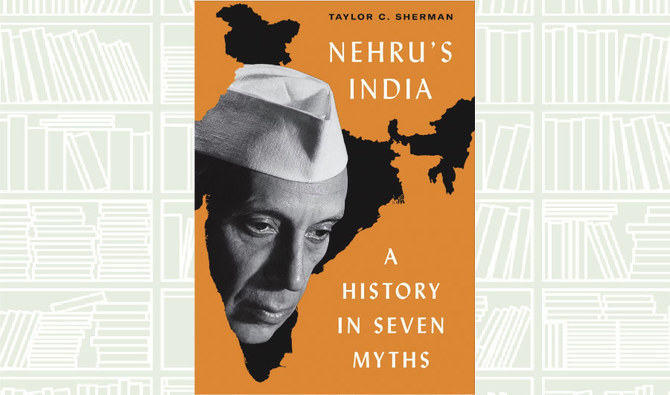
What We Are Reading Today: Nehru’s India; A history in seven myths

Short Url
Updated 17 October 2022
Follow

What We Are Reading Today: Nehru’s India; A history in seven myths

Edited by Karen Bakker

Nehru’s India brings a provocative but nuanced set of new interpretations to the history of early independent India. Drawing from her extensive research over the past two decades, Taylor Sherman reevaluates the role of Jawaharlal Nehru, India’s first prime minister, in shaping the nation. She argues that the notion of Nehru as the architect of independent India, as well as the ideas, policies, and institutions most strongly associated with his premiership — nonalignment, secularism, socialism, democracy, the strong state, and high modernism — have lost their explanatory power. They have become myths.

Sherman examines seminal projects from the time and also introduces readers to little-known personalities and fresh case studies, including India’s continued engagement with overseas Indians, the importance of Buddhism in secular India, the transformations in industry and social life brought about by bicycles, a riotous and ultimately doomed attempt to prohibit the consumption of alcohol in Bombay, the early history of election campaign finance, and the first state-sponsored art exhibitions. The author also shines a light on underappreciated individuals, such as Apa Pant, the charismatic diplomat who influenced foreign policy from Kenya to Tibet, and Urmila Eulie Chowdhury, the rebellious architect who helped oversee the building of Chandigarh.


What We Are Reading Today: ‘The Bell Jar’

Photo/Supplied
Updated 20 December 2025
Follow

What We Are Reading Today: ‘The Bell Jar’

  • The bell jar — clear, enclosing, and distorting the air she breathes — becomes the perfect image of Greenwood’s entrapment. Just as telling is the fig tree she imagines, with each fig representing a possible future: writer, traveler, mother, lover

Author: Sylvia Plath

Sylvia Plath’s “The Bell Jar” (1963) is a raw and luminous portrait of a young woman standing at the edge of adulthood, grappling with ambition, doubt, and the suffocating weight of expectation. 

Through the eyes of the novel’s troubled protagonist Esther Greenwood, Plath reveals the loneliness that can lie hidden beneath achievement and the unease brought on by future expectations.  

The novel opens in New York, where Greenwood’s magazine internship seems the gateway to success. Yet the city’s glamor soon feels hollow, and the confidence around her thin and brittle. 

Her sense of direction begins to fade, and the life laid out before her starts to feel both too small and impossibly distant.  

The bell jar — clear, enclosing, and distorting the air she breathes — becomes the perfect image of Greenwood’s entrapment. Just as telling is the fig tree she imagines, with each fig representing a possible future: writer, traveler, mother, lover. 

Torn between these possibilities, she hesitates until the figs shrivel and drop. This image, perhaps more than any other, reveals how fear of choice can quietly undo a person.   

Plath’s writing is sharp and deeply humane. She exposes the subtle pressures shaping women’s lives at that time without sentiment or complaint. 

The narrative’s erratic rhythm mirrors the character’s disoriented state of mind, where thought and memory blur at the edges. 

“The Bell Jar” speaks to anyone who has felt caught between possibility and paralysis, between who they are and who they are expected to be. 

Plath writes with precision and compassion, turning confusion into clarity and despair into something almost inspiring.