

In Pakistan’s northern region, a museum to preserve Baltistan’s forgotten cultural history

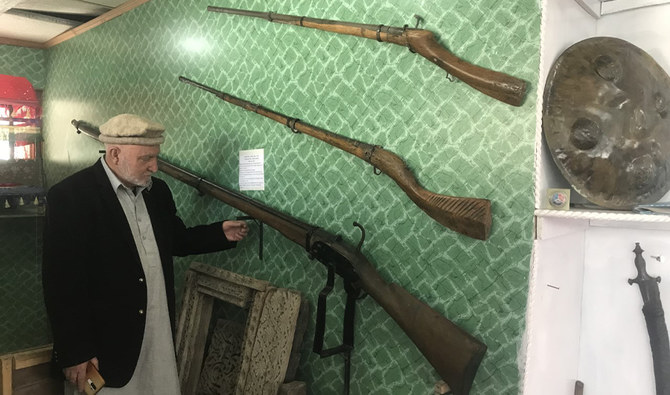
Dr. Hassan Khan Amacha poses for a photo in front of a 10-foot-long antique firearm at his museum in Shigar, Pakistan, on October 10, 2022. (AN Photo)
Short Url
Updated 17 October 2022
Follow

In Pakistan’s northern region, a museum to preserve Baltistan’s forgotten cultural history

  • Muhammad Hassan Khan Amacha took the initiative to set up the facility in Shigar, once ruled by his family
  • The 78-year-old retired doctor says he embarked on the project to keep the history of his forefathers alive

SHIGAR: A man belonging to a royal family that once ruled what is now a scenic district of Pakistan’s northern Gilgit-Baltistan region said in a recent interview with Arab News that he decided to turn a portion of his residence into a museum to preserve his area’s culture by collecting its historic artefacts. 

A medical doctor by profession, Muhammad Hassan Khan Amacha continues to live in Shigar which used to be governed by his family in the past. The district is internationally known to backpackers and high-altitude climbers since it is a major tourist destination and the main gateway to the world’s second tallest K2 mountain. 

“There is no connection between my profession and the museum since I am a doctor,” said the 78-year-old owner of the facility. “However, I belong to the royal family and over 50 items and a few books displayed here come from my own house.” 

Asked about his motivation to undertake the project, Amacha said that he wanted to keep the history of his forefathers alive. 

“I am also writing a book on Shigar,” he continued. “Its content is almost ready and tells the story of this place and its rulers.” 
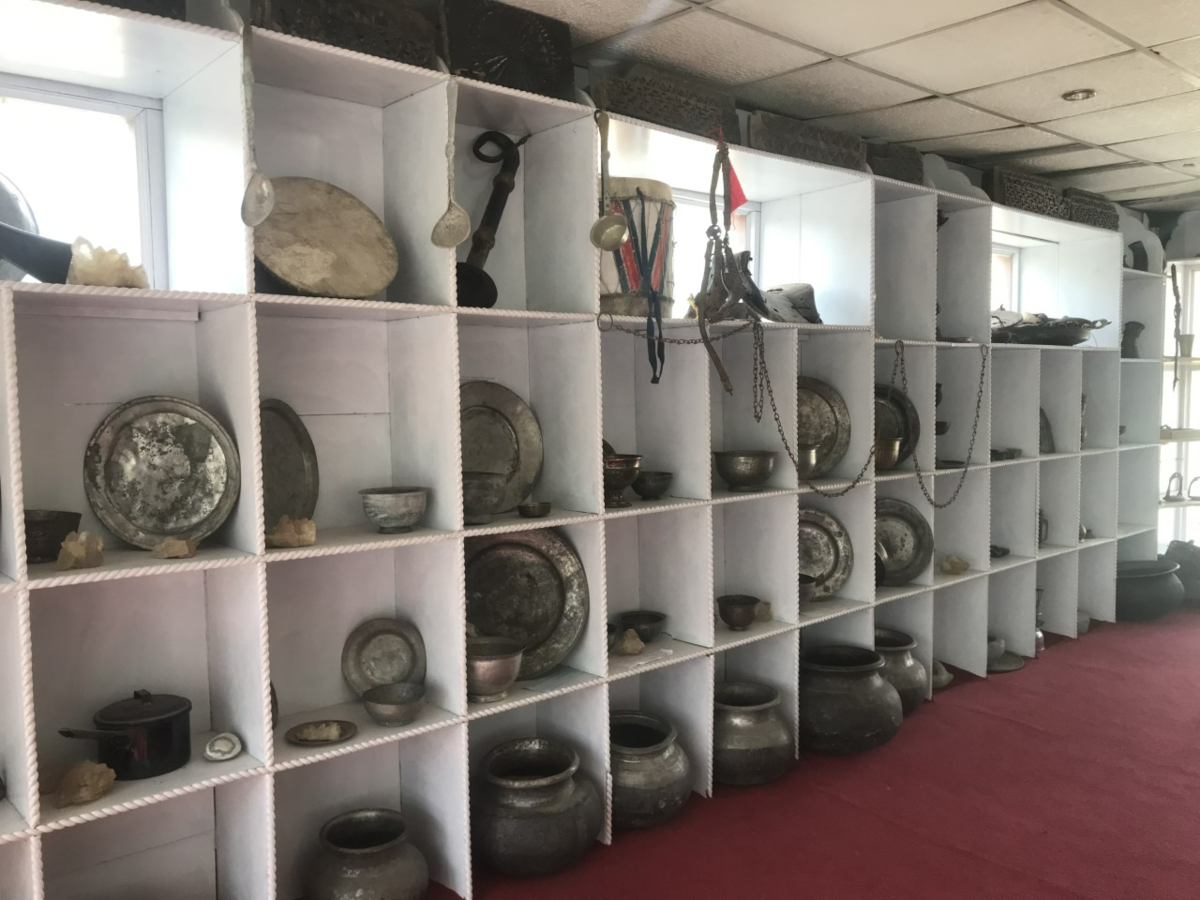


Historical and cultural items of Baltistan region are on the display at a museum in Shigar, Pakistan, on October 10, 2022.  (AN Photo)

He said that his decision to build the museum elicited an enthusiastic response from the residents of the area. 

“Many people decided to present rare and valuable items belonging to their forefathers to me,” Amacha added. “Some also sold interesting artefacts in their possession. Now there are over 200 items in the museum.” 

Among the museum assets is a 10-foot-long antique firearm which is thought to be over 400 years old. 

“There are 18 rifles in the museum,” he said. “The length of one of them is 10 feet and I have not seen such a weapon in any other part of the country.” 

Amacha said the rifle had been used in a war fought in 1634 when the Mughal army, under Shah Jahan’s rule, tried to invade Baltistan. 


Kettles used by the residents of Baltistan region in the past are on the display at a museum in Shigar, Pakistan, on October 10, 2022. (AN Photo)

He maintained it was specifically designed for the war which had to be fought in the mountainous region. 

Other museum items include local kettles, stone pots and hookahs which were preferred by smokers in olden days. 

“The long rifles, pitchers, samovars and stone pots are my favorite,” he said while curating the facility with pride. “One of the pitchers was found a few years ago when a resident of Shigar was digging the land to build a house. It is also the oldest thing here.” 


Pakistan launches double-decker buses in Karachi after 65 years to tackle transport woes

Updated 11 sec ago
Follow

Pakistan launches double-decker buses in Karachi after 65 years to tackle transport woes

  • Karachi citizens will be able to travel in double-decker buses from Jan. 1, says Sindh government
  • City faces mounting transport challenges such as lack of buses, traffic congestion, poorly built roads

ISLAMABAD: The government in Sindh province on Wednesday launched double-decker buses in the provincial capital of Karachi after a gap of 65 years, vowing to improve public transport facilities in the metropolis. 

Double-decker buses are designed to carry more passengers than single-deck vehicles without taking up extra road space. The development takes place amid increasing criticism against the Sindh government regarding Karachi’s mounting public transport challenges and poor infrastructural problems. 

Pakistan’s largest city by population faces severe transportation challenges due to overcrowding in buses, traffic congestion and limited bus options. Commuters, as a result, rely on private vehicles or unregulated transport options that are often unsafe and expensive.

“Double-decker buses have once again been introduced for the people of Karachi after 65 years,” a statement issued by the Sindh information ministry said. 

Sindh Transportation Minister Sharjeel Inam Memon and Local Government Minister Syed Nasir Hussain Shah inaugurated the bus service. The ministry said the facility will be available to the public starting Jan. 1. 

The statement highlighted that new electric bus routes will also be launched across the entire province starting next week. It added that the aim of introducing air-conditioned buses, low-fare services, and fare subsidies is to make public transport more accessible to the people.

The ministry noted that approximately 1.5 million people travel daily in Karachi using the People’s Bus Service, while around 75,000 passengers use the Orange Line and Green Line BRT services.

“With the integration of these routes, efforts are being made to benefit up to 100,000 additional people,” the ministry said.