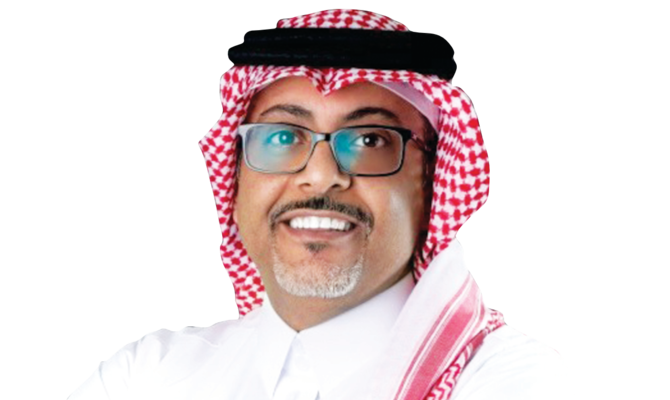
Who’s Who: Nawaf Tawfeq Al-Duaij, executive director at the Royal Commission for AlUla

Nawaf Tawfeq Al-Duaij
Short Url
Updated 16 October 2022
Follow

Who’s Who: Nawaf Tawfeq Al-Duaij, executive director at the Royal Commission for AlUla

Nawaf Tawfeq Al-Duaij is the executive director of administrative affairs at the Royal Commission for AlUla, a position he took up in May 2019.

The Royal Commission for AlUla was established in July 2017 to preserve and develop the 2,000-year-old historical archaeological site of AlUla in north-western Saudi Arabia.

Al-Duaij is responsible for synchronizing administrative and programming departments, making cross-departmental processes more effective, and building personnel relations.

He has established companies in both the Royal Commission for AlUla and the Public Investment Fund, with an estimated capital of SR2 billion ($532 million).

Al-Duaij has also held two positions in AlUla Development Co. — adviser to the CEO and interim chief of shared services.

Before joining the Royal Commission for AlUla, Al-Duaij worked briefly as an administration affairs associate director with the Red Sea Development Co. where he helped develop the KPIs of the administrative affairs department.

He previously worked as an administrative affairs manager at the delivery and rapid intervention center, affiliated with the Council of Economic and Development Affairs, helping to achieve the goals of Saudi Vision 2030 by managing a number of Saudi “seasons” from planning through to implementation.

In 2016, Al-Duaij worked as director of administrative affairs at the Saudi Arabian Olympic Committee. He has also worked at Accenture, an Irish-American professional services company based in Dublin, specializing in information technology services and consulting, and as an administrative manager at the private office of Crown Prince Mohammed bin Salman.

He graduated from King Abdulaziz University with a bachelor’s degree in public administration and later obtained a master’s degree in public administration from the Mohammed bin Rashid School of Government in Dubai.


Saudi deputy foreign minister calls for Sudanese unity during meeting in Cairo

Updated 14 January 2026
Follow

Saudi deputy foreign minister calls for Sudanese unity during meeting in Cairo

  • Waleed Al-Khuraiji says a political solution to the civil war in Sudan must be based on respect for its sovereignty
  • He rejects quasi-government formed by one of the warring factions in July, denounces external intervention in form of weapons supplies and foreign fighters

LONDON: Saudi Arabia’s deputy foreign minister, Waleed Al-Khuraiji, on Wednesday stressed the important need to maintain the territorial integrity of Sudan.

Speaking at the fifth Sudan peace coordination meeting in Cairo, he said a political solution to the civil war that began in April 2023 must be based on respect for Sudanese sovereignty and unity.

He highlighted the efforts the Kingdom is making in an attempt to ensure stability in Sudan, help reach a ceasefire agreement that ends the conflict, prevent the collapse of state institutions, and maintain the unity, territorial integrity and capabilities of the country, the Saudi Press Agency reported.

Al-Khuraiji also said that Saudi efforts to address the worsening humanitarian crisis caused by the war are continuing, in an attempt to alleviate the suffering of the Sudanese people.

It is important that the conflicting factions return to political dialogue, he added, as stated in the Jeddah Declaration of May 2023 and the short-term ceasefire deal that was agreed that same month.

The war in Sudan, between rival military factions the Sudan Armed Forces and the paramilitary Rapid Support Forces, poses a threat to regional stability, Al-Khuraiji warned.

He rejected the quasi-government formed by the Rapid Support Forces in July last year as an obstruction to ongoing efforts to resolve the crisis, a threat to the unity and sovereignty of Sudan, and a risk to regional security and the safety of the Red Sea.

“The announcement of parallel entities outside the framework of legitimate institutions is worrying and disrupts efforts through the political track to solve the crisis,” he said.

The prevention of external intervention in the conflict, including illegal support in the form of weapon supplies and foreign fighters, is crucial for efforts to achieve a ceasefire and facilitate humanitarian operations, Al-Khuraiji added.

He also called for the establishment of safe corridors so that deliveries of aid can reach those in need, similar to a mechanism established in August last year at the Adre crossing on Sudan’s border with Chad.