Saudi Arabia celebrates arts and crafts at Cairo’s ‘Turathna’
Traditional textiles, wicker baskets, beadwork displayed
Updated 15 October 2022
SPA
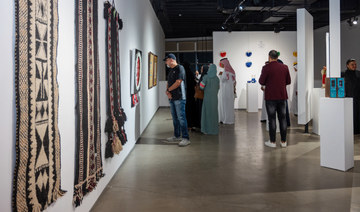
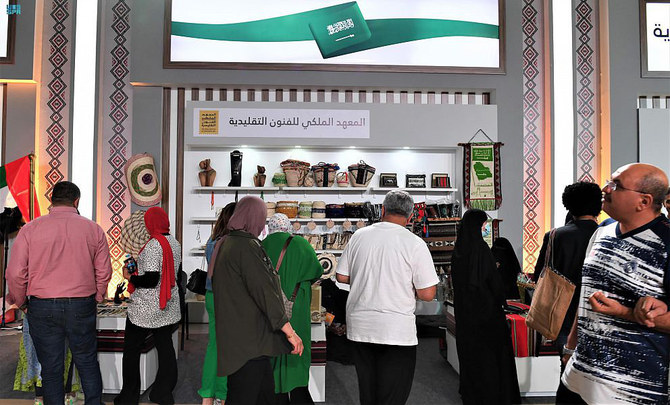
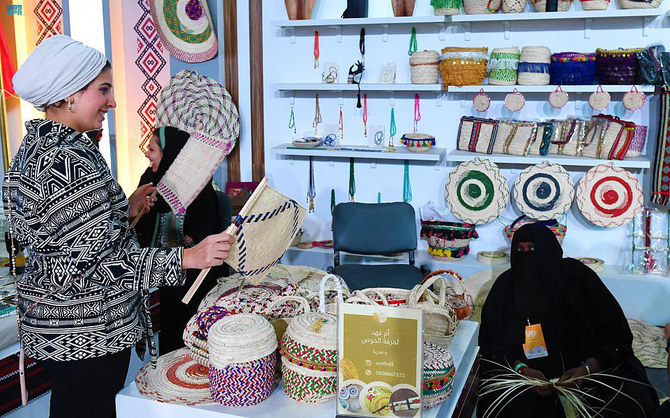
CAIRO: Saudi Arabia’s Royal Institute of Traditional Arts has been celebrating the country’s rich history at the fourth Turathna exhibition of handmade crafts in Cairo, Egypt, with a variety of locally made textiles, beadwork and baskets.
The exhibition, meaning “heritage,” which will conclude on Oct. 15, was organized by the Egyptian Ministry of Industry, Trade and Small Industries, under the patronage of President Abdel Fattah El-Sisi.
In the Kingdom’s pavilion, the institute showcased traditional textile arts such as Al-Sadu weaving, Al-Khos-braided (with palm fronds) wicker baskets, and beadwork.
There was a considerable number of visitors to the pavilion, many of whom praised the Kingdom for protecting these ancient practices as part of the country’s Vision 2030 program.
Through its exhibits, the royal institute focuses on the Kingdom’s history and culture, and assists practitioners to make a living.
The founding economy: A blueprint for stability in the First Saudi State
The establishment of the First Saudi State created a secure environment that facilitated the arrival of caravans, secured vast trade routes, and revived commerce across the Arabian Peninsula
Updated 23 February 2026
SPA
RIYADH: The economy during the founding stage of the First Saudi State served as a fundamental pillar in building the nation, consolidating its influence, and ensuring its stability. This early economic growth was inextricably linked to achieving security, unifying regions, and organizing society—factors that directly stimulated trade, stabilized markets, and enhanced the foundations of daily life in Diriyah and its surrounding areas.
According to Dr. Abdullah Al-Saleh Al-Othaimeen's "Diriyah: Origins and Development during the First Saudi State," published by the King Abdulaziz Foundation for Research and Archives (Darah), the founding economy stands as a historical model reflecting the reciprocal relationship between political stability and early economic prosperity.
Beyond its political and intellectual prominence, Diriyah emerged as a vibrant economic hub. (SPA)
The establishment of the First Saudi State created a secure environment that facilitated the arrival of caravans, secured vast trade routes, and revived commerce across the Arabian Peninsula.
Beyond its political and intellectual prominence, Diriyah emerged as a vibrant economic hub. Its active markets attracted merchants and students from across the region, all of whom benefited from the state-provided stability. The local society relied on diverse activities for its livelihood, including trade, agriculture, and livestock breeding, with horses and camels playing crucial roles in transportation, commerce, and securing roads.
The social and administrative organization upon which the state was founded ensured the continuous availability of goods and sustained market stability. Ultimately, the close relationship between public security and economic growth during this founding phase solidified Diriyah's position as a premier political and commercial center in the Arabian Peninsula.