

Iran prevents Mani Haghighi from attending BFI London Film Festival

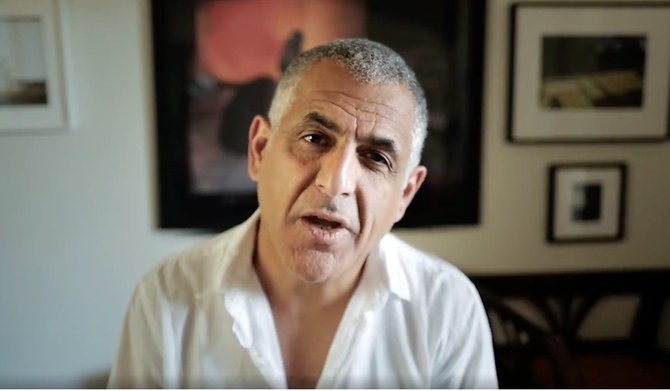
Iranian filmmaker Mani Haghighi. (Screen grab from Twitter video)
Short Url
Updated 15 October 2022
Follow

Iran prevents Mani Haghighi from attending BFI London Film Festival

  • Authorities confiscate filmmaker’s passport without ‘reasonable explanation’
  • Event is showing Haghighi’s latest movie ‘Subtraction’

DUBAI: Iranian filmmaker Mani Haghighi has been prevented from leaving Iran to attend the BFI London Film Festival, where his latest film “Subtraction” is being screened.

The movie made its debut at the Toronto International Film Festival last month, which Haghighi was able to attend. He then returned to Tehran, but when he tried to board a flight to London he was stopped by Iranian authorities without any “reasonable explanation,” he said in a video statement.

Haghighi has two theories on why he was stopped. The first is an Instagram video he posted recently criticizing Iran’s hijab laws and the crackdown on young people protesting against them.

He said that perhaps the authorities thought that by keeping him in the country they could keep a closer eye on him and shut him up.

“The very fact that I’m talking to you in this video right now kind of undermines that plan,” Haghighi said.

His second theory is that of an “exile in reverse,” whereby the authorities are forcing him to stay in Iran and making it a prison for him.

But he said: “I would rather be here than anywhere else in the world right now. So, if this is a punishment for what I’ve done, then, by all means, bring it on.”

Haghighi is not the first filmmaker to face the wrath of Iranian authorities. In July, acclaimed director Jafar Panahi was forced to serve a six-year jail sentence that had been handed down a decade ago, after he attempted to find information about fellow filmmakers Mohammad Rasoulof and Mostafa Aleahmad, who had been detained earlier.

“The BFI London Film Festival supports Haghighi and all filmmakers in their freedom to make their films and present them around the world,” a spokesperson for the event said.

“Earlier this week, in solidarity with imprisoned Iranian filmmakers and the brave women of Iran who are challenging for their freedom, BFI London Film Festival filmmakers and delegates joined Festival Director Tricia Tuttle in a moment of solidarity and reflection.”


Syria reveals new post-Assad banknotes

Updated 5 sec ago
Follow

Syria reveals new post-Assad banknotes

DAMASCUS: Syrian leader Ahmed Al-Sharaa unveiled on Monday new banknotes replacing those showing ousted ruler Bashar Assad and his family, hoping the Syrian pound can regain some of the value lost to over a decade of war.
Improving the standing of the Syrian pound is among the greatest challenges for Syria’s new authorities, who will remove two zeros, in a process known as redenomination.
The new bills, which range from 10 to 500 Syrian pounds, will enter circulation on January 1. They show images of roses, wheat, olives, oranges and other agricultural symbols for which Syria is famous.
After unveiling the banknotes, Sharaa said the new currency marks “the end of a previous, unlamented phase and the beginning of a new phase that the Syrian people... aspire to.”
“The new currency design is an expression of the new national identity and a move away from the veneration of individuals.”
Since the start of Syria’s civil war in 2011, the pound has plunged from 50 to around 11,000 against the greenback, and Syrians are forced to carry huge wads of banknotes even for basic needs like grocery shopping.
The removal of the zeros, which does not impact the currency’s value, was done to make transactions easier and restore trust in the Syrian pound.
“If someone wants to buy something simple, they need to carry bags in order to trade, so people go for dollars,” Sharaa said, adding that the currency revamp will boost “the national currency within the country and strengthen trust.”
“Syria deserves a strong economy and a stable currency.”
Syria’s old banknotes were printed in Russia, Assad’s former backer.
When asked by journalists, Syrian central bank chief Abdul Qadir Al-Hasriya did not specify where the new currency will be printed.