

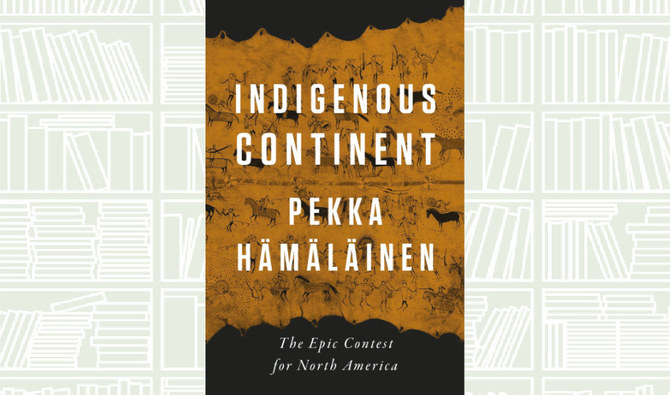
What We Are Reading Today: Indigenous Continent; The Epic Contest for North America

Short Url
Updated 11 October 2022
Follow

What We Are Reading Today: Indigenous Continent; The Epic Contest for North America

In “Indigenous Continent,” acclaimed historian Pekka Hämäläinen presents a sweeping counternarrative that shatters the most basic assumptions about American history.

Shifting our perspective away from Jamestown, Plymouth Rock, the Revolution, and other well-trodden episodes on the conventional timeline, he depicts a sovereign world of Native nations whose members, far from helpless victims of colonial violence, dominated the continent for centuries after the first European arrivals.

From the Iroquois in the northeast to the Comanches on the Plains, and from the Pueblos in the southwest to the Cherokees in the southeast, Native nations frequently decimated white newcomers in battle. Even as the white population exploded and colonists’ land greed grew more extravagant, Indigenous peoples flourished due to sophisticated diplomacy and leadership structures.

Hämäläinen ultimately contends that the very notion of “colonial America” is misleading, and that we should speak instead of an “Indigenous America” that was only slowly and unevenly becoming colonial.

The evidence of Indigenous defiance is apparent today in the hundreds of Native nations that still dot the US and Canada.


What We Are Reading Today: Three Roads Back by Robert D. Richardson

Updated 06 March 2026
Follow

What We Are Reading Today: Three Roads Back by Robert D. Richardson

In “Three Roads Back,” Robert Richardson, the author of magisterial biographies of Ralph Waldo Emerson, Henry David Thoreau, and William James, tells the connected stories of how these foundational American writers and thinkers dealt with personal tragedies early in their careers. 
For Emerson, it was the death of his young wife and, 11 years later, his five-year-old son; for Thoreau, it was the death of his brother; and for James, it was the death of his beloved cousin Minnie Temple. 

Filled with rich biographical detail and unforgettable passages from the journals and letters of Emerson, Thoreau, and James, these vivid and moving stories of loss and hard-fought resilience show how the writers’ responses to these deaths helped spur them on to their greatest work, influencing the birth and course of American literature and philosophy.
As Richardson shows, all three emerged from their grief with a new way of seeing, one shaped by a belief in what Emerson called “the deep remedial force that underlies all facts.”