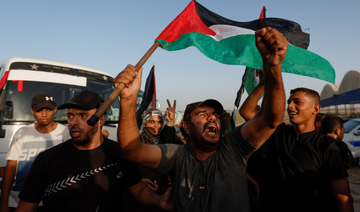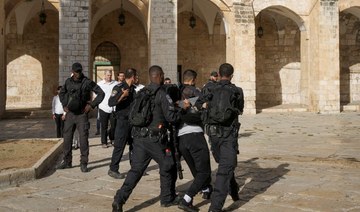
RAMALLAH: Hundreds of settlers protected by Israeli police stormed the Al-Aqsa compound in East Jerusalem for a second day as tensions soared during the Jewish new year.
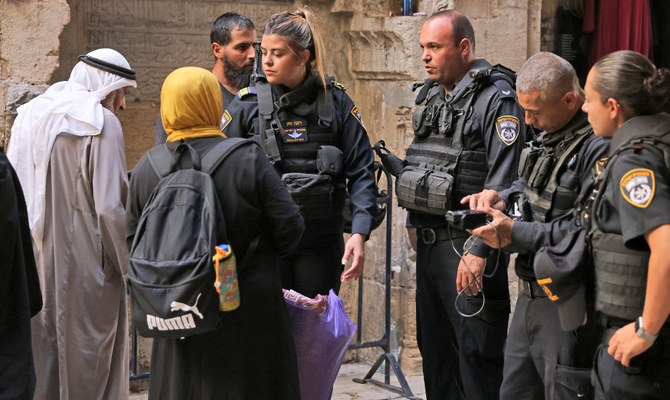
Dozens of Palestinian men and women remained inside Al-Aqsa to defend it as police prevented others under 40 from entering, deployed officers on horseback and used drones to monitor the grounds.
Despite the restrictions, dozens of Muslims were able to perform pre-dawn prayers shortly before the settlers moved in.
At least two Palestinians inside the compound were arrested for using religious chants to disrupt the settlers as they performed new year rituals in the compound’s courtyards.
A Palestinian security official told Arab News that Israeli police had deployed in large numbers throughout East Jerusalem and imposed restrictions on worshippers as part of a well-rehearsed tactic to prevent protests.
“The number of Israeli police escorting the intrusive settlers is equal to the number of settlers, and this reflects the extent of the precautions to secure the incursions,” he said, adding that Palestinians “reject the desecration of Al-Aqsa by settlers.”
The huge police operation was also geared towards dissuading Palestinian from allowing their children to go to Al-Aqsa, he added, but warned that the situation could boil over if anyone was assaulted or killed by the police.
Israeli police had not sought coordination with the Palestinian security services, the official added.
Meanwhile, top Israeli police officer Maj. Gen. Yacov Shabtai toured the mosque, accompanied by several officers.
The Palestinian Foreign Ministry said turning the area around Al-Aqsa into a virtual military barracks and imposing restrictions on Muslim worshippers was “like reoccupying the holy city of Jerusalem and its old city by force.”
It warned of the consequences of the “gradual Judaization” of the mosque and its courtyards, saying such moves were a “blatant attack” on the beliefs of millions of Muslims and the “legal and legitimate right” of the Islamic Awqaf Department “to supervise the movement of worshippers.”
Meanwhile, Palestinians reacted with anger to President Mahmoud Abbas’s greetings to Israeli Defense Minister Benny Gantz on the Jewish new year.
Gantz asked Abbas during a call to ensure that the Palestinian security services made every effort to prevent an escalation in the West Bank during the new year holidays.
In reply, a Fatah member in Ramallah told Arab News: “Abbas didn’t surrender Jerusalem during his call with Gantz. It was a courtesy call, nothing more than that.”