


ISLAMABAD: Pakistani foreign minister Bilawal Bhutto Zardari said on Thursday engagement with neighbor and archrival India was “untenable” over what he called its anti-Muslim policies, especially in Indian-administered Kashmir, adding that India had not offered flood aid to Islamabad.
The Muslim-majority Himalayan region of Kashmir has been at the heart of more than 70 years of animosity since the partition of the British colony of India into the separate countries of Muslim Pakistan and majority Hindu India. Both rule parts of the region but claim it in full.
Ties between the nuclear-armed rivals have been particularly strained since a suicide bombing of an Indian military convoy in Kashmir in 2019 that New Delhi says was carried out by Pakistan-based militants. The bombing led to India sending warplanes to Pakistan. Islamabad denies state complicity in any attacks in Indian-administered Kashmir.
In August 2019, Indian Prime Minister Narendra Modi withdrew Indian-administered Kashmir’s autonomy in order to tighten his grip over the territory, provoking outrage in Pakistan and the downgrading of diplomatic ties and suspension of bilateral trade.
“Unfortunately, the India today is a changed India … it is no longer the secular India promised by its founding fathers for all its citizens,” Bhutto Zardari said in an interview with a French TV channel when the host asked if India had sent aid to help victims of cataclysmic floods. “It is increasingly becoming a Hindu-supremacist India at the expense of its Christian and Muslim minorities.”
“We have seen certain steps and actions that had made engagement with India untenable for us, particularly the unilateral illegal actions of August 2019,” the foreign minister added. “All of this creates very little space for us to engage.”
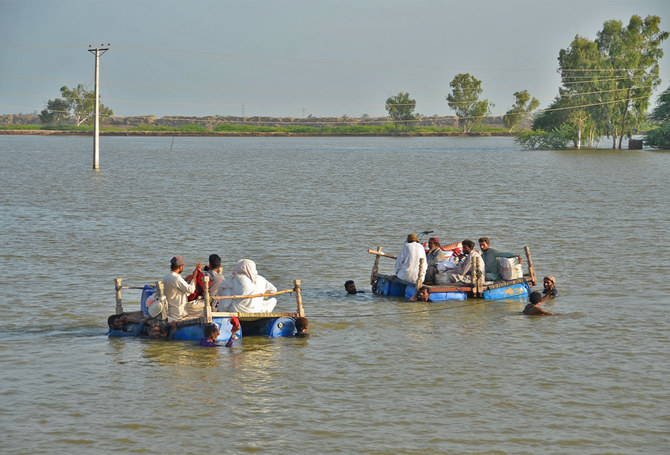
When asked if India had sent aid after the recent catastrophic floods that have killed almost 1,600, the Pakistani leader said: “No.”
When asked if Pakistan had requested assistance from India, he added: “No.”
On Wednesday, Bhutto Zardari drew the world’s attention to the ongoing conflict in Indian-administered Kashmir, calling for a “just and lasting” solution while speaking at a meeting of the OIC Contact Group on Jammu and Kashmir on the margins of the 77th United Nations General Assembly Session in New York on Wednesday.
The group reviewed the political and security environment in Kashmir Valley and what it called “the deteriorating humanitarian and human rights situation” there.
The Contact Group comprises Azerbaijan, Niger, Pakistan, Saudi Arabia and Turkey.
OIC Secretary General Hissein Brahim Taha chaired the meeting and in his opening remarks reaffirmed the OIC’s commitment to a “peaceful settlement of the Jammu and Kashmir dispute in accordance with the relevant resolutions of the United Nations and the OIC Summits and Council of Foreign Ministers.”
He also presented a report on the implementation of an action plan agreed upon during the last meeting of the Contact Group in March 2022 in Islamabad.
Speaking at the Contact Group meeting, Bhutto Zardari drew attention to “the worsening situation” in Kashmir since August 2019.
Indian security forces, he said, “continued to conduct cordon-and-search operations, put down protests violently, indiscriminately use pellet guns, imprison Kashmiri political leaders, abduct and torture children and women, and stage fake encounters.”
“The Foreign Minister stressed that durable peace and stability in South Asia would remain tense and fragile without a just and lasting solution to the Jammu and Kashmir dispute in accordance with United Nations Security Council resolutions and the wishes of the Kashmiri people,” the foreign office said in a statement.
The meeting of the Contact Group concluded with the adoption of a joint communiqué that “unequivocally reaffirmed the OIC’s position and resolutions on the Jammu and Kashmir dispute.”


