TEHRAN: Iranian police fired tear gas on Saturday to disperse a protest rally in the country’s west following the funeral ceremony for a young woman who died while in police custody in Tehran earlier this week, the semi-official Fars news agency reported.
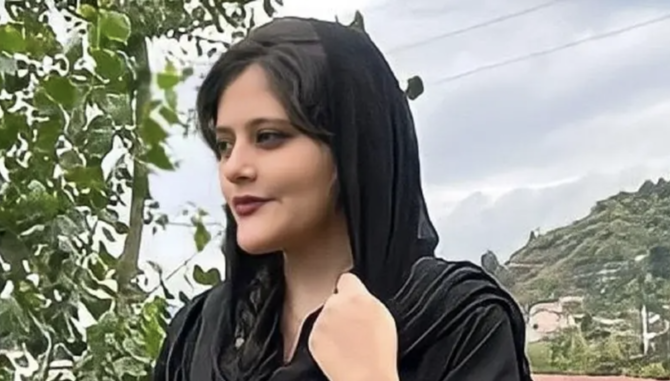
The police have said that 22-year-old Mahsa Amini, who was detained on Tuesday after Iran’s so-called “morality police” found fault with her headscarf, or hijab, had died of a heart attack. The police have also released closed circuit footage from the police station, which they say shows the moment Amini collapsed. A relative has said she had no history of heart disease.
According to the Fars report, after Amini’s funeral in the city of Saqez, about 460 kilometers (280 miles) west of the capital, Tehran, some protesters gathered in front of the governor’s building, chanting slogans. The report did not elaborate.
After police showed up and fired tear gas, the protesters dispersed. There was no immediate information about any injuries.
Videos posted on social media Saturday purported to show protesters in Saqez chanting anti-government slogans but the Associated Press could not authenticate the videos or confirm the location in the footage.
Amini’s death triggered an outcry against the morality police from celebrities and prominent figures on social media. Iran’s judiciary launched an investigation into her death.
The headscarf has been compulsory for women in Iran since after the 1979 Islamic Revolution and members of the morality police enforce the strict dress code. The force has been criticized in recent years over its treatment of people, especially young women, and videos uploaded on social media have shown officers forcing women into police vehicles.
Since 2017, after dozens of women publicly took off their headscarves in a wave of protests, authorities have adopted tougher measures.
However, the reformist Etemad Melli political party urged Iran’s parliament to cancel the law on the mandatory hijab and suggested President Ebrahim Raisi do away with the morality police.
The Kasra hospital in Tehran, where police took Amini after she collapsed and slipped into a coma, said she was brought in without vital signs.
Oscar-winning Iranian filmmaker Asghar Farhadi, who rarely reacts publicly to events in Iran, expressed sorrow and called Amini’s death in custody a “crime.”
Iranian hard-liners have called for harsh punishment and even lashes of women who disobey the hijab law, arguing that allowing women to show their hair leads to moral decay and the disintegration of families. The judiciary has in recent years urged people to inform on women who do not wear the hijab.


![]()

Iran police fire tear gas as protests erupt at funeral of woman arrested by morality police
Short Url
https://arab.news/2x9fj
Iran police fire tear gas as protests erupt at funeral of woman arrested by morality police
- Videos posted on social media Saturday purported to show protesters in Saqez chanting anti-government slogans
- Reformist Etemad Melli political party urged Iran’s parliament to cancel the law on the mandatory hijab


Latest updates


Recommended


© 2026 SAUDI RESEARCH & PUBLISHING COMPANY, All Rights Reserved And subject to Terms of Use Agreement.