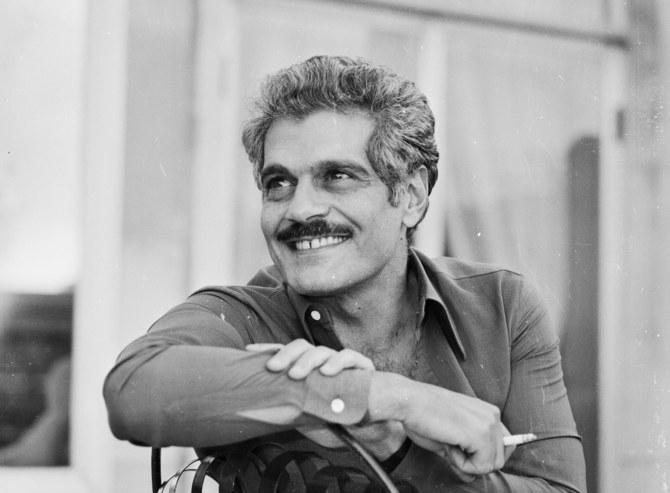

DUBAI: In the history of Arab cinema, no star has shone brighter than Omar Sharif. The legendary Egyptian actor, who became Arab cinema’s first major crossover star after 1962’s “Lawrence of Arabia” catapulted him to international fame, had talent so copious and personality so large that his presence has only grown in the public consciousness since his death in 2015, as the film world continues to search for his true successor.
Current Egyptian superstar Asser Yassin, one of a few actors to have been dubbed ‘The next Omar Sharif,’ knows that search is futile.
“I was always compared to him and even told that I would be his successor. I’d always reply, ‘There will be only one Omar Sharif,’” Yassin tells Arab News.
Born in Alexandria, Egypt, in 1932 as Michael Yusef Dimitri Chaloub, Sharif — who took that name when he began his filmmaking career — was raised in a multi-lingual household, his parents having moved from Zahle, Lebanon decades before his birth, and he had an early affinity for languages, picking up not only Arabic, English and his mother’s French, but Italian and Spanish, too.
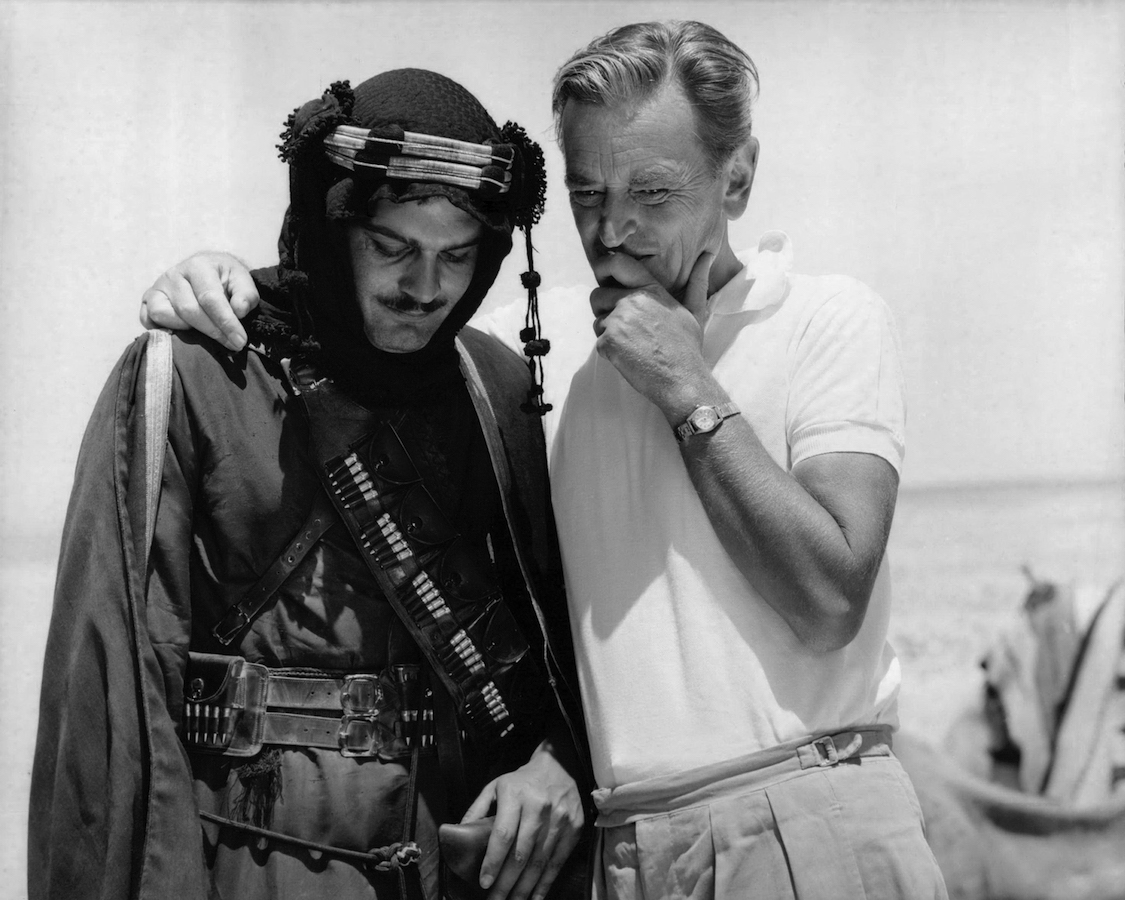
Egyptian actor Omar Sharif (left) with English director David Lean (1908 - 1991) on the set of 'Lawrence Of Arabia,' 1962. (Getty)
‘Sharif’ means nobleman, and it’s easy to see why he took to the name. His mother Claire Saada was one of the country’s most renowned socialites, hosting Egypt’s King Farouk regularly throughout Sharif’s youth, after his family moved to Cairo when he was four.
Part of the lore of how the great Sharif found his way in front of the camera has been proven to be mythmaking. Sharif studied mathematics and physics at Cairo University before moving into film, and while reports often include the note that he studied acting at the Royal Academy of Dramatic Arts in London, the school itself has no record of him ever attending.
According to renowned Egyptian filmmaker and newly appointed director of the Cairo International Film Festival Amir Ramses, the real story involved a bit more luck, and an encounter with Egypt’s most acclaimed filmmaker, Youssef Chahine.
“He was a really handsome young man who probably hadn’t dreamed of working in cinema, who got noticed by a young and talented director, who made him a star within a couple of movies (alongside) Egypt’s most prestigious actress,” Ramses tells us.
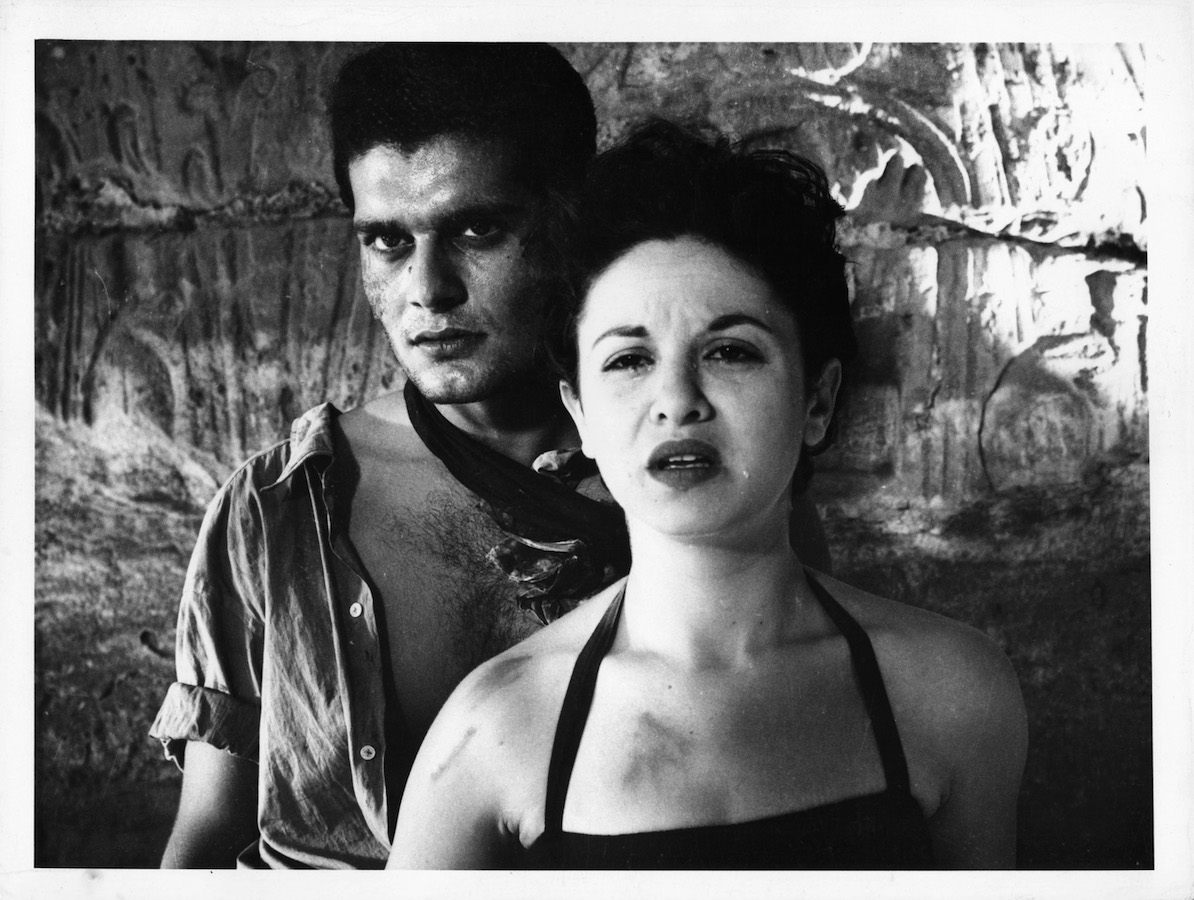
Omar Sharif and Faten Hamama in a scene from the film 'Siraa Fil-Wadi', 1954. (Getty)
Chahine, only a few years into his filmmaking career himself, cast Sharif in two films in 1954, opposite the country’s then-biggest star, Faten Hamama, who had been a major box-office draw for more than a decade.
The films, particularly “The Blazing Sun,” proved to be a huge success, and led to Sharif teaming up with Chahine again and again throughout the 50s, and quickly becoming a star himself. Oh, and marrying Hamamah.
“He proved to be a really charismatic and talented actor, which was really kind of miraculous,” says Ramses. “Most have to work for years from the time they know they want to make movies for a living before becoming a success, but for him it was a stroke of luck that led him to discover his talent. I guess that’s part of his charm.”
Luck also played its part in his step up to international fame. In 1962, English director David Lean was preparing to tell the story of Lawrence of Arabia, and demanded that his casting directors bring him Arab actors to give his film an air of authenticity.
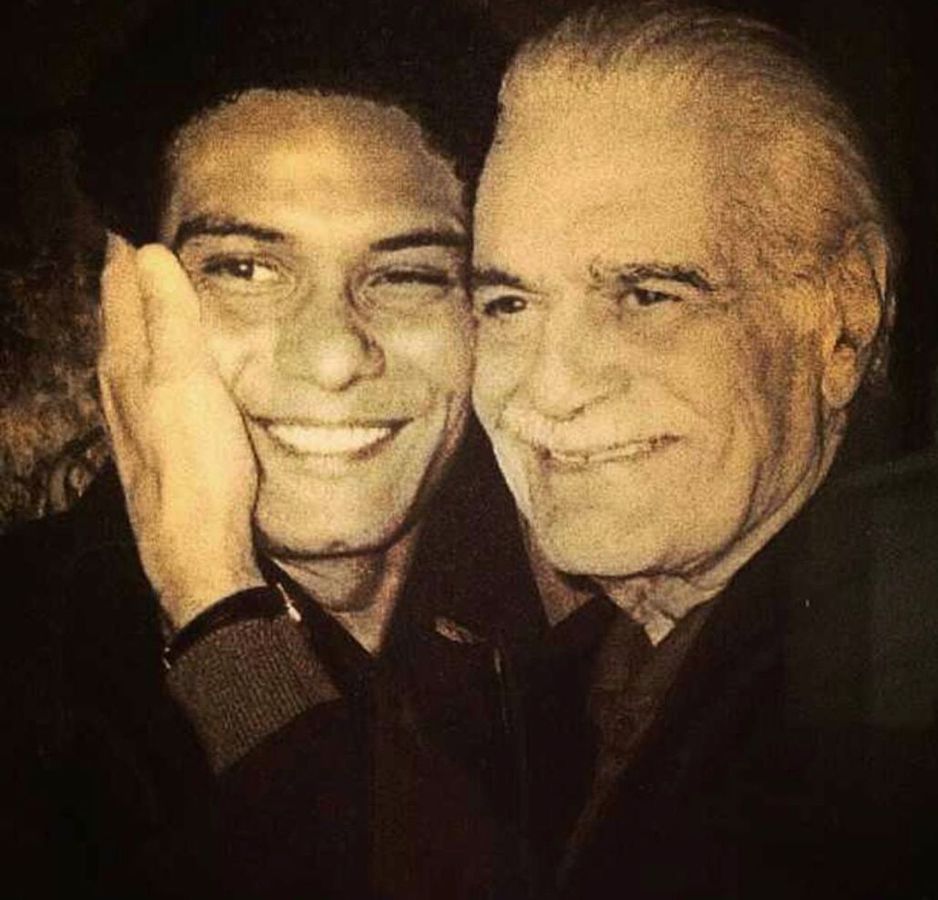
Asser Yassin and Omar Sharif. (Supplied by Asser Yassin)
Sharif, who, thanks to his childhood, spoke good English, was whisked off on a plane to the desert to meet the director.
“As we came in to land we could see (Lean) sitting all by himself,” Sharif recounted years later. “We landed right next to him, but he didn’t move one step. When I got off the plane, he didn’t say ‘Hello’. He simply walked round me to see my profile. Finally, he said, ‘That’s very good, Omar. Let’s go to the make-up tent.’”
Sharif’s role, a fictional envoy named Sherif Ali, though the most physically demanding of his career (“Lean hated actors. I was one of the only actors he actually liked, in all his life” the actor said later), was an instant hit, earning him an Academy Award nomination for Best Actor in a Supporting Role and winning him two Golden Globes (for the same role — it was the 60s, and it’s the Globes), as well as netting him a long-term deal with Columbia Pictures. And so Sharif spent the majority of his subsequent decades in Hollywood and Europe.
While he instantly became recognizable, Sharif was very conscious of being an Arab in an underrepresented environment, causing him to tread lightly behind the scenes in those early years, and accept less money than he thought he deserved.
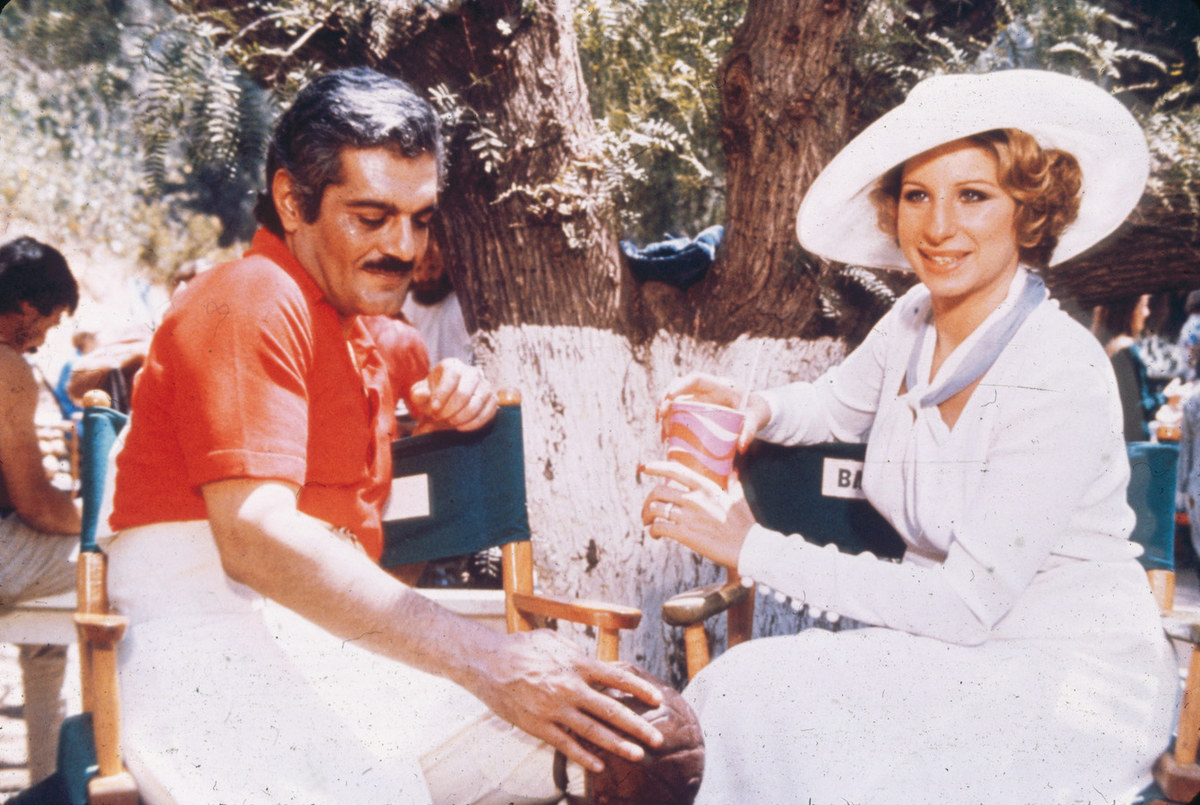
American actress and singer Barbra Streisand with co-star Omar Sharif on the set of the movie 'Funny Lady', 1975. (Getty)
“I had to be very careful. For example, Columbia Pictures signed a five-year contract with me when I had made ‘Lawrence of Arabia,’ but they didn’t pay me anything,” Sharif said later.
His gamble paid off, however. Sharif went from sidekick to leading man, starring in a number of the decade’s most popular films, including Lean’s 1965 epic “Doctor Zhivago,” and the ever-popular romantic comedy “Funny Girl,” opposite Barbara Streisand in her first film role, in 1968.
From that point, though, Sharif’s remarkable rise tapered off. While the roles continued to pour in, Sharif seemed to lose his previously spot-on knack for picking good projects. Or perhaps he stopped trying as hard to do so.
“I went 25 years without making a good film,” he said candidly years later. “I had to work all the time to support my family and myself, and all my expensive tastes. It got to the stage where my own grandchildren were making fun of my films. I decided it was time to stop, to keep some dignity, and wait for something that I felt enthusiastic about.”
Towards the end of his life, it was once again the Arab world in which he often found his strongest inspiration, with acclaimed films such as “The Traveller,” which garnered Sharif standing ovations at the Venice International Film Festival in 2009.
Renowned Egyptian actor Amr Waked — Sharif’s co-star in the film — remembers their trip to Venice vividly, he tells Arab News.
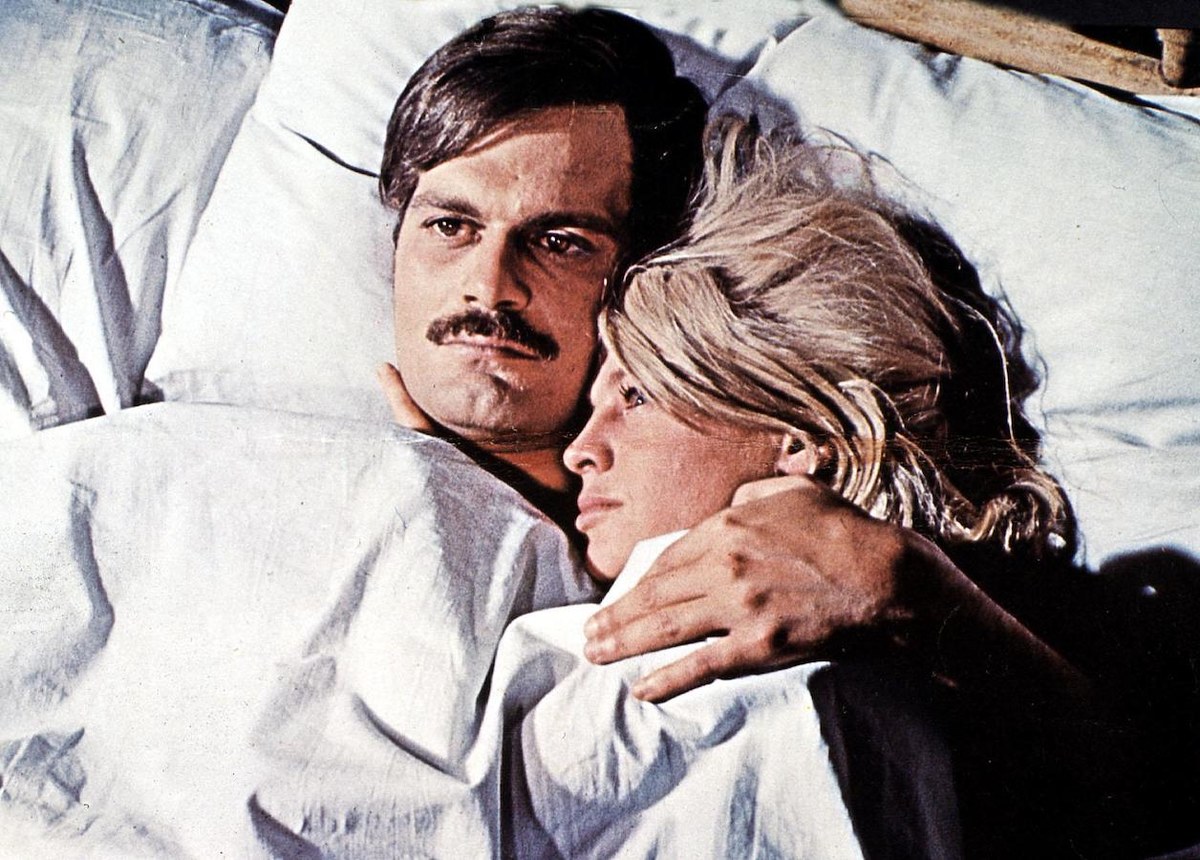
Omar Sharif, Julie Christie in 'Doctor Zhivago.' Getty
“When we were leaving, we were on the same flight together to Paris. I can tell you, there wasn’t a single person in either airport that did not stand in respect to Omar Sharif as he was passing,” says Waked.
Lebanese filmmaker Daizy Gedeon, who directed Sharif in her film “Lebanon... Imprisoned Splendour” in 1996 and continued a friendship with him for years afterwards, was always amazed not only by Sharif’s talent in front of the camera, but his fantastic charisma in everyday life as well — the mark of a true star.
“He loved acting, and he found a way to express the identity of an Arab in a way that people had never really seen,” says Gedeon. “When we met over the years across the world, every head in the room would turn, and he would draw the attention of every woman, because, even as he aged, he still looked stunningly handsome. His presence was unlike any other.”
Even though Sharif died in 2015 at the age of 83, his legacy is such that he remains a major presence in the world of cinema, both regionally and internationally.
“He’s one of those people who didn’t die, actually. His work still lives with us. We all will die before his work,” says Waked. “There was something inside of him that just glowed.”
There will be only one Omar Sharif. But we were lucky to get even one.