


UAE rabbi marries in Abu Dhabi on anniversary of Abraham Accords

1 / 13
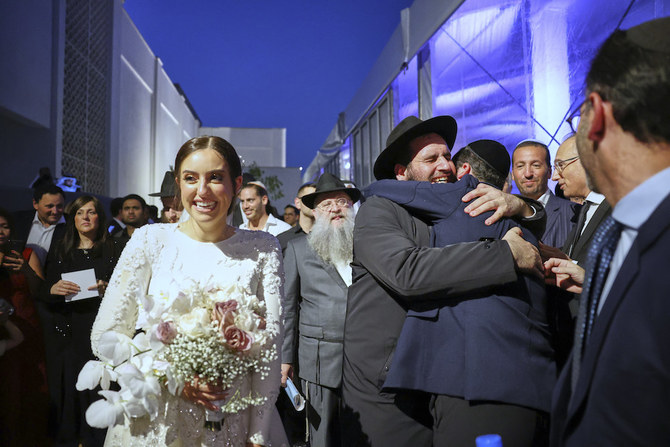
Two years after the signing of the Abraham Accords, normalizing relations between the UAE and Israel, the UAE’s chief rabbi got married on Wednesday at the Hilton Yas Island in Abu Dhabi. (Jewish UAE / Christopher Pike)
2 / 13
Two years after the signing of the Abraham Accords, normalizing relations between the UAE and Israel, the UAE’s chief rabbi got married on Wednesday at the Hilton Yas Island in Abu Dhabi. (Jewish UAE / Christopher Pike)
3 / 13
Two years after the signing of the Abraham Accords, normalizing relations between the UAE and Israel, the UAE’s chief rabbi got married on Wednesday at the Hilton Yas Island in Abu Dhabi. (Jewish UAE / Christopher Pike)
4 / 13
Two years after the signing of the Abraham Accords, normalizing relations between the UAE and Israel, the UAE’s chief rabbi got married on Wednesday at the Hilton Yas Island in Abu Dhabi. (Jewish UAE / Christopher Pike)
5 / 13
Two years after the signing of the Abraham Accords, normalizing relations between the UAE and Israel, the UAE’s chief rabbi got married on Wednesday at the Hilton Yas Island in Abu Dhabi. (Jewish UAE / Christopher Pike)
6 / 13
Two years after the signing of the Abraham Accords, normalizing relations between the UAE and Israel, the UAE’s chief rabbi got married on Wednesday at the Hilton Yas Island in Abu Dhabi. (Jewish UAE / Christopher Pike)
7 / 13
Two years after the signing of the Abraham Accords, normalizing relations between the UAE and Israel, the UAE’s chief rabbi got married on Wednesday at the Hilton Yas Island in Abu Dhabi. (Jewish UAE / Christopher Pike)
8 / 13
Two years after the signing of the Abraham Accords, normalizing relations between the UAE and Israel, the UAE’s chief rabbi got married on Wednesday at the Hilton Yas Island in Abu Dhabi. (Jewish UAE / Christopher Pike)
9 / 13
Two years after the signing of the Abraham Accords, normalizing relations between the UAE and Israel, the UAE’s chief rabbi got married on Wednesday at the Hilton Yas Island in Abu Dhabi. (Jewish UAE / Christopher Pike)
10 / 13
Two years after the signing of the Abraham Accords, normalizing relations between the UAE and Israel, the UAE’s chief rabbi got married on Wednesday at the Hilton Yas Island in Abu Dhabi. (Jewish UAE / Christopher Pike)
11 / 13
Two years after the signing of the Abraham Accords, normalizing relations between the UAE and Israel, the UAE’s chief rabbi got married on Wednesday at the Hilton Yas Island in Abu Dhabi. (Jewish UAE / Christopher Pike)
12 / 13
Two years after the signing of the Abraham Accords, normalizing relations between the UAE and Israel, the UAE’s chief rabbi got married on Wednesday at the Hilton Yas Island in Abu Dhabi. (Jewish UAE / Christopher Pike)
13 / 13
Two years after the signing of the Abraham Accords, normalizing relations between the UAE and Israel, the UAE’s chief rabbi got married on Wednesday at the Hilton Yas Island in Abu Dhabi. (Jewish UAE / Christopher Pike)
Short Url
Updated 16 September 2022
Follow

UAE rabbi marries in Abu Dhabi on anniversary of Abraham Accords

  • 1,500 guests attend wedding of Levi Duchman and Lea Haddad
  • Celebration is the largest Jewish event in nation’s history

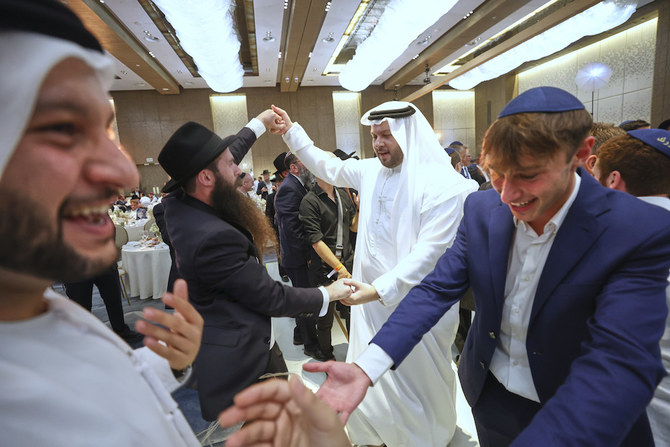
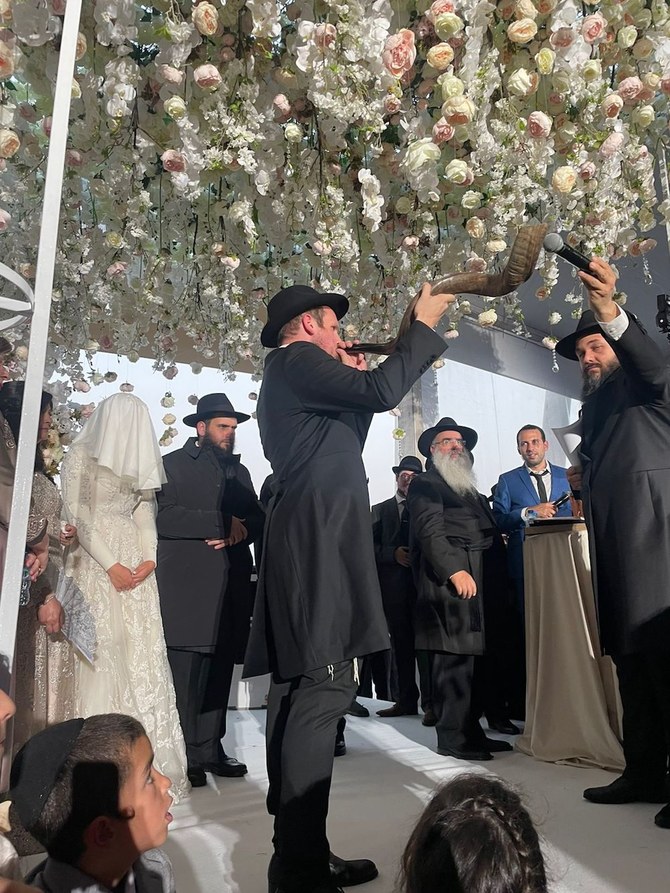
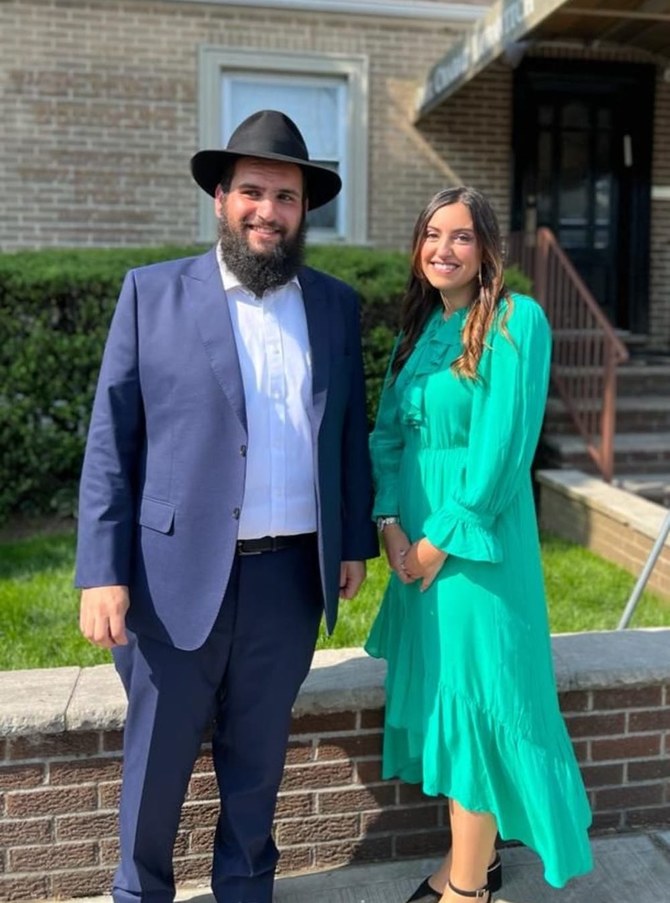
DUBAI: Two years after the signing of the Abraham Accords, normalizing relations between the UAE and Israel, the UAE rabbi got married on Wednesday at the Hilton Yas Island in Abu Dhabi.

Rabbi Levi Duchman, 29, tied the knot with Lea Hadad, 27, the daughter of Rabbi Menachem Hadad, the chabad chief rabbi in Brussels.

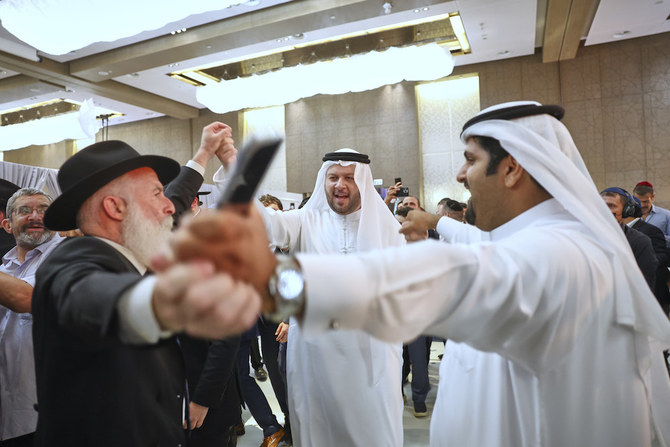
The event, which purposefully coincided with the second anniversary of the accords, highlighted the growing presence of Jewish life in the Emirates where until just a few years ago Jews would have to keep their services almost hidden from the public.

About 1,500 guests attended the ceremony, including high-ranking officials from the UAE government and more than 20 ambassadors from France, Japan, South Korea, Finland and elsewhere. Prominent businessmen, including Emirati entrepreneur Mohamed Alabbar were also at the event, as were male and female Catholic priests, reflecting the UAE’s growing commitment to interfaith and co-existence.

“We are most fortunate to be in this great place the United Arab Emirates,” Rabbi Levi Banon of the chabad of Morocco — Duchman’s brother-in-law and master of ceremonies for the evening — told guests from the chuppah, or wedding canopy.

“We feel your motto of excellence and hospitality. Thank you for making us feel at home.”

While the exact number of Jews residing in the UAE is unknown, estimates range from 500 to 3,000 or more since the Abraham Accords were signed. Since normalization, the UAE has welcomed over 200,000 Jewish tourists, a figure that is on the rise given the increasing number of Israelis and Jews living in the UAE and establishing businesses there.

The welcoming ceremony in Abu Dhabi was attended by friends and family from around the world, some making their first trips since the start of the pandemic. During the ceremony, the mothers of the bride and groom “broke the glass,” — the Jewish tradition representing goodwill for a long-lasting marriage between their children.

Hundreds of guests watched as the couple were united in marriage in the chuppah, which symbolizes the home they will build together. Emiratis, Israelis, Americans and other nationalities mingled and conversed as they watched the young couple take their vows.

Rabbi Levi, who has lived in the UAE since 2014, is committed to serving the country’s growing Jewish community. Since his arrival, he has established communities in Dubai and Abu Dhabi, including numerous places of worship, and founded Mini Miracles, the country’s only kosher multilingual nursery and preschool in the Jumeirah neighborhood of Dubai. A second branch is set to open in Abu Dhabi.

He also established a Hebrew supplemental school, a mikvah for the Jewish rite of purification and the government-licensed kosher agency, as well as bringing several rabbis to the UAE to join him in serving the community.

He also set up a training program for rabbinical interns and has helped Israeli and Jewish businesses take root in the Emirates following the accords.

“The couple’s commitment to get married in Abu Dhabi demonstrates their long-term commitment to serving the UAE’s growing Jewish community,” said a Jewish New Yorker who flew in for the occasion.

Rabbi Levi was born in Brooklyn and spent two years in Morocco with his sister Chana and her family. It was there that he was inspired to help grow Jewish life in the Arab world.

His father, Rabbi Sholom Duchman, is the director of the Colel chabad, which was founded in 1788 and is the oldest operating charity in Israel.

Hadad is of Moroccan heritage and was born and raised in Belgium. She is the daughter of Chief Rabbi Menachem Hadad. Her grandfather began the tradition of emissary work when he set up the chabad community in Milan.

“Rabbi Levi and Lea are a perfect couple,” said Alan Kay, a Jew from the UK who has lived in Abu Dhabi for 11 years.

“The fact that they chose their marriage to take place in Abu Dhabi, the UAE capital, is testament to their commitment to the country and to building the Jewish community here.”


Viral phenomenon in Argentina has young people identifying themselves as animals

Updated 27 February 2026
Follow

Viral phenomenon in Argentina has young people identifying themselves as animals

  • As the movement gains traction, psychologists are stepping in to analyze the phenomenon and its place in public discourse

BUENOS AIRES: On a recent Sunday, a Buenos Aires plaza transformed into a makeshift wilderness for an unusual group of teenagers.
Sofía, wearing a lifelike beagle mask, ran across the grass on all fours. Nearby, 15-year-old Aguara leapt through the air, clearing an obstacle course while imitating the precise movements of a Belgian breed dog. Others dressed as cats and foxes perched in the branches of trees, keeping their distance from curious onlookers.
It was the latest gathering of “therians,” individuals who say they identify mentally, spiritually or psychologically with non-human animals. The trend has taken over Argentine social media over the past few months, gaining traction on platforms like TikTok, where the hashtag #therian has surpassed 2 million posts, with Argentina leading all other Latin American countries in engagement. The surge has drawn the attention of influencers and media outlets alike, sparking reactions that range from laughter and bewilderment to outright anger.
And as the movement gains traction, psychologists are stepping in to analyze the phenomenon and its place in public discourse.
Aguara, who claims to identify as a Belgian Malinois and counts her age as the equivalent of two years and two months in dog years, says she’s a lot like any other teenager.
“I wake up like a normal person and live my life like a normal person,” she said. “I simply have moments when I like being a dog.”
As the leader of what she calls her “pack,” Aguara — the name she identifies with — boasts more than 125,000 followers on TikTok and coordinates regular meetups around the Argentine capital.
Aru, a 16-year-old who wore a seal mask to the park meetup, said she considers herself part of the “otherpaw” branch of therians: individuals who wear masks and tails or move on all fours just for fun. “It’s not necessarily about identifying as an animal,” she said.
She reckons the therian trend took off in Argentina because of the country’s “fairly free” environment. For other young Argentines, the movement has provided a vital community where they can feel truly accepted.
Should parents be worried?
Débora Pedace, a psychologist and director of the Integral Therapeutic Center in Buenos Aires, acknowledged that the phenomenon generates a complex mix of confusion, laughter and even anger.
“From a psychological standpoint, this is a symbolic identification with an animal,” Pedace said. “It becomes pathological or alarming only when it turns into a deeply rooted belief and the person fully assumes the role of an animal, potentially leading to self-harm or hurting others.”