


DUBAI: Faster than some observers predicted, the wider streaming world has gained ground on industry pioneer Netflix in the fight for entertainment supremacy — but the world’s biggest streamer still has a few tricks up its sleeve.
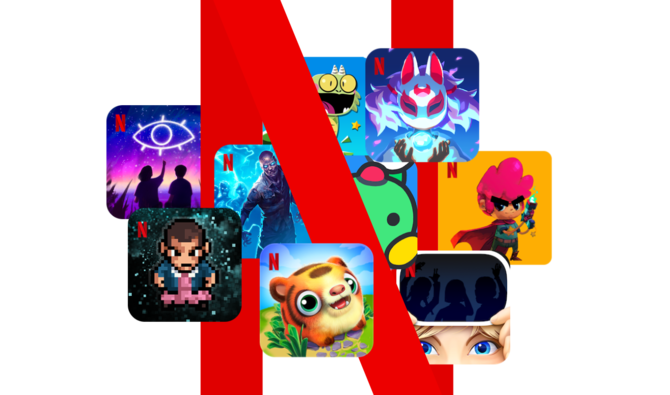
Take Netflix Games, for instance. Soft-launched only 10 months ago with little marketing power behind it, the service has already added 28 mobile games to its library and is steadily gaining ground among the company’s massive subscription base, largely through word of mouth.
For Netflix, however, gaming is not a simply a value-added service; Netflix Games could signal the future of the company, one that will maximize the value of its in-house intellectual properties.
“We think the great opportunity that Netflix has is connecting our universes together,” Leanne Loombe, head of external video games at the company, told Arab News.
That means that in the near future, when new seasons of globally popular Netflix properties such as “Stranger Things,” “Squid Game,” “Bridgerton” and “Money Heist” are released, they might potentially be accompanied with games that tie-in with them directly. Such a service would not only cross-promote but could also enrich the entire viewing experience.
“Some of the great IPs on the streaming side could become experiences on the gaming side that could allow people to watch the TV show or the movie and then play the game and really immerse themselves in the universe and the characters. We’re excited to bring more Netflix IP games to the service,” Loombe said.
Netflix has long had a clear global strategy. It is available in 190 countries and territories, with teams around the world that aim not only to tailor existing content to each unique market but also to create content specifically designed for each one. In some cases, such as the Jordanian, Arabic-language original drama AlRawabi School for Girls, this local content ends up finding a global audience.
By embracing gaming, Netflix properties could gain cultural ground to an even greater degree, especially in countries such as Saudi Arabia where gaming is not only popular on a grassroots level but has state-level support for the industry’s continued growth.
“Saudi Arabia will become one of the global hubs for gaming and esports,” said Prince Faisal bin Bandar, chairman of the Saudi Esports Federation, during his opening remarks at the Next World Forum in Riyadh this month.
The move by Netflix toward multi-platform maximization of the value of its IPs is not a plan for the distant future. It has already announced two major games that tie into past and future Netflix projects.
A game based on the popular drama series “The Queen’s Gambit,” titled The Queen’s Gambit Chess, was announced in June. A release date was not given but is likely imminent.
In addition, an original and exclusive game in the blockbuster Assassin’s Creed franchise was announced last weekend by software company, and new Netflix partner, Ubisoft. It will reportedly tie-in with a previously announced live-action “Assassin’s Creed” TV series. Both could appear on Netflix in 2023.
“Of the 28 games we’ve released so far, and with 50 planned by the end of the year, not many of them are Netflix IP,” said Loombe. “Our future will be focused more on this as it’s an area that we have a superpower in already.”
While the majority of the games are aimed at the mobile gaming experience, that does not mean they are intended to be superficial “pick-up-and-play” experiences. The streamer already has a range of game types, from casual to so-called “hardcore gaming” experiences, and existing multiplayer options mean that the prospect of esports on Netflix’s gaming platform is not a far-fetched possibility.
“We already have multiplayer games on the service and giving people the chance to play together is something that we’re passionate about,” says Loombe.
Netflix is devoting to its future gaming plans the same depth, focus and size of investment that their TV IPs are already known for. This is especially true in the case of the upcoming Ubisoft games, which in addition to Assassin’s Creed, include spin-offs popular games Valiant Hearts and Mighty Quest.
“Those games all had a scale that existed before they came to the platform and we want to make sure that with our upcoming originals, we’re doing those games justice in terms of the complexity, scope and depth of experience that we’re creating,” said Loombe.
“While it’s still early, as those games are in development, we are definitely staying true to those franchises and want to provide great games to the existing communities and their most hardcore fans.”
While many other streaming services emerged from existing film and television studios or services, Netflix has always been a technology-first company that does not view itself as conveniently fitting into any specific box. As Loombe puts it, it is an entertainment company and the definition of entertainment encompasses a broader category than some might think.
“I think it’s a natural progression for Netflix to move into gaming so that we have a broad spectrum of entertainment for our members to experience,” she said.
“You need a few hours to sit and watch a movie or a TV show at the weekends or in the evening, but with games you can play for five minutes in your break or you can play on your commute, especially on mobile. That makes Netflix properties that much more accessible and can fit within your lifestyle.”
And this, ultimately, is why Netflix believes its future is multiplatform — so that no amount of free time, however brief, cannot be filled with some form of entertainment that can be enjoyed for the price of a Netflix subscription.
“Games allow us to ensure that our members have something to engage in, wherever they are, whatever time of day it is,” said Loombe. “Our goal is to bring joy to our members through a connected ecosystem; to make sure entertainment is always in their hands.”


