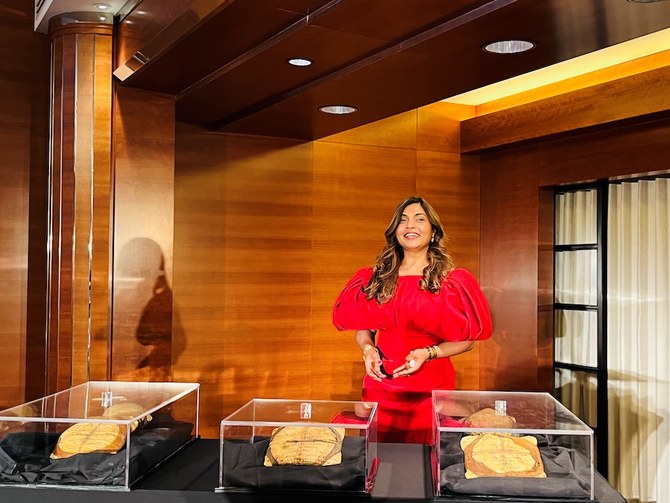

LONDON: A UK-based marketplace for digital non-fungible tokens has announced plans to tokenize and sell all five volumes of the oldest handwritten Qur’an manuscript available in the public domain.
Metadee, which offers digital artworks and collectibles from around the world, said in July that it had tokenized the third, fourth and fifth volumes of a copy of the Qur’an handwritten by the personal scribe of the Prophet Muhammad, Zayd ibn Thaabit, who served as the chief recorder of Qur’anic text.
Now it has confirmed that all five volumes will be made available as NFTs — digital objects specially encoded with proof of their unique nature and ownership — for purchase “to ensure everyone in any country, especially in countries which do not trade in crypto(currency), can access the manuscript.” In addition, the physical copies of volumes one and two are going up for auction.
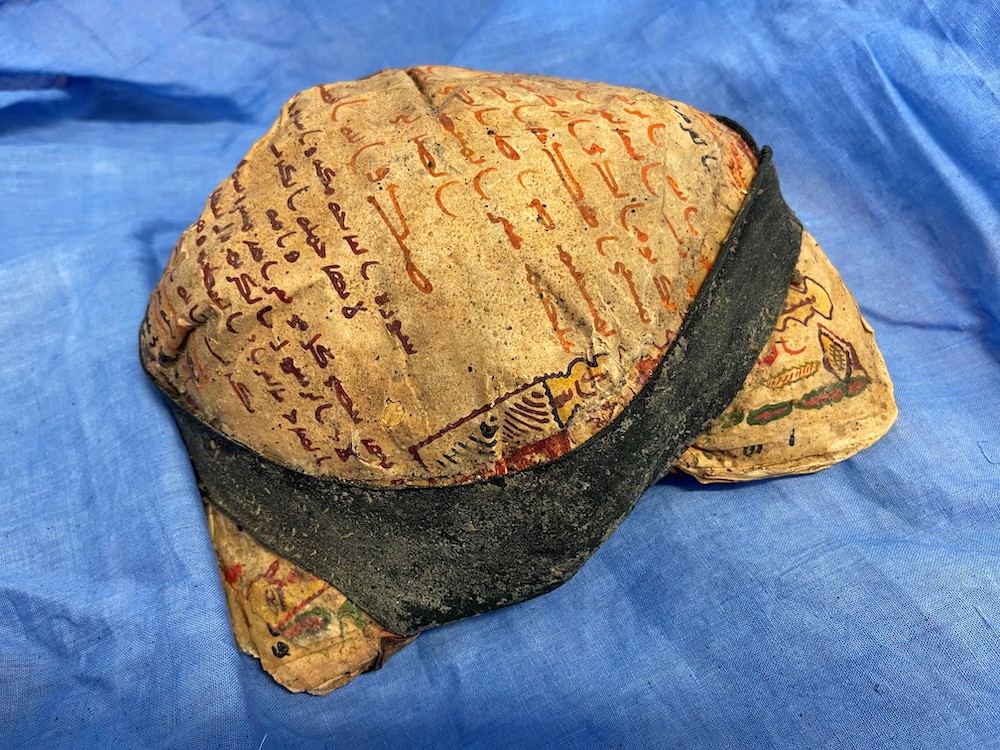
Metadee said that this rare Qur’an manuscript is believed to have been written in 632 A.D. and has been authenticated and certified by the University of Oxford’s Research Laboratory for Archaeology and the History of Art. (Supplied/MetaDee)
One million NFTs of each of volumes three, four and five of the manuscript have been created and are available to buy for $200 each. The bidding for volumes one and two begins at $25 million per volume, and the successful bidder for each of them will receive the physical copy plus an NFT.
Matadee founder Deepali Shukla told Arab News that the Qur’an NFTs “are limited, digitized versions of the very first manuscript, handwritten in ink by the personal scribe of the Prophet (and) owing to their immeasurable historic and cultural value, the manuscripts are being seen as a cherished treasure by the faithful and art collectors alike.”
The company said that this rare Qur’an manuscript is believed to have been written in 632 A.D. and has been authenticated and certified by the University of Oxford’s Research Laboratory for Archaeology and the History of Art, the leading global authority in dating archaeological artifacts using radiocarbon dating technology.
“In addition to owning and preserving a unique and significant artifact, any individual that owns such an NFT can pass it on to future generations using proof of ownership secured on blockchain,” Shukla said.
“Equally so, it is a great honor to bring enduring wisdom from 1,400 years (ago) and to make it even more valuable in today’s and tomorrow’s digital world.”
She explained that the original manuscripts from which the NFTs will be created are in the possession of a custodian family and kept in Geneva, Switzerland. Generations of the family have traveled through Madinah, Makkah and Syria over the years, and have guarded the volumes and kept them secure.
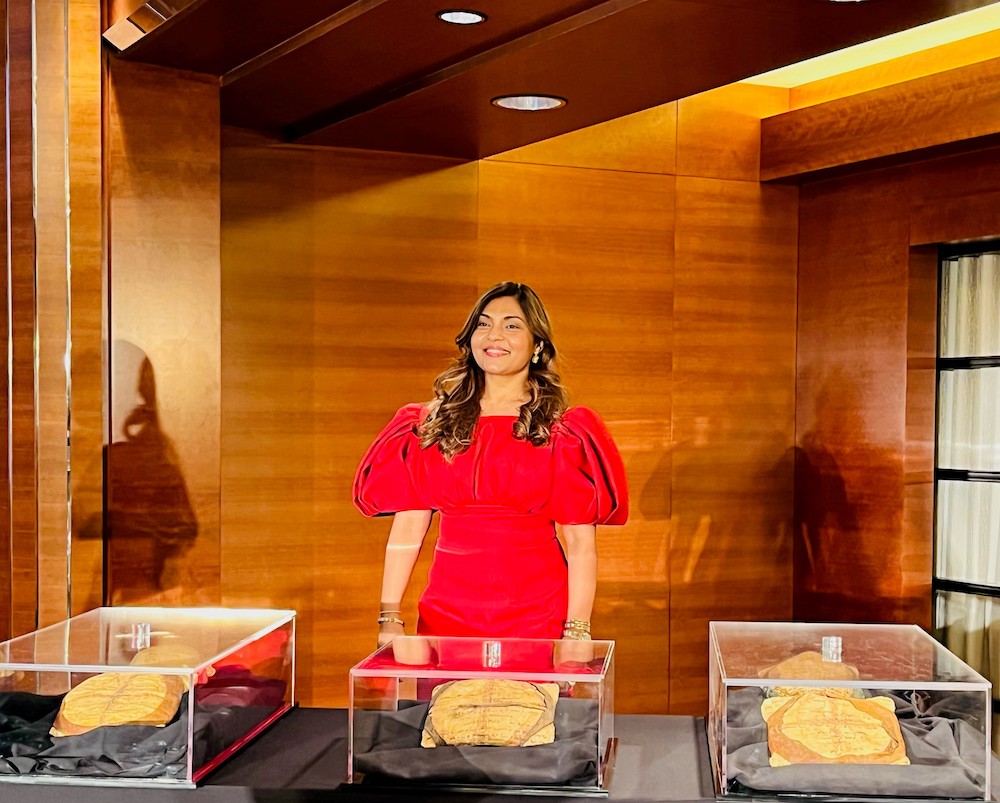
Matadee founder Deepali Shukla said that the Qur’an NFTs are limited, digitized versions of the very first manuscript, handwritten in ink by the personal scribe of the Prophet Muhammad. (Supplied/MetaDee)
“Thanks to tokenization, rare artifacts and holy texts can now be acquired more easily and accessed without the restrictions of time and space,” said Shukla.
“This helps enrich learning experiences, empowers communities, and makes knowledge more appealing for young people.”
Shukla, who describes herself as a collector and art enthusiast, said recently-launched MetaDee fills a significant gap in the NFT marketplace, in the sense that not everyone might feel attracted to the abstract.
“We have, therefore, innovated a marketplace for exquisite, real and rare digitalized collectibles,” she said. “What was once the exclusive domain of the rich and the ultra-wealthy is now democratized. Everyday people can now own such rare, exclusive and real tokenized artworks and collectibles.”
Shukla said that Metadee’s NFTs undergo extensive scrutiny and due diligence and each collectible is carefully studied, researched and scientifically validated as being one of a kind and valuable. Since the company began selling them, she added, it has received a great response from organizations, countries and even across religions.
“If we were to even set aside their collectible value, this undertaking is proving to be something truly empowering,” she said.
The Qur’an manuscript NFTs are unique, she added, because no other format assigns proof of ownership that can be verified and validated in perpetuity. They can be accessed anytime, anywhere around the world, are easily stored on the blockchain, and are transferable to new owners.
“Besides digital information, NFTs hold perpetual records using smart contracts that may be accessed on blockchain; therefore gifting, purchasing and selling collectibles is made easy within a safe and secure marketplace such as MetaDee.”
Shukla said that the market for digital NFT collectibles is the fastest-growing niche market, and is expected to be worth $700 billion in the coming decade, as several countries, including Saudi Arabia, have started to accept cryptocurrency and NFTs and some have even installed cryptocurrency ATMs.
“As time progresses, actual, tangible and real assets almost always endure, hence the rationale of augmented value of such tokenized assets seems to appeal to people,” she added.