


Last week, the International Cricket Council released its long-awaited men’s Future Tours Programme for the 2023-2027 cycle.
This confirmed what had been previously trailed — windows have been created for the Indian Premier League, Australia’s Big Bash League, the Bangladesh Premier League and the English Hundred. During these windows little international cricket is to be scheduled, freeing-up the top men’s T20 players.
In reality, the gap is a chasm. The Big Bash League is played between mid-December and early February, the Bangladesh Premier League between early January and mid-February and the Indian Premier League between late March and late May. Added to this mix from 2023 are the two new T20 franchise tournaments in the UAE and South Africa scheduled to be played in January and February.
Despite these windows, the 12 full International Cricket Council members will play an increased number of international matches — 777 compared with 694 in the previous cycle — comprising 173 Tests, 281 ODIs and 323 T20Is. It is the responsibility of the ICC to organize and govern cricket’s major international tournaments, with the 50-over and T20 World Cups being flagship tournaments.
Although, it appoints officials for these matches and for Test matches, the ICC has no responsibility for controlling bi-lateral fixtures between member countries. This lies with individual boards, as does the governance of domestic cricket. In effect, there is no one body in charge of cricket.
Given this situation, it is hardly surprising that the Board of Control for Cricket in India has used its financial strength and fanatical support levels to morph into a major shaper and influencer of the game.
This power will expand. A recent example is that, at long last, it seems that the board is preparing to introduce a women’s Indian Premier League.
The 2022/23 domestic women’s calendar will start one month earlier in mid-October and finish in February to facilitate a window in March 2023, prior to the men’s Indian Premier League. It is understood that existing franchise holders are interested in being involved. A crucial factor will be assessments of potential media rights revenues.
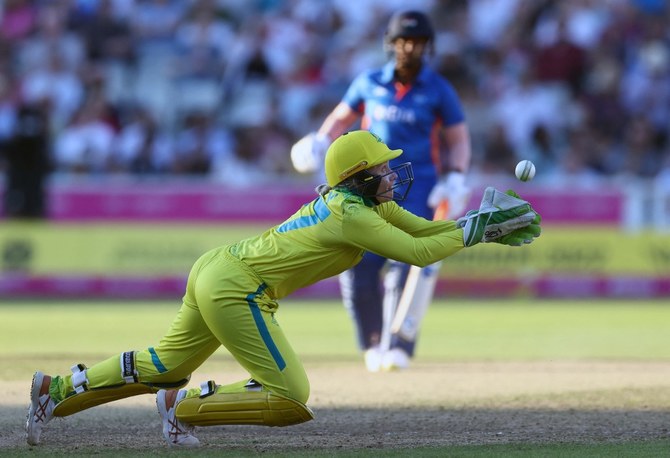
The appeal of a women’s Indian Premier League has been enhanced by the silver-medal award achieved by the Indian team in the recent Commonwealth Games in Birmingham, where they almost beat the invincible Australians. There was implied criticism in India that the team failed to cope with pressure. If they had greater opportunities to play more high-pressure cricket, then they are likely to be better equipped to deal with such situations.
Women’s cricket, overall, has also received a boost with the ICC announcing its first women’s Future Tours Programme. The cycle started this year and runs until April 2025, when the ODI World Cup will be played in India. During this timescale, 301 international matches are scheduled to be played — 135 ODIs, 159 T20Is and a mere seven Tests. The balance of matches reflects previous comments from ICC’s executive that the growth of women’s Test cricket was unlikely to proceed at any speed. One of these Tests has already been played and all of the remaining six involve either Australia or England.
The best that can be claimed for the women’s Future Tours Programme is that a more defined structure has been put in place that can be built on. The current focus is on the ICC Women’s Championship that will lead to qualification to play in the World Cup in 2025. The Board of Control for Cricket in India made it quite clear that it wished to host this tournament. After a bidding process, it was duly awarded its wish last month at a meeting of an ICC sub-committee on which the current Indian board president sits. The timing sits well with the board’s policy to raise the profile of women’s cricket in India. Alongside the World Championship, women’s T20 cricket continues in the build-up to the 2024 and 2026 World Cups, due to be hosted in Bangladesh and England, respectively. Bangladesh will also host the women’s Asia Cup in early October.
Below the Future Tours Programme, which relates only to the 12 full members, there is a plethora of cricket being played.
Associate members men’s teams continue to slug it out in their quest to perform on the big stage with full members. As part of the ICC League 2 qualifying stage for the 2023 ODI World Cup, a tri-series took place in Scotland between the hosts, UAE and the US, which ended on Aug. 17. The UAE team did itself no favors. In its three matches, the team lost in the last over to the US, was well-beaten twice by Scotland and had its second match against the US abandoned without a ball being bowled, due to rain.
In the final match, the US beat Scotland by two wickets. As a result, the US replaced the UAE in third place of the League, having played two more matches. The top three teams out of seven will progress to the next qualifying stage and, with 10 matches remaining, the UAE has its fate in its own hands.
This was also the case in the qualification race for the Asia Cup T20.
In a round-robin tournament with Hong Kong, Singapore and Kuwait, staged in Oman between Aug. 20-24, the UAE lost by one wicket with one ball remaining to Kuwait, beat Singapore and then lost to Hong Kong in a must-win game by eight wickets with an over remaining. Hong Kong will now progress to the Asia Cup T20. No doubt, the UAE dressing room will be deflated, having been on the cusp of a major breakthrough. It now has to regroup. Kuwait cricket will also have a sense of regret that, having beaten the UAE, it could not progress further.
What these results do show is that cricket is growing successfully in countries that were previously not associated with the game. The newly announced ICC’s men’s and women’s Future Tours Programmes have the feeling of being staging posts. During their time, the impact of the new and expanded T20 franchises on cricket’s other formats will become apparent, shaping future Future Tours Programmes.


