

Bahrain, Saudi Arabia discuss improving technical cooperation among Gulf countries

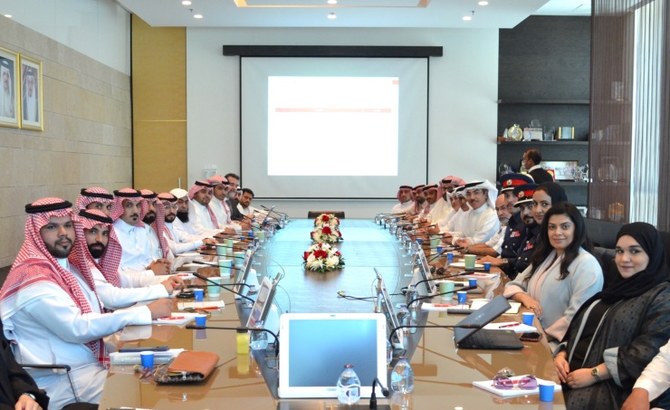
Bahrain-Saudi meeting discusses promoting technical integration. (BNA)
Short Url
Updated 24 August 2022
Follow

Bahrain, Saudi Arabia discuss improving technical cooperation among Gulf countries

  • Meeting held as part of GCC’s efforts to promote technical integration

MANAMA: Bahrain’s Information and eGovernment Authority (iGA) hosted a meeting with the Saudi Data and Artificial Intelligence Authority and the Gulf Cooperation Council Secretariat General, reported the Bahrain News Agency.

During the meeting, the trio followed up on the GCC Smart Card technical team’s directives and discussed information technology cooperation.

Bahrain’s team was led by the iGA’s Vice CEO Dr. Zakareya Al-Khajah, while Saudi Arabia’s team was led by Brig. Hamad bin Ali Al-Harbi, director of public security.

The meeting was held as part of the GCC’s efforts to promote technical integration among Gulf countries.

The agenda covered a variety of topics, including methods to expedite the integration of Bahrain’s and Saudi Arabia’s ID verification systems, as agreed upon previously.

The advantages of integrating the systems were also discussed, such as giving Bahraini citizens access to Saudi Arabia’s Unified National Platform with the same eKey usernames and passwords they use in Bahrain, eliminating the need to create new accounts when visiting Saudi Arabia.

Saudi citizens will be able to access Bahrain’s National Portal using their identity authentication system.

The eKey is a single sign-on system that gives access to a variety of Bahraini government services.

The project will also streamline commercial and investment procedures between the two countries, allowing users to conduct transactions online without Bahraini investors having to travel to Saudi Arabia or vice versa.

Furthermore, Bahrain’s eKey service and system experience were discussed, as were iGA’s efforts to continuously develop e-services, channels and projects.

Al-Khajah revealed that over 611,000 beneficiaries are using the basic and advanced versions of the eKey system to access more than 153 e-services available through Bahrain’s National Portal.

Multi-factor authentication, digital signature support, and other enhancements to the eKey system are being considered.

Al-Khajah emphasized Bahrain’s commitment to implementing and supporting ambitious digital initiatives aimed at achieving comprehensive electronic integration among GCC countries.


The UN says Al-Hol camp population has dropped sharply as Syria moves to relocate remaining families

Updated 15 February 2026
Follow

The UN says Al-Hol camp population has dropped sharply as Syria moves to relocate remaining families

  • Forces of Syria’s central government captured the Al-Hol camp on Jan. 21 during a weekslong offensive against the SDF, which had been running the camp near the border with Iraq for a decade

DAMASCUS: The UN refugee agency said Sunday that a large number of residents of a camp housing family members of suspected Daesh group militants have left and the Syrian government plans to relocate those who remain.
Gonzalo Vargas Llosa, UNHCR’s representative in Syria, said in a statement that the agency “has observed a significant decrease in the number of residents in Al-Hol camp in recent weeks.”
“Syrian authorities have informed UNHCR of their plan to relocate the remaining families to Akhtarin camp in Aleppo Governorate (province) and have requested UNHCR’s support to assist the population in the new camp, which we stand ready to provide,” he said.
He added that UNHCR “will continue to support the return and reintegration of Syrians who have departed Al-Hol, as well as those who remain.”
The statement did not say how residents had left the camp or how many remain. Many families are believed to have escaped either during the chaos when government forces captured the camp from the Kurdish-led Syrian Democratic Forces last month or afterward.
There was no immediate statement from the Syrian government and a government spokesperson did not respond to a request for comment.
At its peak after the defeat of IS in Syria in 2019, around 73,000 people were living at Al-Hol. Since then, the number has declined with some countries repatriating their citizens. The camp’s residents are mostly children and women, including many wives or widows of IS members.
The camp’s residents are not technically prisoners and most have not been accused of crimes, but they have been held in de facto detention at the heavily guarded facility.
Forces of Syria’s central government captured the Al-Hol camp on Jan. 21 during a weekslong offensive against the SDF, which had been running the camp near the border with Iraq for a decade. A ceasefire deal has since ended the fighting.
Separately, thousands of accused IS militants who were held in detention centers in northeastern Syria have been transferred to Iraq to stand trial under an agreement with the US
The US military said Friday that it had completed the transfer of more than 5,700 adult male IS suspects from detention facilities in Syria to Iraqi custody.
Iraq’s National Center for International Judicial Cooperation said a total of 5,704 suspects from 61 countries who were affiliated with IS — most of them Syrian and Iraqi — were transferred from prisons in Syria. They are now being interrogated in Iraq.