





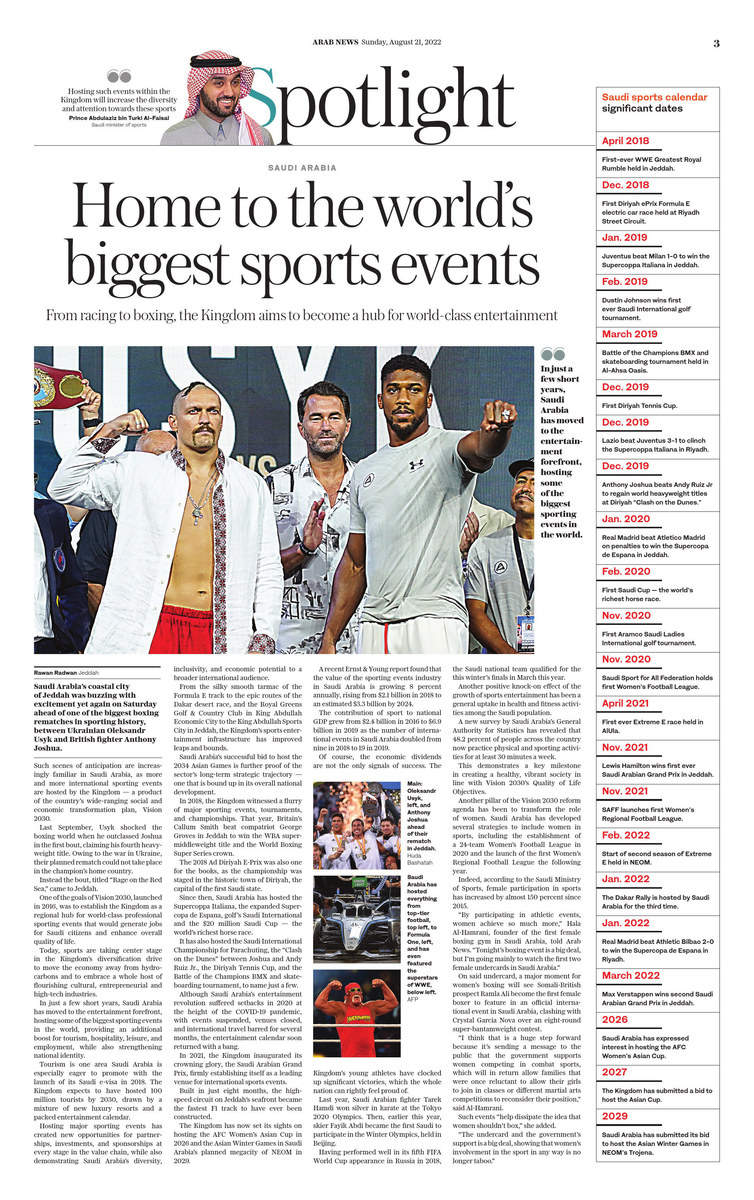
JEDDAH: Saudi Arabia’s coastal city of Jeddah was buzzing with excitement yet again on Saturday ahead of one of the biggest boxing rematches in sporting history, between Ukrainian Oleksandr Usyk and British fighter Anthony Joshua.
Such scenes of anticipation are increasingly familiar in Saudi Arabia, as more and more international sporting events are hosted by the Kingdom — a product of the country’s wide-ranging social and economic transformation plan, Vision 2030.
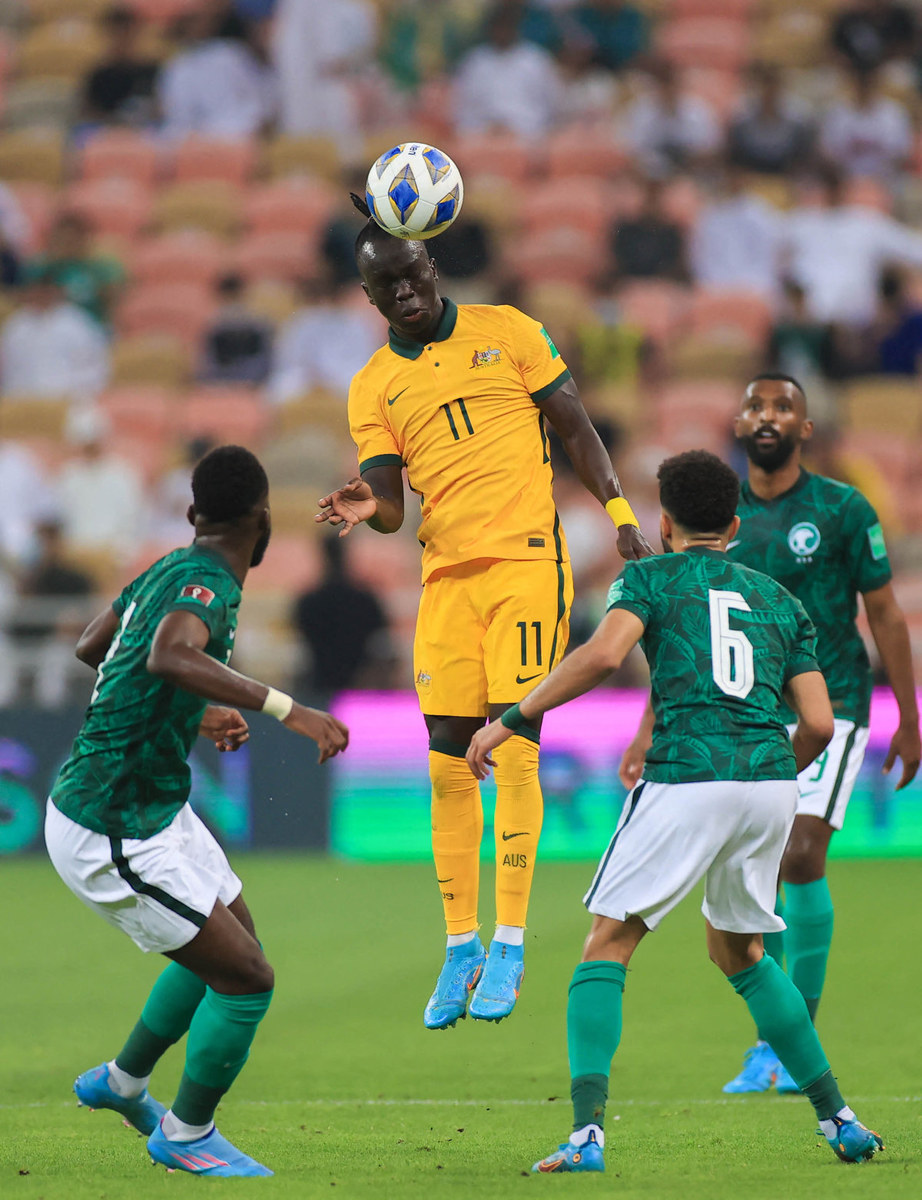
Football match between Saudi Arabia and Australia, part of the 2022 Qatar World Cup Asian Qualifiers, in Jeddah on March 29, 2022. (Photo by AFP)
Last September, Usyk shocked the boxing world when he outclassed Joshua in the first bout, claiming his fourth heavyweight title. Owing to the war in Ukraine, their planned rematch could not take place in the champion’s home country.
Instead the bout, titled “Rage on the Red Sea,” came to Jeddah.
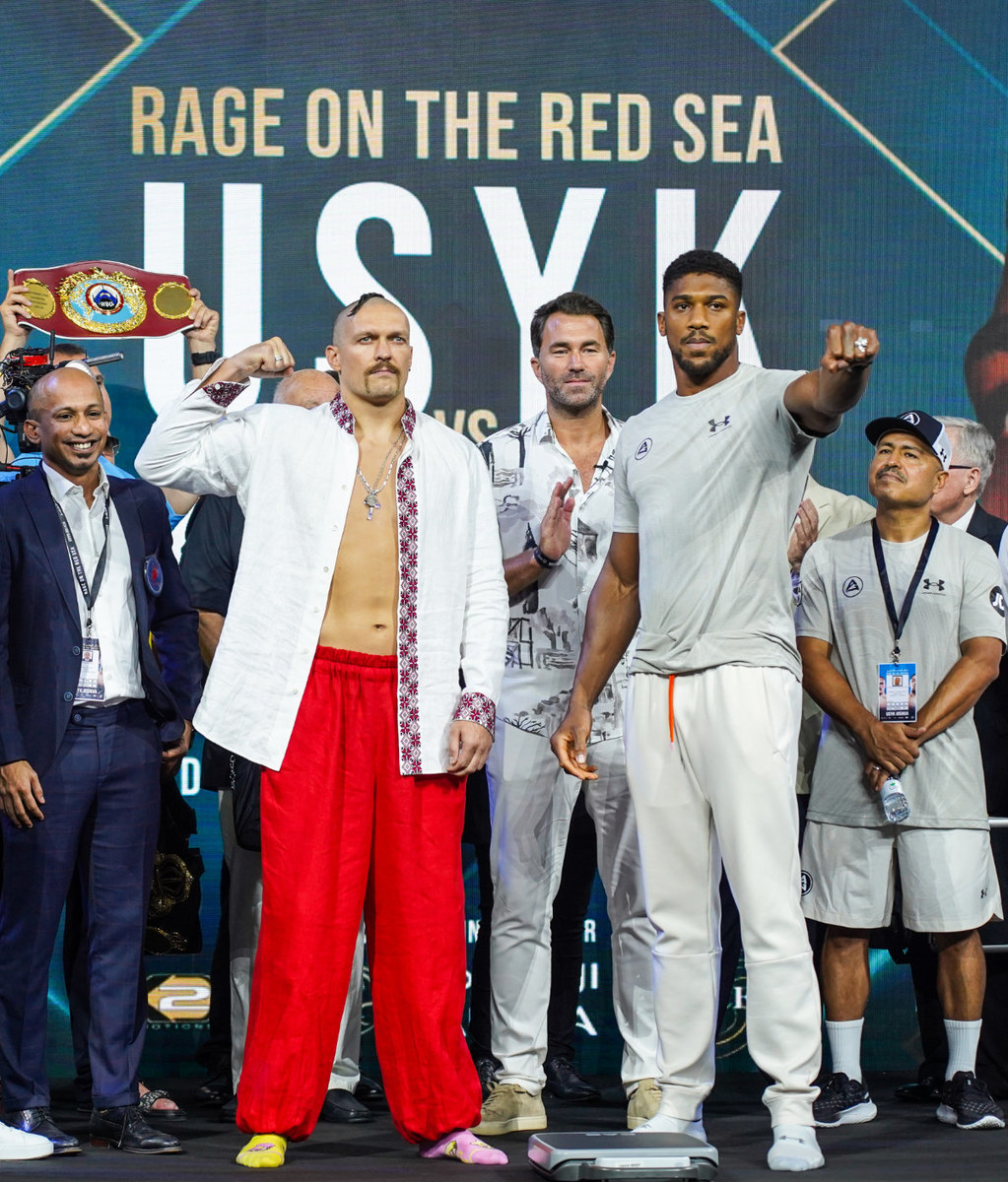
Oleksandr Usyk, left, and Anthony Joshua ahead of their rematch in Jeddah on Aug. 20, 2022. (AN photo by Huda Bashatah)
One of the goals of Vision 2030, launched in 2016, was to establish the Kingdom as a regional hub for world-class professional sporting events that would generate jobs for Saudi citizens and enhance overall quality of life.
Today, sports are taking center stage in the Kingdom’s diversification drive to move the economy away from hydrocarbons and to embrace a whole host of flourishing cultural, entrepreneurial and high-tech industries.
In just a few short years, Saudi Arabia has moved to the forefront, hosting some of the biggest sporting events in the world, providing an additional boost for tourism, hospitality, leisure, and employment, while also strengthening national identity.
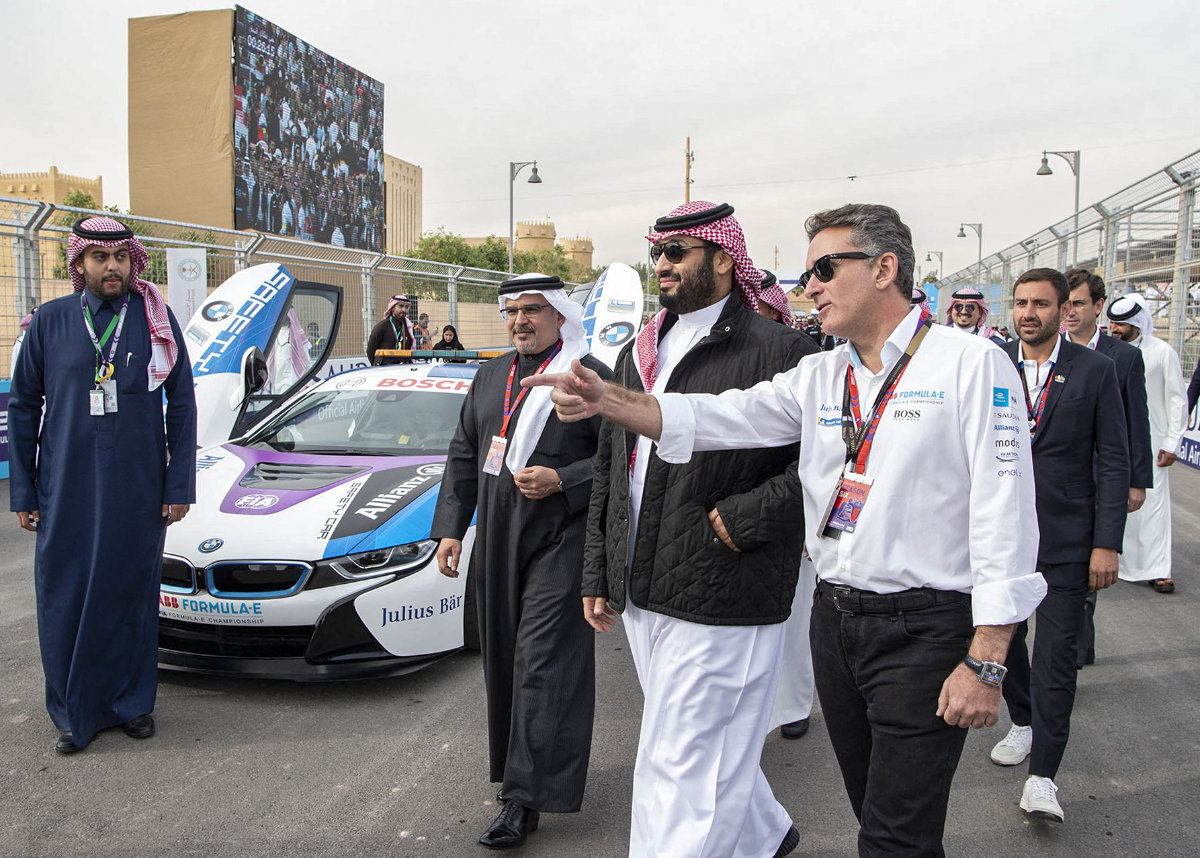
Saudi Crown Prince Mohammed bin Salman (C) attends the launch of the ABB FIA Formula E Championship in Diriyah, Riyadh, on Nov. 22, 2019 (Saudi Royal Palace photo/ File)
Tourism is one area Saudi Arabia is especially eager to promote with the launch of its Saudi e-visa in 2018. The Kingdom expects to have hosted 100 million tourists by 2030, drawn by a mixture of new luxury resorts and a packed entertainment calendar.
Hosting major sporting events has created new opportunities for partnerships, investments, and sponsorships at every stage in the value chain, while also demonstrating Saudi Arabia’s diversity, inclusivity, and economic potential to a broader international audience.
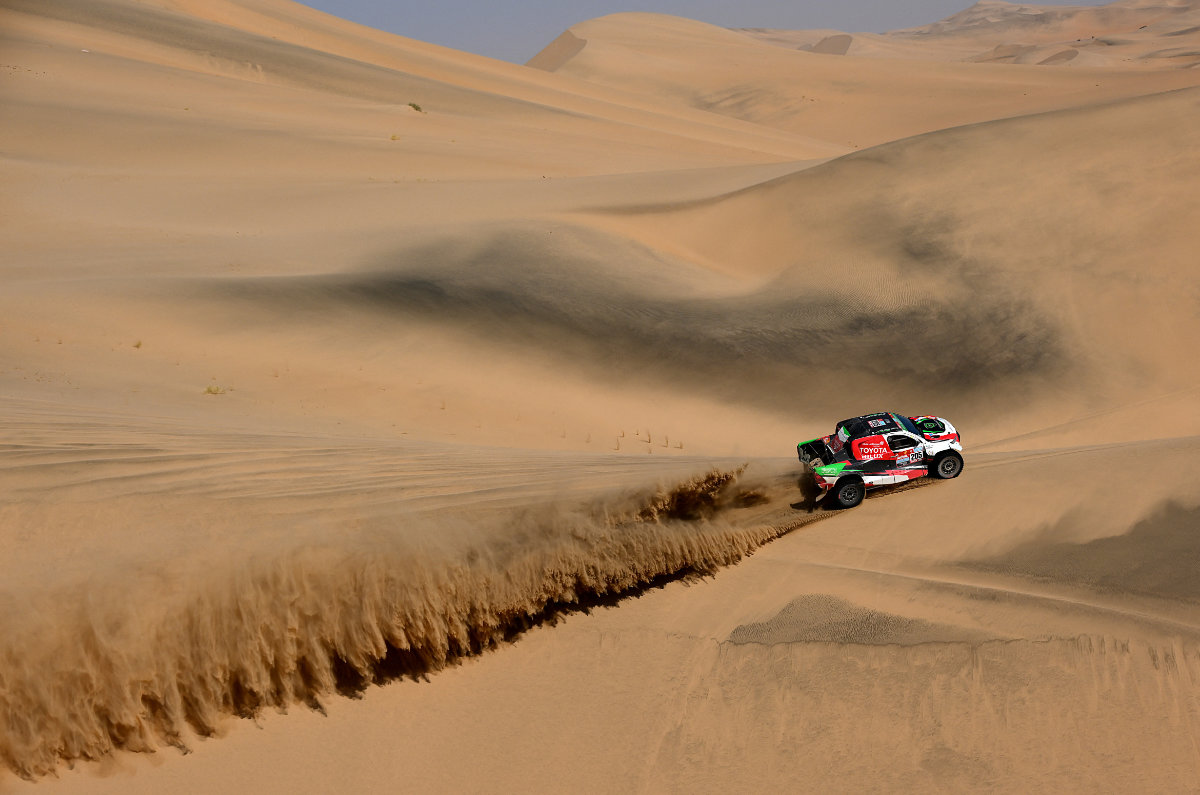
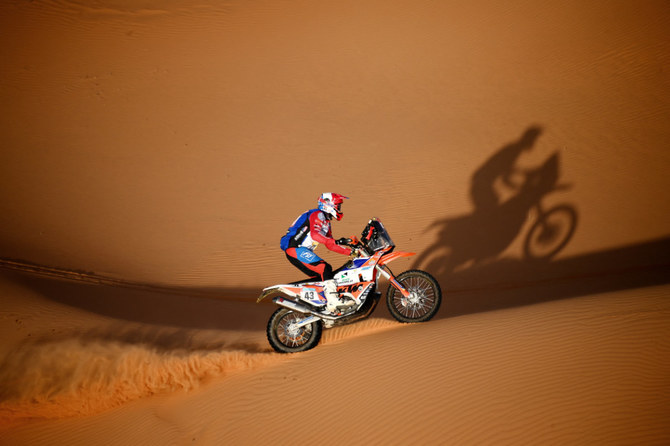
Toyota's Saudi driver Yazeed Al Rajhi and British co-driver Michael Orr compete during Stage 11 of the Dakar 2022 around Bisha on Jan. 13, 2022. (AFP)
From the silky smooth tarmac of the Formula E track to the epic routes of the Dakar desert race, and the Royal Greens Golf & Country Club in King Abdullah Economic City to the King Abdullah Sports City in Jeddah, the Kingdom’s sports entertainment infrastructure has improved leaps and bounds.
Saudi Arabia’s successful bid to host the 2034 Asian Games is further proof of the sector’s long-term strategic trajectory — one that is bound up in its overall national development.
In 2018, the Kingdom witnessed a flurry of major sporting events, tournaments, and championships. That year, Britain’s Callum Smith beat compatriot George Groves in Jeddah to win the WBA super-middleweight title and the World Boxing Super Series crown.
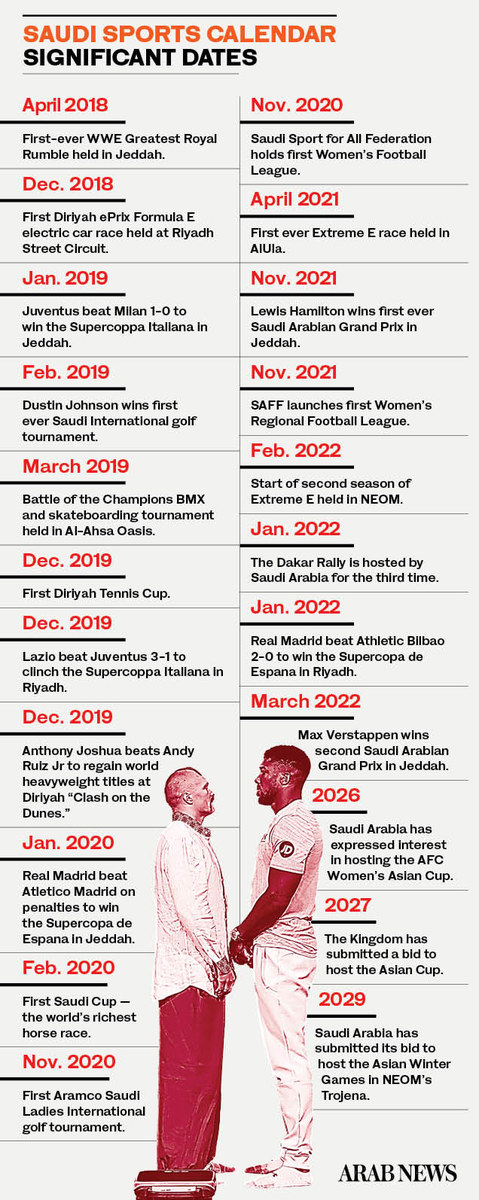
The 2018 Ad Diriyah E-Prix was also one for the books, as the championship was staged in the historic town of Diriyah, the capital of the first Saudi state.
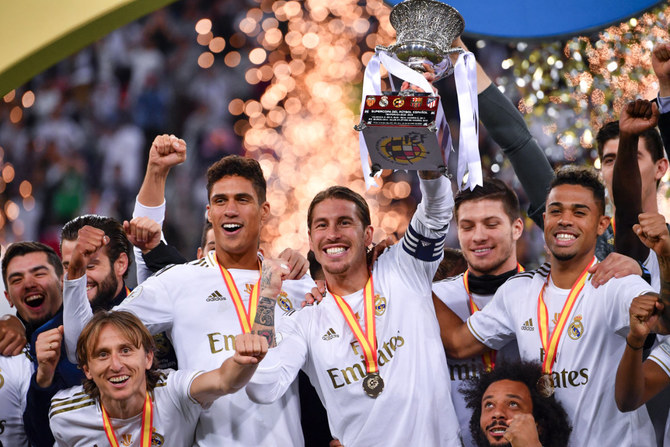
Since then, Saudi Arabia has hosted the Supercoppa Italiana, the expanded Supercopa de Espana, golf’s Saudi International and the $20 million Saudi Cup — the world’s richest horse race.
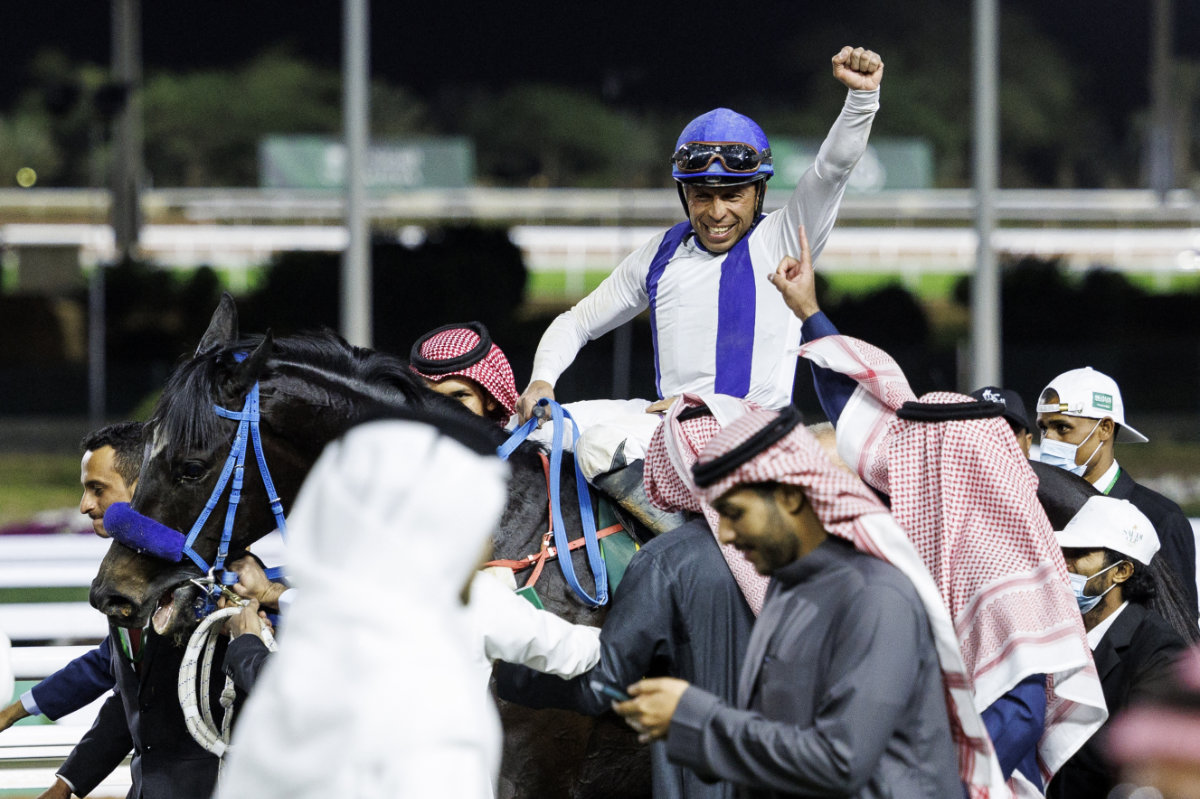
Jockey Wigberto Ramos with Emblem Road celebrates after winning the 1800M race Group 1 of the $20 million Saudi Cup in Riyadh on Feb. 26, 2022. (AFP file)
It has also hosted the Saudi International Championship for Parachuting, the “Clash on the Dunes” between Joshua and Andy Ruiz Jr., the Diriyah Tennis Cup, and the Battle of the Champions BMX and skateboarding tournament, to name just a few.
Although Saudi Arabia’s entertainment revolution suffered setbacks in 2020 at the height of the COVID-19 pandemic, with events suspended, venues closed, and international travel barred for several months, the entertainment calendar soon returned with a bang.
In 2021, the Kingdom inaugurated its crowning glory — the Saudi Arabian Grand Prix — firmly establishing itself as a leading venue for international sports events.
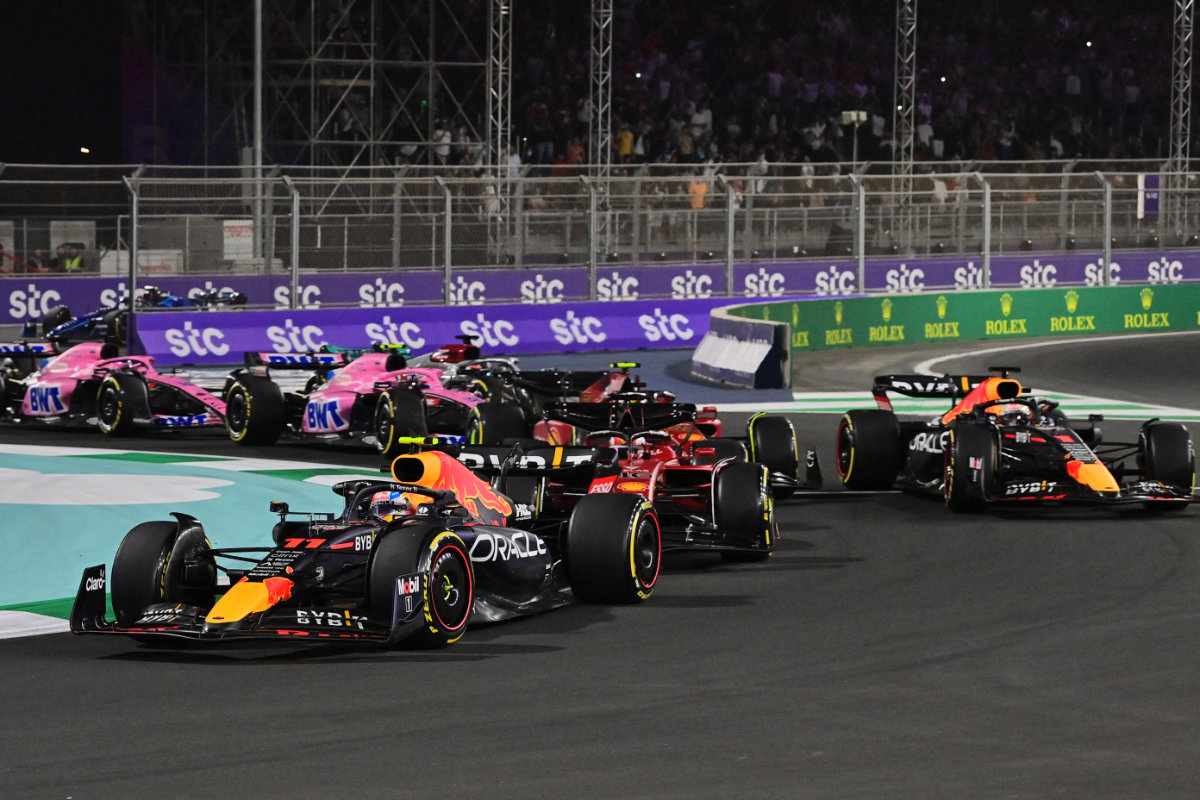
Drivers compete during the 2022 Saudi Arabia Formula One Grand Prix at the Jeddah Corniche Circuit on March 27, 2022. (AFP)
Built in just eight months, the high-speed circuit on Jeddah’s seafront became the fastest F1 track to have ever been constructed.
The Kingdom has now set its sights on hosting the AFC Women’s Asian Cup in 2026 and the Asian Winter Games in Saudi Arabia’s planned megacity of NEOM in 2029.

A view of NEOM’s Trojena, a mountain destination in the northwestern Saudi province of Tabuk, which is will soon offer year-round outdoor skiing and adventure sports. (Supplied)
A recent Ernst & Young report found that the value of the sporting events industry in Saudi Arabia is growing 8 percent annually, rising from $2.1 billion in 2018 to an estimated $3.3 billion by 2024.
The contribution of sport to national GDP grew from $2.4 billion in 2016 to $6.9 billion in 2019 as the number of international events in Saudi Arabia doubled from nine in 2018 to 19 in 2019.
Of course, the economic dividends are not the only signals of success. The Kingdom’s young athletes have clocked up significant victories, which the whole nation can rightly feel proud of.
Last year, Saudi Arabia’s Tarek Hamdi won silver in karate at the Tokyo 2020 Olympics. Then, earlier this year, Fayik Abdi became the first Saudi to participate in the Winter Olympics, held in Beijing.
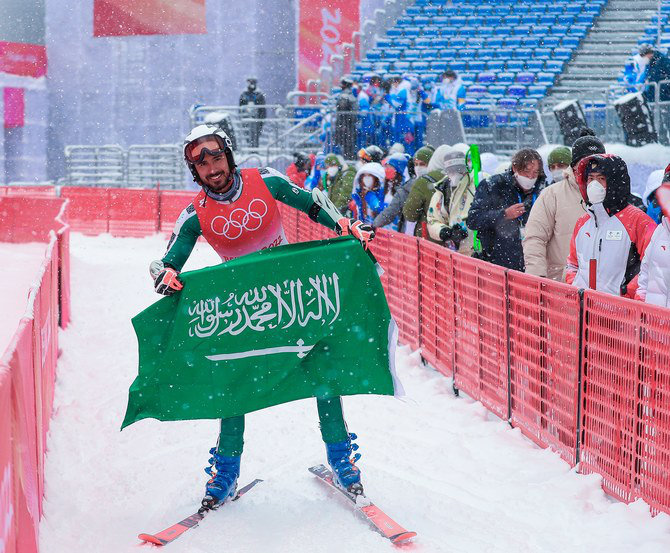
Alpine skier Fayik Abdi became the first ever Saudi to participate at the Winter Olympics. (Saudi Olympic Committee)
Having performed well in its fifth FIFA World Cup appearance in Russia in 2018, the Saudi national team qualified for the this winter’s finals in March this year.
Another positive knock-on effect of the growth of sports entertainment has been a general uptake in health and fitness activities among the Saudi population.
A new survey by Saudi Arabia’s General Authority for Statistics has revealed that 48.2 percent of people across the country now practice physical and sporting activities for at least 30 minutes a week.
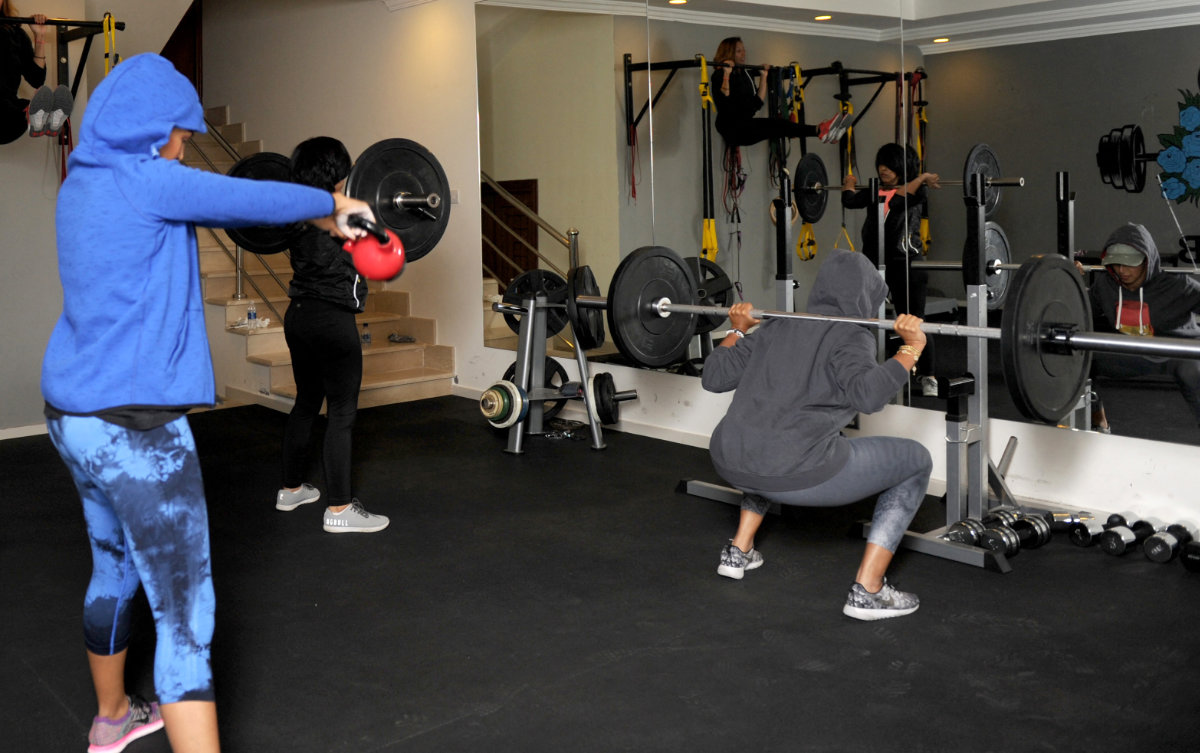
Women take part in a cross fit class at a gym in Jeddah. (AFP file photo)
This demonstrates a key milestone in creating a healthy, vibrant society in line with Vision 2030’s Quality of Life Objectives.
Another pillar of the Vision 2030 reform agenda has been to transform the role of women. Saudi Arabia has developed several strategies to include women in sports, including the establishment of a 24-team Women’s Football League in 2020 and the launch of the first Women’s Regional Football League the following year.
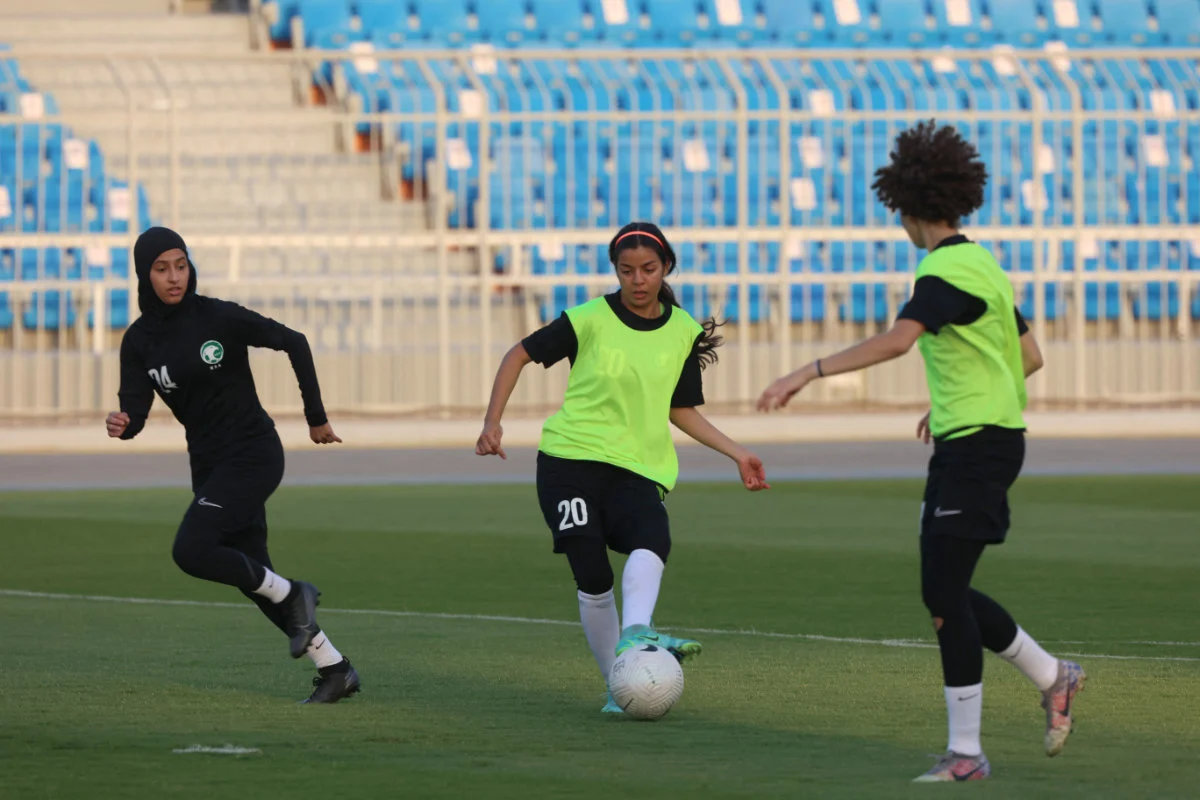
The Saudi women national football team has received a boost with the appointment of veteran German coach Monika Staab as trainer-coach. (Supplied)
Indeed, according to the Saudi Ministry of Sports, female participation in sports has increased by almost 150 percent since 2015.
“By participating in athletic events, women achieve so much more,” Hala Al-Hamrani, founder of the first female boxing gym in Saudi Arabia, told Arab News. “Tonight’s boxing event is a big deal, but I’m going mainly to watch the first two female undercards in Saudi Arabia.”
On said undercard, a major moment for women’s boxing will see Somali-British prospect Ramla Ali become the first female boxer to feature in an official international event in Saudi Arabia, clashing with Crystal Garcia Nova over an eight-round super-bantamweight contest.
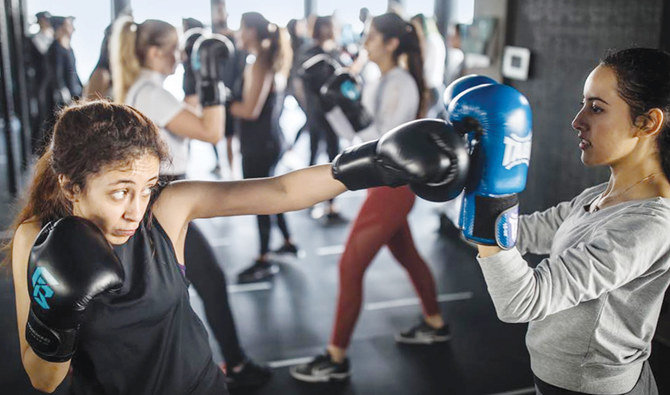
Government support for combat sports has encouraged many women in the Kingdom to train in martial arts. (Supplied/File)
“I think that is a huge step forward because it’s sending a message to the public that the government supports women competing in combat sports, which will in return allow families that were once reluctant to allow their girls to join in classes or different martial arts competitions to reconsider their position,” said Al-Hamrani.
Such events “help dissipate the idea that women shouldn’t box,” she added.
“The undercard and the government’s support is a big deal, showing that women’s involvement in the sport in any way is no longer taboo.”

keywords


