

Saudi beauty brands champion sustainable, cruelty-free values

1 / 4
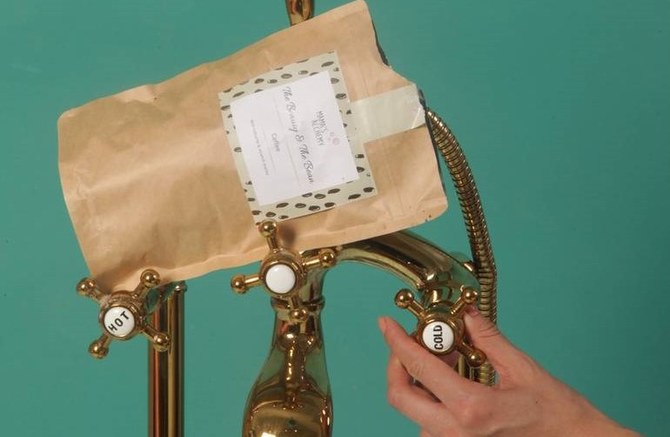
Mama’s Alchemy offers vegan options in the bodycare category in Saudi and the region.
2 / 4
Mama’s Alchemy offers vegan options in the bodycare category in Saudi and the region.
3 / 4
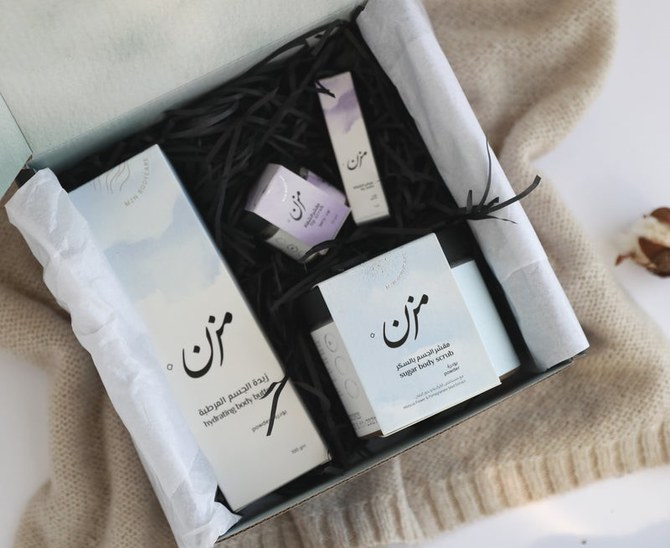
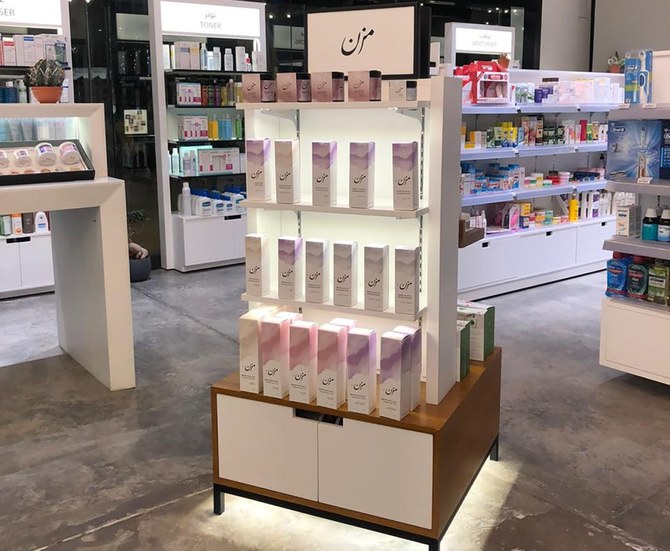
MZN Bodycare’s sustainable products can be found at major pharmacy chains, premium retailers, and spas across Saudi Arabia.
4 / 4
MZN Bodycare’s sustainable products can be found at major pharmacy chains, premium retailers, and spas across Saudi Arabia.
Short Url
Updated 18 August 2022
Follow

Saudi beauty brands champion sustainable, cruelty-free values

  • Muzon Ashgar, founder and manager of Saudi brand MZN Bodycare, put together her own recipes for natural skincare products and packaged them herself
  • Managing partner Mama’s Alchemy Dina Horanieh: We wanted to offer vegan options in the bodycare category in Saudi and the region, as there are very few brands that cater to the cause

RIYADH: Muzon Ashgar, founder and manager of Saudi brand MZN Bodycare, has always had an interest in natural skincare products, which she sourced from the US.

But after throwing a recreational “spa party” for friends a few years ago, she realized there was no need to look abroad to be ethically conscious.

Ashgar put together her own recipes for natural skincare products and packaged them herself. She went from giving the products away as gifts at her at-home spa to selling at local markets and events, eventually establishing her own company.

Now her cruelty-free and sustainable products can be found at major pharmacy chains, premium retailers, and spas across Saudi Arabia.

“We are impressed that most of our customers actually care about MZN being a sustainable brand. There is a remarkable awareness within our community of the benefits of buying sustainable local brands,” Ashgar told Arab News.

But this awareness was not always apparent, and is nonexistent in some communities.

A report by business consultancy Mordor Intelligence found that the major players in the Saudi beauty industry are non-cruelty-free firms, including Beiersdorf AG (parent company to brands such as Nivea and Labello) and Estee Lauder.

When a brand is not cruelty free, the company either conducts individual testing on animals itself, through their supplier, or through a third party.

Ranked top in the huge global market is Procter & Gamble, which holds brands such as Herbal Essences, Pantene, Olay and SK-II. The consumer giant recently announced its commitment to #BeCrueltyFree throughout its 19 companies, highlighting moves by the industry to become more sustainable.

Coming in third is Avon, a brand that is completely cruelty free. While Estee Lauder is not, some of the brands in its portfolio, including Smashbox and Too Faced, both popular with Saudi consumers, have cruelty-free certification by the US-based animal rights group PETA.

The issue becomes complicated because some brands cannot fully develop a cruelty-free approach because they sell products in countries that require animal testing by law, such as China. Pulling their supply from such countries would result in a huge revenue loss.

However, Saudi Arabia does not insist on animal testing for skincare and beauty products. This creates an easy market for local sustainable and vegan cosmetics to step up and answer the demand for those items.

Saudi environmentalist Zahra Alqatari told Arab News that there is only limited awareness of sustainability as an issue in the Kingdom.

“That makes demand for cruelty-free and sustainable beauty products low. As a result, the beauty industry continues to produce products that harm us, animals and the environment.” 

However, this is changing as local brands, such as MZN Bodycare, champion natural, vegan and cruelty-free products for the everyday consumer.

The brand, established in 2015, believes in using local plants to create environmentally friendly products.

“Our region is full of plantations that have amazing benefits like the moringa, olive oils, rose and lavender essential oils, and date seed powder and oils. We found through published research that those oils are very high in antioxidants and vitamins which are beneficial to the skin,” Ashgar told Arab News.

The company has seen a growing interest among Saudis in developing sustainable and environmentally friendly living habits.

“We actually had some customers ask for a ‘return packaging’ program from us, where we take back the used packaging and refill it for them. Some call us to verify the source of our raw materials and that we are actually a cruelty-free brand,” said Ashgar.

Another cruelty-free brand, Mama’s Alchemy, is based on veganism as a core value and motivator.

“We wanted to offer vegan options in the bodycare category in Saudi and the region, as there are very few brands that cater to the cause. We believe veganism plays a vital role in keeping our planet clean and reducing waste,” Dina Horanieh, the firm’s managing partner, told Arab News.

The brand founders went on the hunt for vegan body products for their personal use, but were unable to find any — so they made their own. Mama’s Alchemy caters not only to vegan consumers, but also anyone looking for clean and sustainable body products.

 “The response (from the Saudi public) has been heartwarming. We hope to see more local suppliers offering sustainable options. We are continuously working to offer more vegan and sustainable products,” said Horanieh.


Absher Hackathon finalists highlight scale of Saudi tech talent

Updated 14 December 2025
Follow

Absher Hackathon finalists highlight scale of Saudi tech talent

  • World’s largest hackathon underscores growing national enthusiasm for tech innovation

RIYADH: Saudi Arabia’s push to position itself as a global hub for digital innovation was on display this weekend as the Absher Tuwaiq Hackathon 2025 — billed as the world’s largest hackathon — concluded with the announcement of finalist teams competing for prizes totaling SR1 million ($266,000). 

The three-day hackathon, organized by the Ministry of Interior in partnership with Tuwaiq Academy, brought together innovators from across the Kingdom to develop digital solutions aligned with the ministry’s digital transformation goals. 

The finalist teams recognized for their projects were: Shadow, Wusool, Watheeq , Tanabbah, HRS, Ikhlaa, Amal, Mustabiq, Al‑Dahna, Inspire, Saqour Al‑Watan, Thaqib, Sawt Al‑Mustaqbal, Manee, and YS Advance International. 

The finalists were announced at the end of the three-day Absher Tuwaiq Hackathon organized by the Ministry of Interior in partnership with Tuwaiq Academy. (AN photo/Supplied)

In addition to cash prizes, the competition offered SR450,000 in support from the National Technology Development Program, along with incubation opportunities at Invi Lab to help teams turn prototypes into market-ready products.   

Tariq Al‑Hamid, official spokesperson for the Absher Conference, told Arab News that the hackathon has generated strong momentum nationwide.  

This year’s event included more than 4,000 participants from all regions of the Kingdom — “a reflection of the growing national enthusiasm for digital innovation,” he said. 

HIGHLIGHT

The Absher Tuwaiq Hackathon brought together innovators from across the Kingdom to develop digital solutions aligned with the ministry’s digital transformation goals. 

According to Al‑Hamid, the 2025 event was structured around four specialized tracks: digital identity and security applications; artificial intelligence for predictive and proactive security; Internet of Things applications supporting field operations; and innovations to enhance or expand services on the Absher Platform. 

Tariq Al-Hamid (center) said that the hackathon’s impact extends beyond prize money. (Supplied)

He added that this focused approach allowed participants “to present high‑quality ideas and advanced prototypes at levels comparable to international competitions.” 

Participants also took part in more than 80 training programs delivered by global partners including Google Cloud, Meta, NVIDIA, and Huawei, an experience Al-Hamid said significantly strengthened both the competition and participants’ skills. 

Al-Hamid said that the hackathon’s impact extends beyond prize money. “More important than the cash reward is the opportunity to turn creative ideas into real products that make an impact on citizens, residents, and visitors.” 

Standout participants often attract the attention of leading national technology companies seeking new talent, he added. 

Participation was open to individuals and teams from across Saudi Arabia, from high school students to industry professionals, highlighting the inclusivity of the event and the breadth of the Kingdom’s innovation ecosystem.  

The hackathon forms part of the wider Absher Tuwaiq initiative, a core pillar of the upcoming Absher Conference 2025, which will empower more than 100,000 participants across seven technical tracks in 16 cities, in partnership with 20 local and international organizations. 

The conference, organized by the Ministry of Interior and Tuwaiq Academy, sponsored by Elm Company and held in strategic partnership with the Saudi Data and Artificial Intelligence Authority, will take place in Riyadh from Dec. 17 -19. 

The event will showcase national digital innovations and reinforce Saudi Arabia’s role in global technology.