

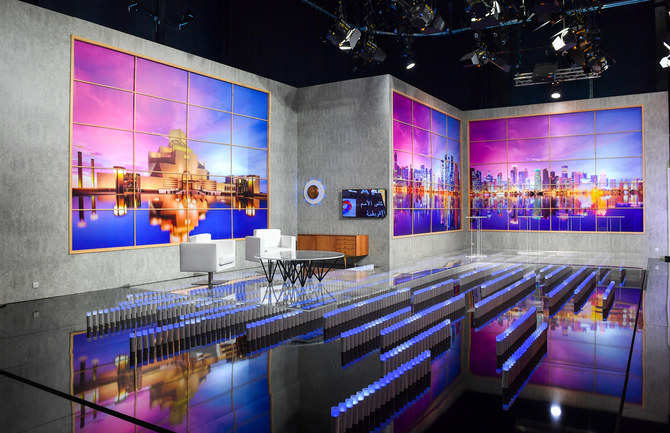
Twitter partners with beIN SPORTS ahead of 2022 FIFA World Cup

The partnership aims to ensure that Twitter continues to be the home of football and a point of reference for fans across the region. (Shutterstock/File)
Short Url
Updated 15 August 2022
Follow

Twitter partners with beIN SPORTS ahead of 2022 FIFA World Cup

  • Channel will offer exclusive content on Twitter to MENA audiences during tournament

LONDON: beIN SPORTS launched a new partnership with Twitter on Monday to share tailored content throughout the world’s biggest football event, the FIFA World Cup, scheduled to kick off in Qatar in November.

beIN SPORTS will distribute content exclusively for regional audiences on Twitter by spotlighting the most significant moments throughout the competition. It will also offer brands and marketers association opportunities through Twitter Amplify sponsorships.

The official broadcaster of the FIFA World Cup across the Middle East and North Africa region will highlight each match with content clips, including one match recap and an in-studio analysis, aired through the beIN SPORTS official handle, @beINSPORTS, for a total of 320 videos.

“As one of the leading official broadcasters of the FIFA World Cup Qatar 2022 in the 24-country MENA region, our talented teams will be working night and day to deliver the best content and insight — using the latest cutting-edge technology, so that every fan’s experience is incredible,” said Faisal Mahmoud Al-Raisi, director of digital at beIN MENA.

“We are delighted to partner with Twitter for this historic event to do everything we can for our millions of followers across MENA to make memories for a lifetime.”

The move comes after studies by beIN SPORTS that showed 78 percent of World Cup fans on Twitter believe that the social media platform offers exclusive content.

The partnership aims to ensure that Twitter continues to be the home of football and a point of reference for fans across the region.

“Football is one of the biggest conversations in this region. We’ve witnessed a 74 percent spike in average monthly football conversations in comparison to the previous 12 months,” said Kinda Ibrahim, Twitter director of global partnerships, MEA and Turkey. “From Saudi Arabia alone, we’ve seen more than 53 million tweets about football so far this year.

“When Twitter talks sports, the world listens. From firing up fan excitement to meeting fans on their home turf, Twitter is the best place to connect to the moments that get the world talking — right where it’s happening,” Ibrahim added.

“By working with the region’s biggest sports broadcaster, we are excited to provide near real time match highlights to die hard fans who drive the intensity and build community around one of the most watched global sporting events.”



Lebanon’s official media scale back Hezbollah coverage after Cabinet ban

Updated 12 March 2026
Follow

Lebanon’s official media scale back Hezbollah coverage after Cabinet ban

  • Information Minister Paul Morcos instructs outlets to comply with government decision
  • Journalists, social media urged to avoid content that could provoke hate speech, incitement

BEIRUT: Lebanon has begun implementing a Cabinet decision taken earlier this month to ban Hezbollah’s security and military activities by scaling back coverage of the group on official media platforms.

The measure, which was described in political circles as a significant and bold step, came after decades during which news about the party and the speeches of its leaders were published verbatim and broadcast live through official media outlets, like the state-run National News Agency, TV station Tele Liban and Radio Lebanon.

“No one is imposing censorship,” an official source told Arab News.

“Rather, there is a commitment to the decisions of the state. It is no longer possible for a speech that attacks the Lebanese government and the state to be published through its official media outlets.”

Information Minister Paul Morcos issued a circular instructing directors of official media outlets to comply with the government’s decision to ban the broadcast of speeches or statements by Hezbollah Secretary-General Sheikh Naim Qassem and statements issued by the group’s armed wing, particularly when they contain criticism of the state.

Morcos also ordered that Hezbollah statements be handled in the same manner as those issued by other political parties, meaning they should not be published verbatim. He further instructed media outlets to avoid using the term “Islamic resistance,” except when it appears directly within Hezbollah statements.

The first manifestations of the decision were Tele Liban’s abstention from live broadcasting a speech by Qassem and a statement made on Tuesday by lawmaker Mohammed Raad, who heads the Hezbollah parliamentary bloc.

The group’s supporters described the move as an attempt “to restrict the resistance, Hezbollah and its leadership in the official media.”

Some argued on social media that preventing the use of terms like “resistance” or “holy warriors (Mujahedin)” and replacing them with expressions such as “Hezbollah” and “fighters” was “aimed at brainwashing and stripping the party of its resistance identity.”

During a Cabinet session on Thursday, Morcos raised the issue of content circulating on social media that incites murder and sectarian strife. This comes against the backdrop of the war that Hezbollah waged from Lebanon against Israel on March 2, without state approval, which led to a sharp division in Lebanese public opinion.

Morcos, who is also Cabinet spokesperson, said after the session that what was being published “exceeds the bounds of freedom of opinion, the press and expression.”

Prime Minister Nawaf Salam considered it to fall under the penal code, specifically regarding crimes that harm national unity, he said, and that “we are against strife in all its forms.”

Morcos also urged journalists, influencers and social media users to remain aware of the sensitivity of the current situation and to avoid content that could provoke strife, hate speech or incitement.

He acknowledged, however, that, according to a legal study, he has no authority over social media, even on media-related matters.

“The Ministry of Information does not exercise a guardianship role and lacks judicial police powers,” he said.

“These authorities rest with the public prosecution offices, which are overseen by the minister of justice and fall within the domain of criminal law and criminal prosecution.”

The ban was agreed during a Cabinet session on March 2, after Hezbollah launched six rockets from Lebanese territory toward northern Israel, the first such attack since the November 2024 ceasefire, prompting retaliatory strikes.

The Cabinet reaffirmed that “the decision of war and peace rests exclusively with the Lebanese state and its constitutional institutions,” and called on Hezbollah to hand over its weapons to the state while limiting its role to political activity within the legal and constitutional framework.