

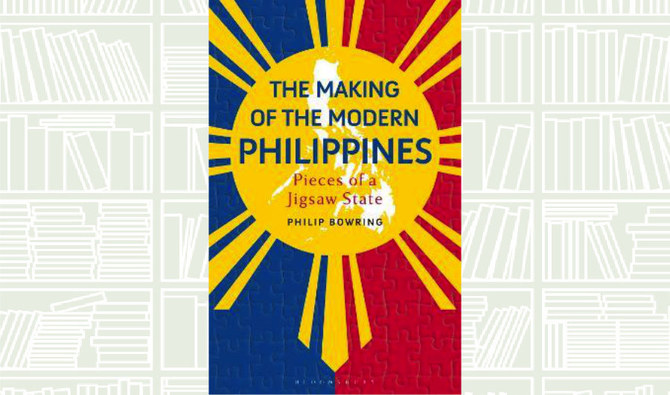
What We Are Reading Today: The Making of the Modern Philippines by Philip Bowring

Short Url
Updated 14 August 2022
Follow

What We Are Reading Today: The Making of the Modern Philippines by Philip Bowring

The Philippines is an eclectic and unique mix of culture, environment, people and politics. Known mostly for natural disasters, migrant labor and dictatorial presidents, in this book Philip Bowing shows how it is much, much more, according to a review on goodreads.com.

Deftly navigating the history of this populous island republic, the book traces its history to define and explain its position in the modern world.

Looking past the headlines of volcanoes, earthquakes and violence, it asks why has the Filipino economy lagged behind its neighbors, and explores the importance of its location in geopolitics.

Taking the history of the Philippines from its pre-colonial era, through its Spanish and American occupations and up to the modern day, it unravels the complex politics, culture, peoples and economy of this rich and unique nation.

Engaging with challenges the Filipino people face today such as federalism, revolution, Mindanao, the diaspora, capitalism and relations with China, it rediscovers the struggles, culture and history of its past to understand the present.


What We Are Reading Today: Can College Level the Playing Field? 

Updated 13 March 2026
Follow

What We Are Reading Today: Can College Level the Playing Field? 

Authors: Sandy Baum and Michael McPherson

We often think that a college degree will open doors to opportunity regardless of one’s background or upbringing. In this eye-opening book, two of today’s leading economists argue that higher education alone cannot overcome the lasting effects of inequality that continue to plague us, and offer sensible solutions for building a more just and equitable society.

Sandy Baum and Michael McPherson document the starkly different educational and social environments in which children of different races and economic backgrounds grow up, and explain why social equity requires sustained efforts to provide the broadest possible access to high-quality early childhood and K–12 education. 

They dismiss panaceas like eliminating college tuition and replacing the classroom experience with online education.