

Saudi-American Native Fury 2022 maneuvers begin in Yanbu

1 / 7
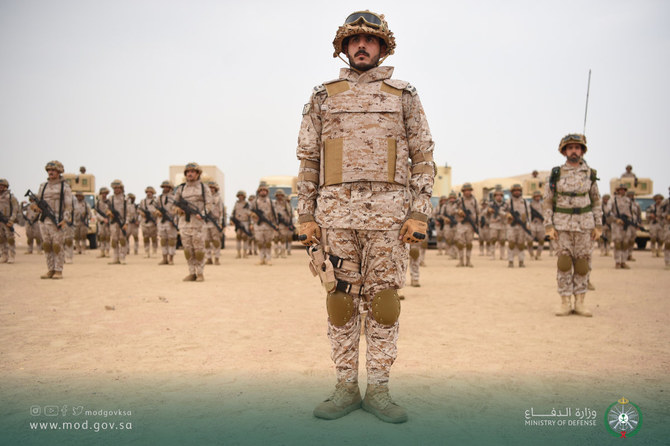
The “Outrageous Anger 22” exercise was launched by the Royal Saudi Armed Forces and US Marine Corps. (Twitter/@modgovksa)
2 / 7
The “Outrageous Anger 22” exercise was launched by the Royal Saudi Armed Forces and US Marine Corps. (Twitter/@modgovksa)
3 / 7
The “Outrageous Anger 22” exercise was launched by the Royal Saudi Armed Forces and US Marine Corps. (Twitter/@modgovksa)
4 / 7
The “Outrageous Anger 22” exercise was launched by the Royal Saudi Armed Forces and US Marine Corps. (Twitter/@modgovksa)
5 / 7
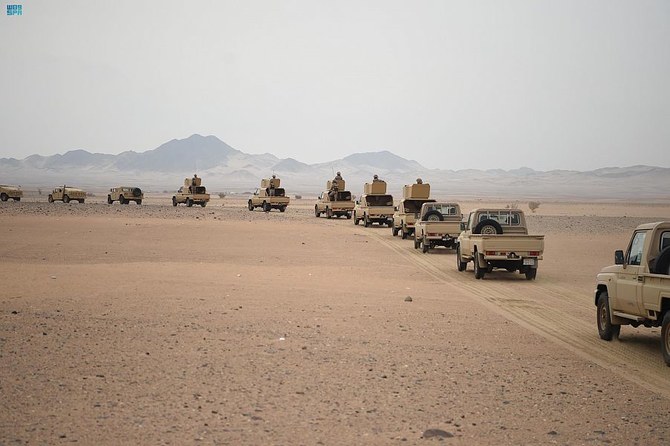
Photo/Saudi Press Agency
6 / 7
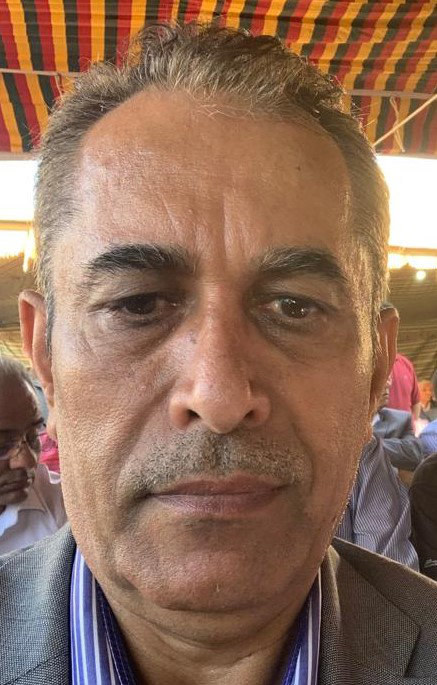
Ali Al-Balawi, a strategic analysis expert. (Supplied)
7 / 7
Saudi-American Native Fury exercise will raise the level of compatibility and combat readiness of the Saudi and American forces. (SPA)
Short Url
Updated 14 August 2022
Follow

Saudi-American Native Fury 2022 maneuvers begin in Yanbu

  • Exercise to raise level of combat readiness of Saudi, American forces
  • The month-long drill includes logistical exercises and operations with live ammunition

RIYADH: The Native Fury 2022 drill between Saudi armed forces and US marine corps has begun in Yanbu’s exercise operations area.

The exercise will last nearly a month and include many drills and exercises on logistics as well as live ammunition shooting.

It was opened by Saudi Air Force Major General Ahmed Aldebais and US Marine Corps Maj. Gen. Paul J. Rock and a number of senior officials from both sides, who toured the sites of the drill.

The exercise commander Col. Saud Al-Aqili said that the “Native Fury” exercise aimed to “practice and train the implementation of bilateral operational and logistical military plans, exchange experiences between the two sides, and complementary work with civil authorities to implement such mixed exercises.”
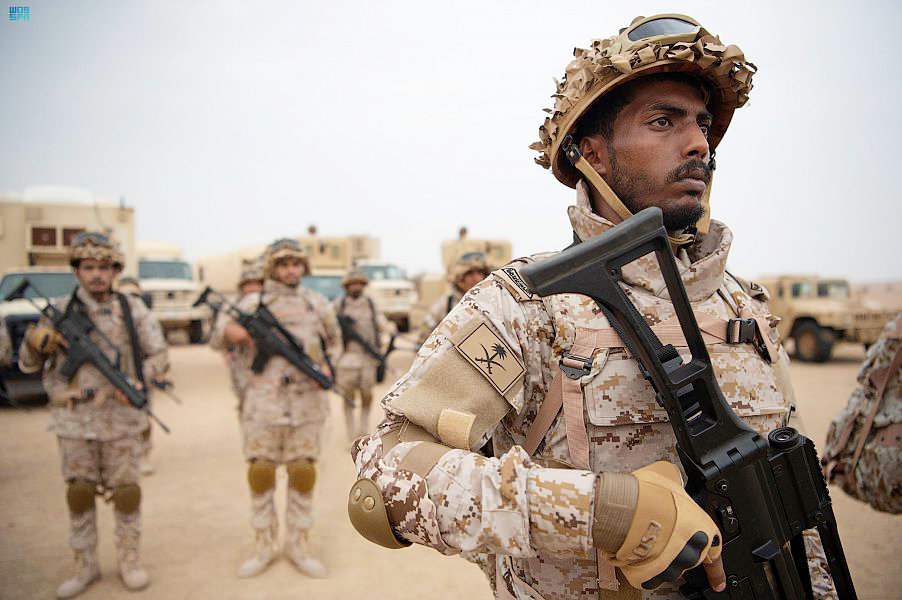


The exercise was opened by Saudi Air Force Major General Ahmed Aldebais and U.S. Marine Corps Maj. Gen. Paul J. Rock and a number of senior officials from both sides and is taking place in Yanbu. (SPA)

Col. Matthew H., commander of the American forces participating in the exercise, said that the maneuvers improved complementary work and raise the level of compatibility and combat readiness of the Saudi and American forces.

Relations between the two countries date back to 1931, when the Kingdom began the commercial journey of oil exploration and production.

In 1933, King Abdulaziz bin Abdulrahman Al-Saud granted an American company the right to explore for oil, which was followed by the signing of a cooperation agreement between the two countries.

The historic meeting on board the US cruiser (USS Quincy) on Feb. 14, 1945 between King Abdulaziz and US President Franklin Roosevelt established decades of relations and strategic partnership between Saudi Arabia and the US.

Ali Al-Balawi, a strategic analyst, told Arab News: “The exercise means a lot as it affirms the importance of Saudi-American joint military cooperation safeguarding common interests and regional security.”

Al-Balawi said that the exercise confirmed that joint training programs between the Saudi Armed Forces and the United States Marines “will continue, as planned, and are not influenced by any other political factors.”

He said that this meant that security and stability were given priority over many other matters, “especially because American military and intelligence officials realize that without the Saudi positive role there will be no security or stability in the Middle East and no protection to the US interests.”  

Saudi Arabia, according to Al-Balawi, is a pivotal and important country with moderate policies, which “are important factors in the international and regional stabilization industry.”

He said that the combat efficiency of the Saudi Army, as well as the quality of the advanced and sophisticated weapons it deals with, qualified it for joint training with the US Navy. He highlighted the importance of the waterways surrounding Saudi Arabia and the international trade passing through the region, which required Saudi power.

Al-Balawi said that the goal of the exercise was to emphasize Saudi Arabia and America’s ability to provide regional security requirements, to send a message to all threats to vital waterways in the region, and to show that Saudi forces have the rehabilitation and training capability to deal with emergency conditions as they occur.


Rebuilding lives: Saudi initiative gives fresh hope to amputees

Updated 08 December 2025
Follow

Rebuilding lives: Saudi initiative gives fresh hope to amputees

  • Baitureh Health Association has provided life-changing support to more than 1,000 people
  • Prosthetic limbs can cost up to $76,000

MAKKAH: The Baitureh Health Association for the Care of Amputees has quickly become one of Saudi Arabia’s most impactful humanitarian initiatives, transforming support for people with lost limbs.

Established in 2020, the association deals with people’s physical, psychological and social needs and fills a long-standing gap in the national health system.

CEO Badr bin Alyan told Arab News that the initiative was created in response to a growing need, driven by amputations linked to accidents, blood disorders, occupational injuries and other causes.

Its operations were “based on service integration rather than fragmentation, enabling beneficiaries to return to their lives with confidence, ability and independence,” he said.

This holistic process covers everything from initial evaluations to psychological and physical rehabilitation, family support, prosthetic fitting and ongoing maintenance.

Its psychological support programs include group sessions led by certified mentors who have undergone similar experiences, as well as field visits to support patients before and after amputation.

More than 1,000 people across the Kingdom have so far benefitted from the association’s work, about 10 percent of them children, whom Alyan said were “the most sensitive and the most in need of intensive psychological and family support.”

Its specialist programs for children — My First Step and Therapeutic Entertainment — help young people adapt to prosthetics, overcome trauma and build confidence in a safe and supportive setting.

The association has completed more than 300 prosthetic fittings, including silicone cosmetic limbs, mechanical, hydraulic, electronic and 3D-printed models. 

Alyan said the type of prosthetic selected depended on a number of factors, such as age, lifestyle, type of amputation, activity level and psychological readiness.

Children also have to undergo frequent adjustments to their new limbs to account for their growth.

Each prosthetic cost between SR20,000 ($5,300) and SR285,000, Alyan said.

The association funds its work through sponsorships, community contributions and strategic partnerships.

Despite its success, Alyan said there were still challenges to be faced, including the lack of a consolidated base for the provision of psychological support and therapy services and prosthetics development and maintenance.

There was also a shortage of local experts, he said.

In response, the association set up a rehabilitation center, which Alyan said would help to localize prosthetics manufacturing, reduce costs and accelerate fitting processes and create opportunities for local experts to develop their knowledge and experience.

But providing prosthetics was only part of the association’s work, he said.

“Rebuilding a human life is the deeper goal.”