Summer home where Pakistani founder spent final days lives on as monument to his memory

The picture taken on August 2, 2022 shows exterior view of Quaid-e-Azam Residency in Ziarat, Balochistan, Pakistan. (AN Photo)
Short Url
Updated 14 August 2022
Follow

Summer home where Pakistani founder spent final days lives on as monument to his memory

  • Two-story wooden building called Quaid-e-Azam Residency was built by British in Ziarat Valley in 1892
  • It was a summer retreat of Muhammad Ali Jinnah, today one of Pakistan’s most widely visited heritage sites

QUETTA: A single bed, modest wooden furniture, and black and white photographs on the walls of a small bedroom in a 19th-century residence in southwest Pakistan present an unassuming setting. 

But this is no ordinary room: it has special significance for Pakistanis as the place where the country's founding father spent some of the last days of his life.  

The Ziarat, or Quaid-e-Azam, Residency, has a two-story wooden structure amidst a juniper forest and was built during British rule in 1892. Located in Ziarat Valley, a picturesque hill station in Balochistan province, the house was a summer retreat of Muhammad Ali Jinnah, Pakistan’s Quaid-e-Azam (Great Leader). It was also where Jinnah stayed for two months as he tried to recover from a lung disease a year after the success of his movement to separate Pakistan from India on Aug. 14, 1947 after the end of British colonial rule. 

Decades later, people from across the country visit Ziarat to pay tribute to Jinnah's memory.
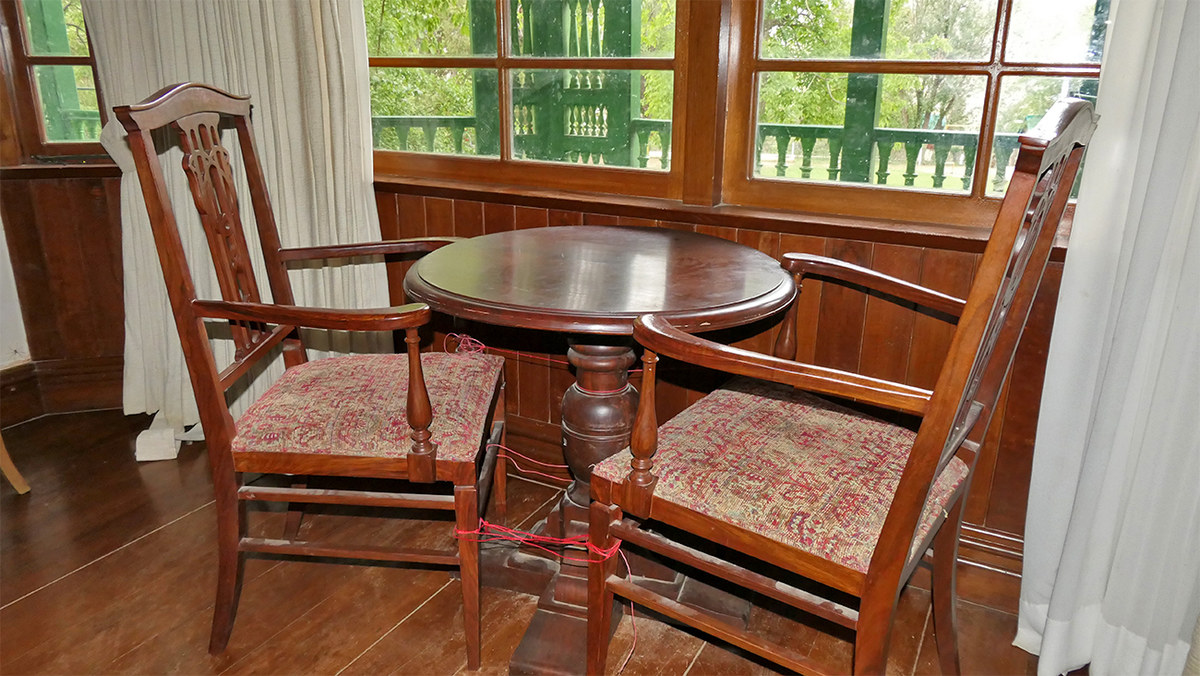


Chairs and a table used by Pakistani founder Muhammad Ali Jinnah for political meetings on display at his summer residence in Ziarat, Balochistan, on Aug. 2, 2022. (AN Photo)  

“We have read about the Quaid Residency in books and heard stories from our elders … but when I stepped inside the residency, my feelings changed,” Chanda Ashraf, a 21-year-old student from Gujranwala, told Arab News.  

“Inside this residency, I have experienced how the Quaid lived here and his existence was tangible,” she said. “I request all Pakistanis to visit this place once in their lifetime.”

The house has eight rooms, fitted with cedar wood. Jinnah’s bedroom is on the second floor, in front of his sister’s, Fatimah Jinnah, who took care of him in Ziarat.
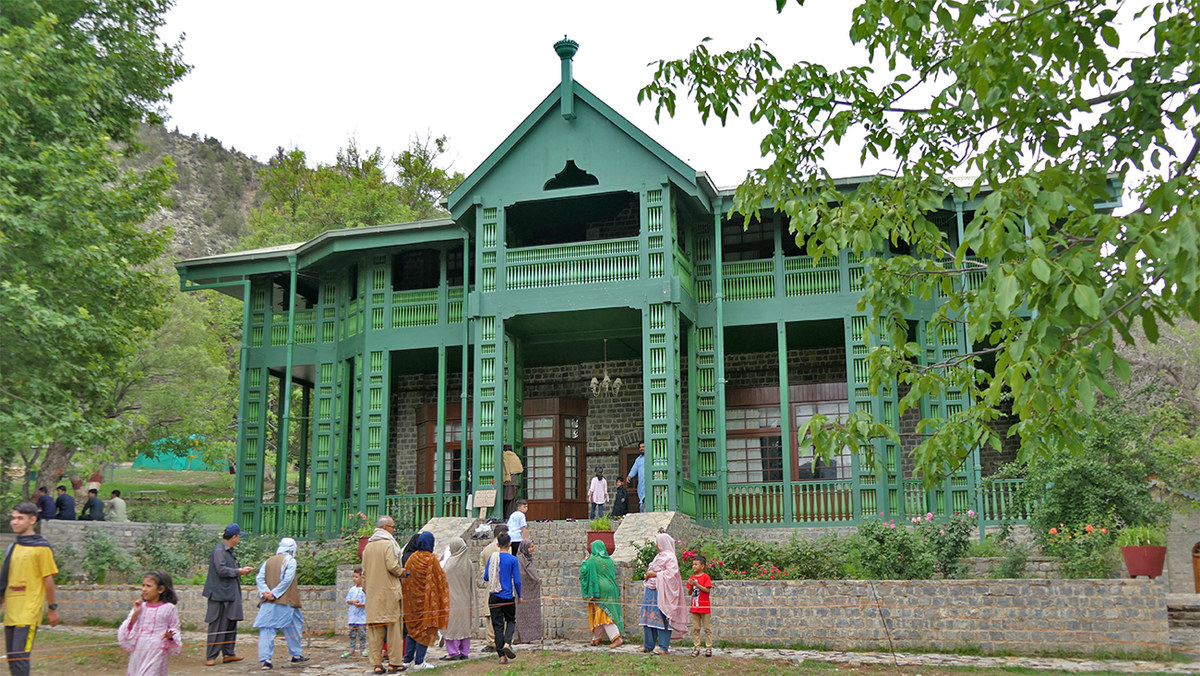


Tourists take photos in front of Pakistani founder Muhammad Ali Jinnah’s summer residence in Ziarat, Balochistan, on Aug. 2, 2022. (AN Photo)

Jinnah had had tuberculosis since the 1930s, but hid his condition because he believed it would hurt him politically, historians say. In July 1948, Jinnah arrived in Quetta and journeyed to the higher retreat at Ziarat, where the Pakistani government sent the best doctors it could find to treat him. It was here that a diagnosis of tuberculosis and advanced lung cancer was confirmed. 

On August 13, on the eve of the first anniversary of the independence for which he had fought so hard, the founding father was moved to the lower altitude of Quetta and finally back to Karachi on September 11, 1948. 

Jinnah died later that night at 10:20 pm at his home in Karachi. He was 71 years old and Pakistan was a little over one. 

Today, the Quaid’s clothes and the tableware he and his sister had used at the Ziarat summer home are on display at the residency - now a museum and one of Pakistan’s most widely visited national heritage sites. 
The Quaid-e-Azam Residency has also appeared on the 100-rupee note since 2006.
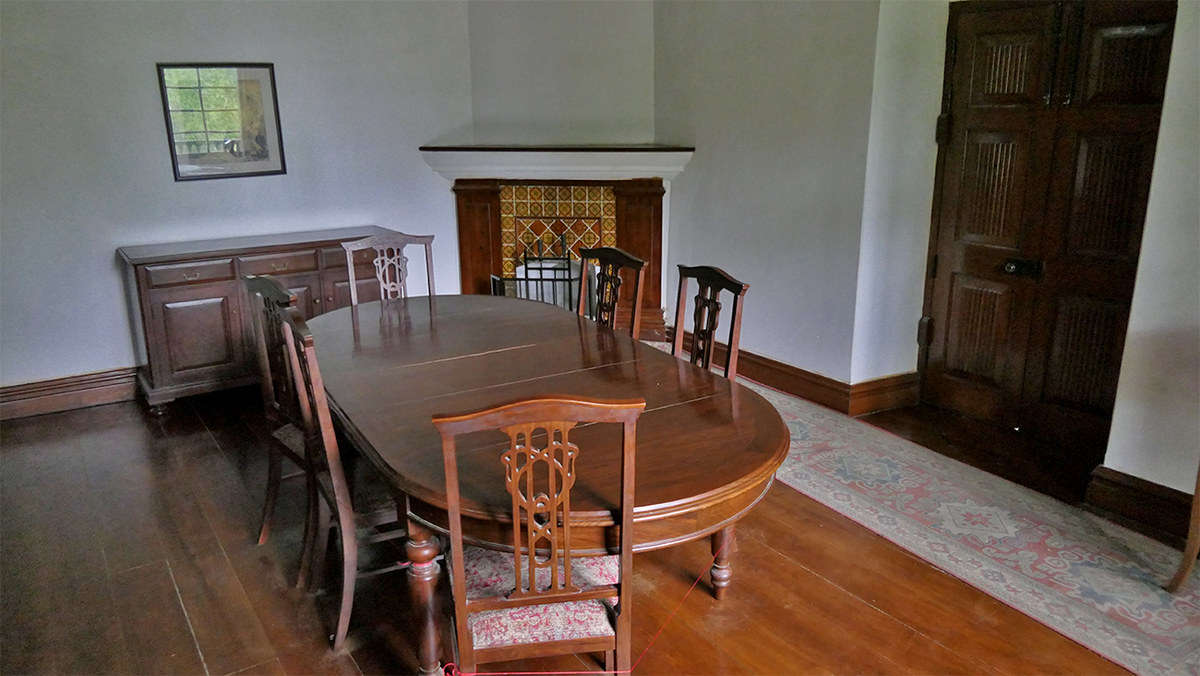


A dining table used by Pakistan founder Muhammad Ali Jinnah is on display at his summer residence in Ziarat, Balochistan, on Aug. 2, 2022. (AN Photo)  

Muhammad Rahim, who for the past 19 years has been working as an official tour guide at the residency, said he was proud to be working at the house belonging to the man who had “struggled for an independent country for our future generations.”

“My late uncle Toti Khan had performed duties in the residency when Quaid-e-Azam Muhammad Ali Jinnah had come to live here back in the summer of 1948,” he told Arab News.  
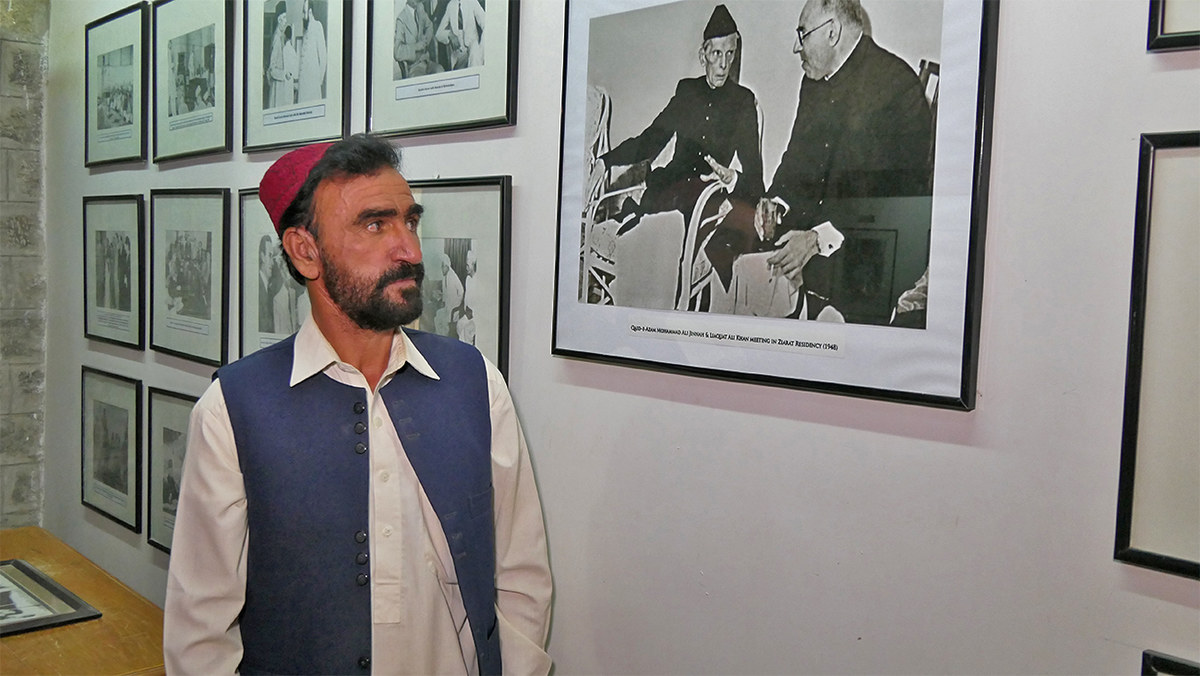


Muhammad Rahim, a guide at the Quaid-e-Azam Residency, poses at the museum’s gallery with photos of Pakistani founder Muhammad Ali Jinnah, in Ziarat, Balochistan, on Aug. 2, 2022. (AN Photo)  

“Despite two janitors hired for cleaning Quaid’s residence, I clean the entire residency with my hands, because I consider it as my service for the Quaid.”

The building was damaged in 2013, when a blaze tore through its wooden structure after a grenade attack by a Baloch separatist group. It was restored within four months.

Balochistan has long been the scene of a low-level insurgency, and a few attacks have been reported in Ziarat district in recent years, but the province’s tourism minister, Abdul Khaliq Hazara says, told Arab News the security situation was normal and thousands of people visited Jinnah’s residence every year.

“The government has been developing the infrastructure in Ziarat to facilitate tourists,” he said. “The Quaid Residency is a national heritage.”

A visitor Mohamad Alam Qasim said: "Not just for Balochistan, this is Pakistan’s heritage. Quaid-e-Azam was our national hero. He was everyone's leader."
Pakistan joins regional talks on Afghanistan in Iran as Kabul stays away

Updated 15 December 2025
Follow

Pakistan joins regional talks on Afghanistan in Iran as Kabul stays away

  • China, Pakistan, Pakistan, Tajikistan, Uzbekistan, Turkmenistan all joined talks organized by Iran, as did Russia
  • Afghanistan was invited but decided not to attend, Taliban-led government was tight-lipped on the reasons

TEHRAN, Iran: Afghanistan’s neighbors met in Iran and agreed to deepen regional coordination to address political, economic and security challenges, as well as calling for sanctions on Afghanistan to be lifted. 

The only absent party? Afghanistan itself.

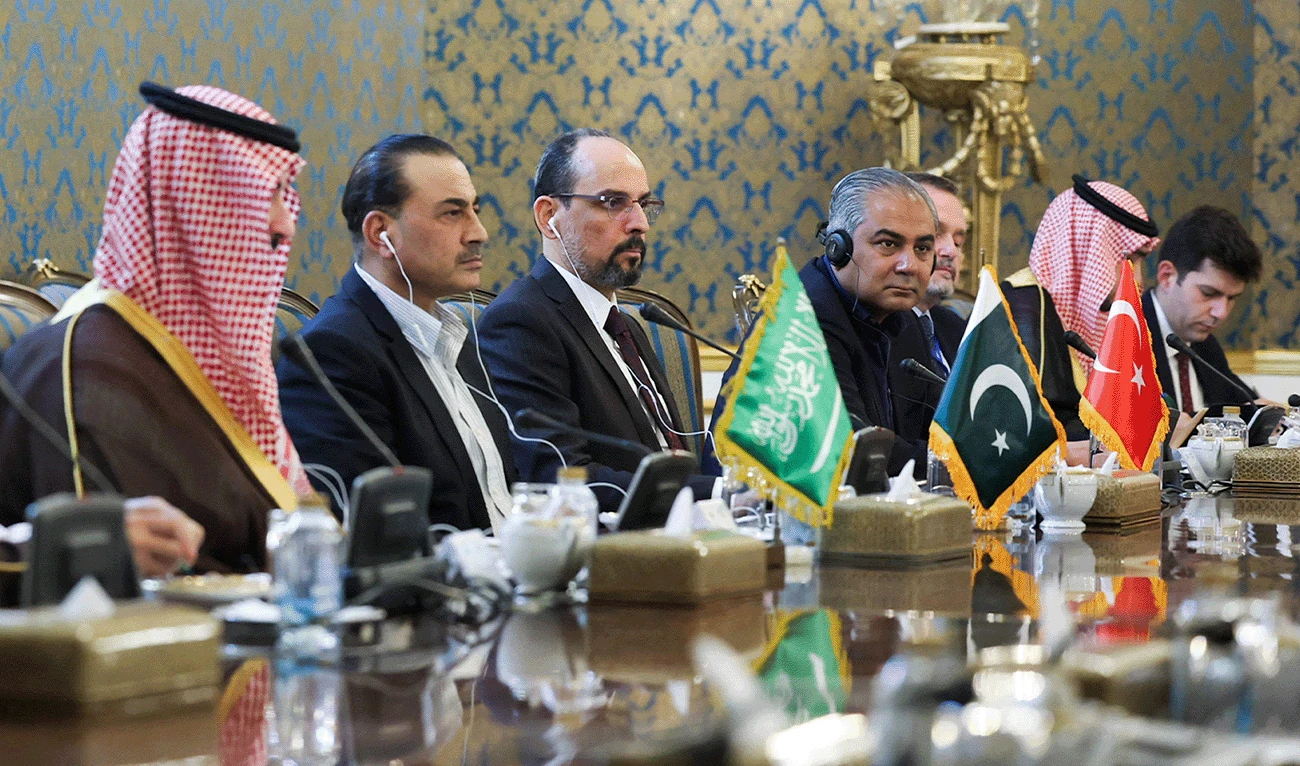
China, Pakistan, Pakistan, Tajikistan, Uzbekistan and Turkmenistan all joined the talks organized by Iran, as did Russia, according to a statement released after the meeting on Sunday.

Afghanistan was invited but decided not to attend. Its Taliban-led government was tight-lipped on the reasons, with the foreign ministry saying only that it would not participate because Afghanistan “currently maintains active engagement with regional countries through existing regional organizations and formats, and has made good progress in this regard.”

The statement from the talks in Iran stressed the importance of maintaining economic and trade ties with Afghanistan to improve living conditions and called for the country’s integration into regional political and economic processes.

The Taliban were isolated after they retook power in Afghanistan in August 2021, but in the past year, they have developed diplomatic ties. They now raise several billion dollars every year in tax revenues to keep the lights on.

However, Afghanistan is still struggling economically. Millions rely on aid for survival, and the struggling economy has been further impacted by the international community not recognizing the Taliban government’s seizure of power in the wake of the chaotic withdrawal of US-led troops in 2021. Natural disasters and the flow of Afghans fleeing Pakistan under pressure to return home have underlined Afghanistan’s reliance on foreign aid to meet essential needs.

The countries at the talks also voiced security concerns and pledged cooperation in combating terrorism, drug trafficking and human smuggling, while opposing any foreign military presence in Afghanistan. They underscored the responsibility of the international community to lift sanctions and release Afghanistan’s frozen assets, and urged international organizations to support the dignified return of Afghan refugees from neighboring countries.

The participants backed efforts to reduce tensions between Afghanistan and Pakistan, which have been particularly strained, with border clashes between the two sides killing dozens of civilians, soldiers and suspected militants and wounding hundreds more.

The violence followed explosions in Kabul on Oct. 9 that Afghan authorities blamed on Pakistan. A Qatar-mediated ceasefire has largely held since October, although there have been limited border clashes. The two sides failed to reach an overall agreement in November despite three rounds of peace talks.

Asif Durrani, Pakistan’s former special representative for Afghanistan, said the Taliban government’s decision to skip the meeting reflected a “lack of political maturity.” 

Writing on X, Durrani said the move reinforced concerns that the Taliban were unwilling to negotiate, instead adopting an “I don’t accept” stance that he said would do little to resolve serious regional problems.

Mohammad Sadiq, the current Pakistani special representative for Afghanistan who attended the talks, wrote on X that the Afghan people had already suffered enough and deserved better.

Only an Afghanistan that does not harbor militants would inspire confidence among neighboring and regional countries to engage meaningfully with Kabul and help unlock the country’s economic and connectivity potential, he wrote.

Participants agreed to hold the next meeting of foreign ministers of Afghanistan’s neighboring countries as soon as possible in Ashgabat, Turkmenistan, and welcomed Pakistan’s offer to host the next round of special envoys’ talks in Islamabad in March.

Iran’s foreign ministry spokesman, Esmail Baghaei, on Sunday said that the meeting had not been held for about two years and marked the first such gathering attended by special envoys on Afghanistan from neighboring countries as well as Russia. Russia and Uzbekistan sent the special envoys of their presidents, while Pakistan was represented by a delegate from the prime minister’s office.

Landlocked Afghanistan is sandwiched between the Middle East, Central Asia, and South Asia, making it strategically located for energy-rich and energy-hungry nations.