WASHINGTON: Former US diplomat Bill Richardson said Sunday that he was “optimistic” about efforts to negotiate a “two for two” prisoner swap with Russia that would free US basketball star Brittney Griner and another American.
Richardson, a former ambassador to the UN, has negotiated the release of several Americans held in other countries. Reports last month said he was expected to travel to Russia for talks over Griner, who on Thursday was sentenced to nine years in prison on a drug charge.
While insisting Sunday that he is only a “catalyst” in any negotiations, Richardson’s mention of a “two-for-two” swap including Griner suggested inside knowledge.
“My view is, I’m optimistic,” he told ABC’s “This Week.”
“I think she’s going to be freed, I think she has the right strategy of contrition, there’s going to be a prisoner swap — though I think it will be two for two, involving Paul Whelan.”
Whelan is a former US Marine who was convicted of espionage in June 2020 and sentenced to 16 years in prison. He has insisted on his innocence.
His case and Griner’s have been enmeshed in the deep US-Russia tensions since Russian troops invaded Ukraine in February.
But recent comments from both sides — including from US Secretary of State Antony Blinken and his Russian counterpart, Sergei Lavrov — have suggested signs of movement, and US President Joe Biden has faced repeated calls to arrange a deal.
Reports suggested that Russian arms trafficker Viktor Bout, known as the “Merchant of Death,” might be freed in exchange for Griner and Whelan. The Kremlin has long sought his release.
But Richardson’s mention of a “two for two” swap raises questions about who the second Russian in the equation might be.
And some Americans have asked why Marc Fogel, a US citizen serving a 14-year sentence in Russia on marijuana charges — which he said he had for medicinal purposes — has not been mentioned.
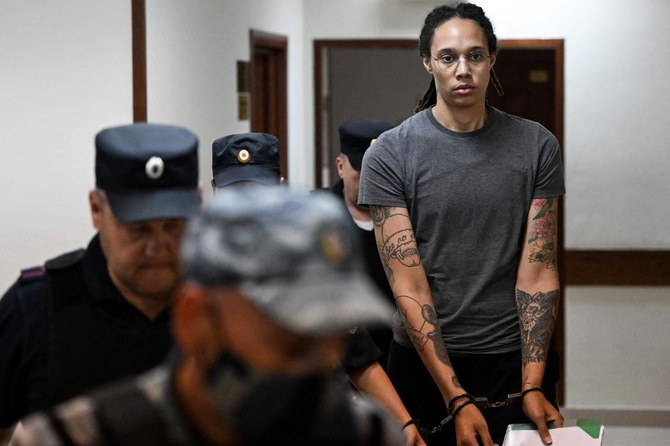
Griner was sentenced Thursday to nine years in a Russian penal colony and ordered to pay a fine of one million rubles ($16,590) for smuggling narcotics.
She was arrested at a Moscow airport for possessing vape cartridges with a small amount of cannabis oil.
The 31-year-old, who was in Russia to play for the professional Yekaterinburg team during her off-season from the Phoenix Mercury, said the substance was prescribed by a US doctor to relieve pain.
The two-time Olympic gold medalist and Women’s NBA champion pleaded guilty but said she did not intend to break the law.
Richardson is a prominent Democrat, having served in the US Congress, as governor of New Mexico, and both as UN envoy and energy secretary in the Bill Clinton administration.
Since then, he has worked as a discreet go-between in several sensitive hostage talks with foreign countries, including North Korea. In November 2021 he helped secure the release of US journalist Danny Fenster from a prison in Myanmar.


![]()

Ex-US envoy Richardson ‘optimistic’ Griner will be freed
Short Url
https://arab.news/mcnfn
Ex-US envoy Richardson ‘optimistic’ Griner will be freed
- Bill Richardson: ‘I think she’s going to be freed, I think she has the right strategy of contrition, there’s going to be a prisoner swap — though I think it will be two for two, involving Paul Whelan’
- Some Americans have asked why Marc Fogel, a US citizen serving a 14-year sentence in Russia on marijuana charges — which he said he had for medicinal purposes — has not been mentioned


Latest updates


Recommended


© 2026 SAUDI RESEARCH & PUBLISHING COMPANY, All Rights Reserved And subject to Terms of Use Agreement.