Oil prices rose in early Asian trade on Thursday, bouncing off multi-month lows in the previous session caused by data signalling weak US fuel demand.
Brent crude futures rose 53 cents, or 0.6 percent, at $97.31 a barrel by 0020 GMT while West Texas Intermediate (WTI) crude futures rose 55 cents, also a 0.6 percent gain, to $91.21. Both benchmark fell to their weakest levels since February in the previous session.
US crude oil inventories rose unexpectedly last week as exports fell and refiners lowered runs, while gasoline stocks also posted a surprise build as demand slowed, the Energy Information Administration said.
On the supply side, ministers for the Organization of the Petroleum Exporting Countries (OPEC) and allies including Russia, known as OPEC+, agreed to a small increase in the group’s output target, equal to about 0.1 percent of global oil demand.
While the United States has asked the group to boost output, spare capacity is limited and Saudi Arabia may be reluctant to beef up production at the expense of Russia, hit by sanctions over the Ukraine invasion that Moscow calls “a special operation.”
Ahead of the meeting, OPEC+ trimmed its forecast for the oil market surplus this year by 200,000 barrels per day (bpd) to 800,000 bpd, three delegates told Reuters.
Supporting prices, the Caspian Pipeline Consortium (CPC), which connects Kazakh oil fields with the Russian Black Sea port of Novorossiisk, said that supplies were significantly down, without providing figures.


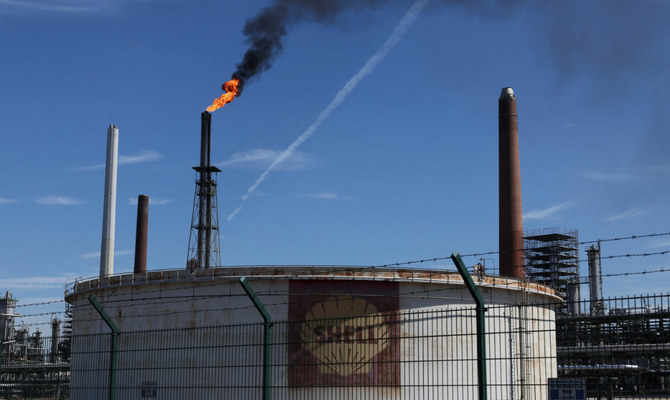
Oil prices rebound after dropping to lowest in months on weak US demand
https://arab.news/5dgjk
Oil prices rebound after dropping to lowest in months on weak US demand

- US crude oil inventories rose unexpectedly last week as exports fell and refiners lowered runs


Arab Cities Culture and Creative Industries Index launched
- UNESCO official says the index ‘strengthens the evidence base on culture and creative industries in the Arab region’
- It is planned as an advanced policy-enabling tool designed to position culture and creative industries as core components of future governance models
DUBAI: The Mohammed bin Rashid School of Government launched the 2026 edition of the Arab Cities Culture and Creative Industries Index on Wednesday.
Building on UNESCO’s frameworks to quantify the contributions that culture and creativity make to urban development in the Arab region, the index is the first regionally grounded and evidence-based framework.
Ernesto Ottone Ramirez, UNESCO’s assistant director-general for culture; Hala Badri, director-general of Dubai Culture; and Ali Al-Marri, MBRSG’s executive president, attended a special panel at the World Governments Summit in Dubai, during which the index was announced.
Welcoming the launch of the Index, Ramirez said: “It strengthens the evidence base on culture and creative industries in the Arab region, providing reliable, comparable, and policy-relevant figures.
“Such data is essential to guide public investment, inform decision-making, support inclusive cultural policies, and monitor culture’s contribution to sustainable development.”
The launch marks a definitive transition from ambition-led strategies to data-informed cultural policymaking, according to Al-Marri, who said: “By positioning culture as a core component of governance and a productive economic sector with measurable impact, we provide Arab cities with the tools to benchmark their creative ecosystems against global standards while respecting our unique regional context.”
According to a media release, the index is planned as an advanced policy-enabling tool designed to position culture and creative industries as core components of future governance models, marking a significant paradigm shift in which culture is recognized not merely as a social asset but as a strategic pillar of economic resilience, innovation, and inclusive growth.
Badri emphasized that the launch of the index represents an important step in highlighting culture’s role in advancing societies and positioning the cultural and creative industries as key contributors to the emirate’s knowledge- and innovation-driven economy.


