

UAE's Coral Energy becomes Pakistan's top fuel oil supplier – data

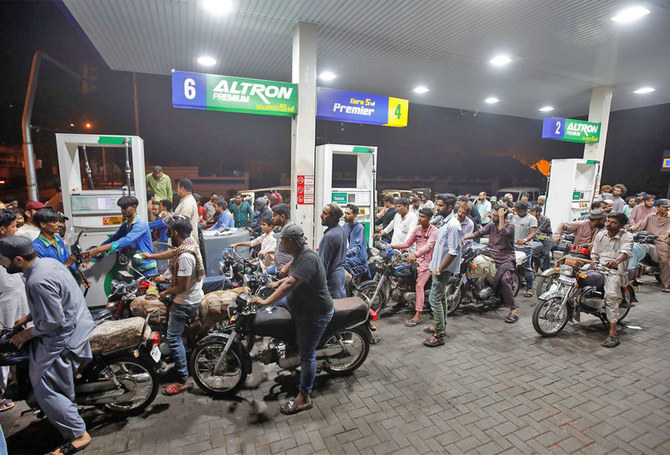
People wait their turn to get fuel at a petrol station, in Karachi, Pakistan on June 2, 2022. (REUTERS)
Short Url
Updated 03 August 2022
Follow

UAE's Coral Energy becomes Pakistan's top fuel oil supplier – data

  • Coral Energy won tenders to sell eight fuel oil cargoes to Pakistan State Oil during April-August
  • South Asian nation in June posted record monthly highs for imports and petroleum-related purchases

SINGAPORE: Dubai-based trader Coral Energy has become the top fuel oil supplier to Pakistan in recent months after winning a slew of import tenders floated by state-run Pakistan State Oil (PSO), data compiled by Reuters showed.

Coral Energy won tenders to sell eight fuel oil cargoes to PSO during April-August, said a spokesman for Pakistan's energy ministry, as the country's demand for oil in power generation grew after liquefied natural gas prices surged.

This is equivalent to more than 475,000 tonnes of fuel oil, Reuters calculations showed. Pakistan imported about 992,500 tonnes of fuel oil in the first half this year, data from Pakistan's Oil Companies Advisory Council showed.

PSO started buying fuel oil from Coral Energy this year and, so far, the private trader has become the main supplier for PSO in July and August, PSO's spokesperson said.

It last sold two cargoes of high sulphur fuel oil (HSFO) cargoes to PSO for delivery in the first half of August, at premiums of $77 and $78 per tonne to Middle East quotes on a cost and freight (C&F) basis.

Trading houses Vitol and BB Energy were previously active participants in PSO's fuel oil tenders.

For supplies in the second half of August, Coral Energy had submitted three offers for HSFO cargoes and one offer for low sulphur fuel oil (LSFO) in PSO's tender, documents from PSO's website showed. It was not immediately clear if PSO bought any cargoes in this tender.

Coral Energy could not be immediately reached for comment. The company is looking at expanding its trading activities across Asia, said a source familiar with the matter.

The South Asian nation in June posted record monthly highs for imports and petroleum-related purchases, central bank data showed last week, as electricity demand peaked during summer. Pakistan's foreign exchange reserves have dwindled and it has been struggling to finance a widening current account deficit amid a fast depreciating currency.

Coral Energy, which deals in crude oil and refined products, outbid China's Sinopec for the purchase of Russian ESPO crude oil cargoes in July.


Pakistan alleges India behind Balochistan attacks that killed 18 civilians, 15 troops

Updated 6 sec ago
Follow

Pakistan alleges India behind Balochistan attacks that killed 18 civilians, 15 troops

  • Interior Minister Mohsin Naqvi accuses India of planning coordinated attacks across Balochistan this week 
  • Military says it killed 133 militants on Friday and Saturday in separate operations across various areas in Balochistan

ISLAMABAD: Pakistan’s Interior Minister Mohsin Naqvi this week alleged that India was behind the recent coordinated attacks in the southwestern Balochistan province that the military says killed 18 civilians and 15 troops, vowing to go after those responsible for the violence. 

Pakistan’s military said on Saturday that it had killed 133 militants in the past two days in separate operations in Balochistan. The Inter-Services Public Relations (ISPR) said 41 militants were killed in operations in Panjgur and Harnai areas on Friday while 92 militants, including three suicide bombers, were killed on Saturday as security forces repelled coordinated attacks on civilians and law enforcement personnel in Quetta, Gwadar, Mastung, Nushki, Dalbandin, Kharan, Panjgur, Tump and Pasni areas. 

It added that 18 civilians, including women, children, elderly people and laborers, were killed in the attacks in Gwadar and Kharan, while 15 security personnel were also killed during clearance operations and armed standoffs.

“India is behind these attacks,” Naqvi said during a joint press conference in Quetta late Saturday night with Balochistan Chief Minister Sarfraz Bugti. “I can tell you for sure that India planned these attacks along with these terrorists.”

He vowed that Islamabad would go after the militants who carried out these attacks and their “masters.”

“At this time it is very necessary that the world knows that the main country that is behind terrorism is India, who not only financially supports terrorists but also supports them in their planning and strategy as well,” the minister said. 

In its statement on Saturday, the ISPR said the attacks were launched by “Indian sponsored Fitna al Hindustan,” a reference the military frequently uses for the separatist Balochistan Liberation Army (BLA) militant group. 

The BLA also issued a statement on Saturday, saying it had launched what it called “Operation Herof 2.0,” claiming responsibility for attacks in multiple locations across Balochistan. 

The military had said intelligence reports have confirmed the attacks were orchestrated and directed by militant leaders operating from outside Pakistan who were in direct communication with attackers during the assaults.

Pakistan has frequently blamed India for supporting militant attacks in Balochistan and its northwestern Khyber Pakhtunkhwa (KP) provinces, charges that New Delhi has vehemently denied. 

Balochistan, which borders Iran and Afghanistan, has faced a decades-long insurgency by separatist militant groups, with Pakistani authorities frequently accusing foreign actors of backing the violence. India has repeatedly denied such allegations.