- Economists say dramatic fall of rupee is the 'most immediate reason' for the spike in inflation, the third highest in world
- Pakistani authorities plan to generate $125 million through new taxes to keep budget deficit at the level agreed with IMF
KARACHI: Pakistan’s inflation rose to a 14-year high of 24.93 percent on a year-on-year basis in July, the country's statistics bureau said on Monday, with experts attributing it to falling currency and rising commodity prices.
Pakistan is currently experiencing one of the highest inflationary pressures due to drastic depreciation of its national currency and recent multiple price hikes of fuel and electricity by the government as prior action to revive the stalled $6 billion International Monetary Fund (IMF) program it secured in 2019.
In July, food prices increased by 10.28 percent, energy and housing by 4.98 percent and transport by 3.88 percent, according to the Pakistan Bureau of Statistics (PBS).
Financial experts say rupee's depreciation is a major factor contributing to the inflationary pressure and the South Asian country now has the third-highest inflation rate in the world.
“The dramatic fall in the currency is the most immediate reason for the spike in the inflation rate which is now the third-highest in the world,” Yousuf Nazar, a London-based economist, told Arab News on Monday.
“Pakistani rupee has to appreciate and oil prices need to come down for the inflationary pressures to ease off in the country.”
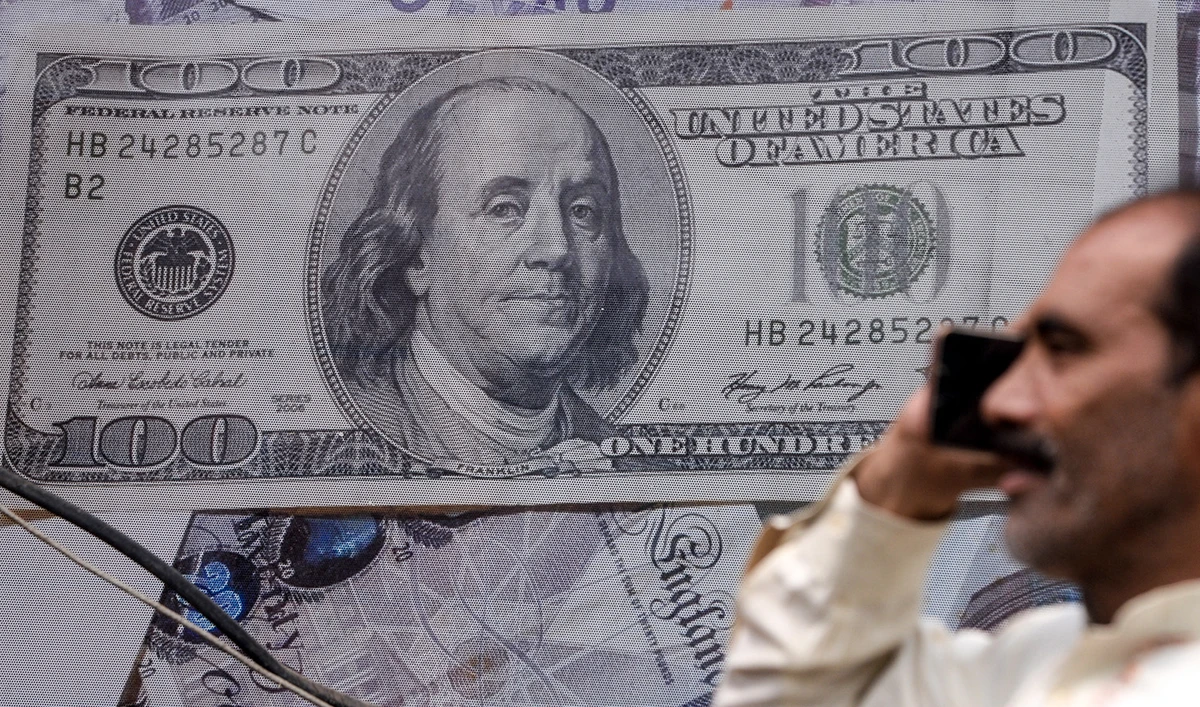
The Pakistani currency on Monday appreciated by 0.22 percent to close at Rs238.84 against the US dollar, in a second consecutive session of appreciation.
The local currency has depreciated by 16.7 percent since July 1, with the greenback rising from Rs204.56 to Rs238.84.
Pakistan is facing one of the worst economic crises in its history since its foreign exchange reserves have significantly declined and the national currency is under tremendous pressure.
However, the country’s finance ministry and the central bank jointly said on Sunday the pressure on rupee would ease in the coming days. Pakistani authorities say the country’s economic “problems are temporary and are being forcefully addressed.”
Finance Minister Miftah Ismail was also optimistic about the rupee’s appreciation following the decline in the import bill that fell by more than a third in July.
Pakistan's imports have declined to $5 billion, down by 35 percent from June's record monthly high of $7.7 billion, Ismail said at a press conference in Islamabad on Sunday.
Financial experts have stressed the need for serious efforts to contain inflation by setting up a special cell to ensure smooth management on the supply side.
“Think about managing inflation beyond monetary tightening through setting up crisis cell for supply-side monitoring of key food items to manage food inflation and ensuring supply of cheaper fuels,” Dr Khaqan Najeeb, a former advisor to the finance ministry, told Arab News.
Najeeb also suggested carving out a serious conservation strategy to ensure that “there is no undervaluation of the rupee” in the short run.
Pakistan has also decided to impose additional taxes to generate Rs30 billion ($125.7 million) for the continuity of oil and gas supply to the nation and to save the Pakistan State Oil (PSO) from defaulting on international payments, according to the finance ministry.
“The ECC (Economic Coordination Committee) decided to clear the outstanding payments accumulated during the period of pervious government and approved an amount of Rs30 billion as supplementary grant for PSO receivables,” the ministry said in a statement on Sunday.
“The ECC also directed Finance Division and FBR (Federal Board of Revenue) to submit proposal for generation of Rs30 billion through taxes within a week.”
Under the IMF program, financial experts say, the country needs to generate funds to keep the budget deficit at the agreed level.
“Bailouts are never free, especially being in an IMF program requires that Pakistan generate the same amount of funds to keep the budget deficit at the agreed level with the fund,” Najeeb said.
“This would require an additional taxation effort and of course it would come from the existing taxpayers most probably the corporate sector as that is the easiest source of collection or it could come from an increased duty structure on the imports. Any kind of new taxation at this stage is an extra burden on those already in the tax net.”