

PM visits Balochistan to evaluate flood-hit areas as deaths from monsoon rains reach 136

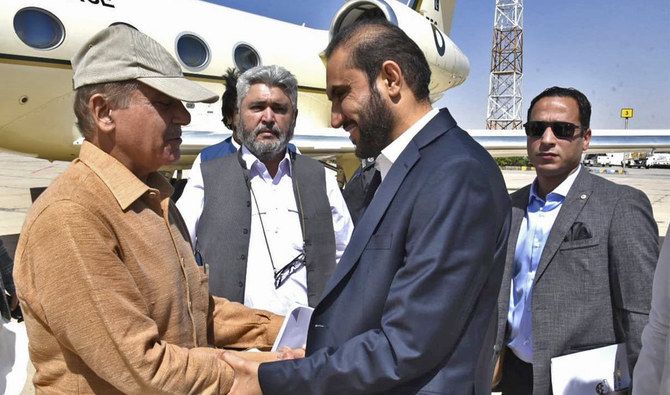
Balochistan Chief Minister Abdul Quddus Bizenjo (right) receives Prime Minister Shehbaz Sharif during a day-long visit to Quetta, Pakistan, to oversee relief operations in the flood-affected areas on August 1, 2022. (APP)
Short Url
Updated 01 August 2022
Follow

PM visits Balochistan to evaluate flood-hit areas as deaths from monsoon rains reach 136

  • Official statistics reveal 434 people have lost their lives in rains across Pakistan since the onset of monsoon
  • Balochistan is the worst affected province where 136 people have been killed in rains, floods since mid-June

ISLAMABAD: Prime Minister Shehbaz Sharif arrived in Quetta on Monday to visit flood-affected areas and interact with people in the southwestern Balochistan province during a daylong visit.

Pakistan has witnessed torrential rains since mid-June, leading to flash floods in different parts of the country.

According to a recent situation report circulated by the National Disaster Management Authority (NDMA), 434 people have lost their lives in rains in different parts of Pakistan since the onset of monsoon.

In Balochistan, nine people lost their lives in the last 24 hours, taking the overall death toll to 136 in rains since the beginning of the season.

“Chairman National Disaster Management Authority Lt. Gen. Akhtar Nawaz briefed the prime minister regarding the relief and rescue activities while onboard the flight to Quetta,” the Associated Press of Pakistan (APP) news agency reported.
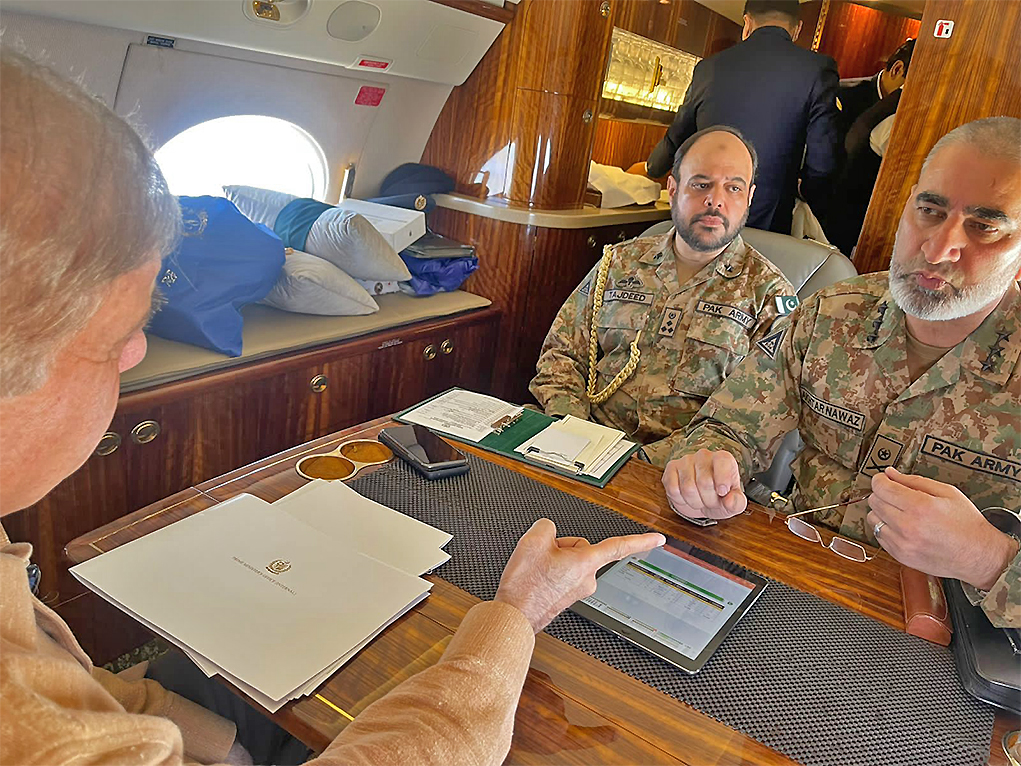


Chairman National Disaster Management Authority, Lt. Gen. Akhtar Nawaz (right) briefs Prime Minister Shehbaz Sharif (left) on his way to Quetta, Balochistan, on Aug 1, 2022. (APP)

The prime minister is expected to visit Qila Saifullah and Chaman in Balochistan to see the situation on the ground.

His visit to the southwestern province comes at a time when the meteorological department of Pakistan has predicted more than normal rain in the month of August.

The Met Office has also forecast relatively high temperatures in mountainous areas, indicating a faster rate of snowmelt that may result in floods in the area.

Experts have already warned that climate change has made monsoon highly erratic in terms of its onset, intensity and area of coverage.

One of them, Dr. Ghulam Rasul, told Arab News last week that monsoon had started penetrating “shadow zones,” including Balochistan and high mountains of Khyber Pakhtunkhwa and Gilgit-Baltistan, which it did not affect in the past.


Pakistan urges pilgrims to complete Saudi biometrics as Hajj preparations gain pace

Updated 30 January 2026
Follow

Pakistan urges pilgrims to complete Saudi biometrics as Hajj preparations gain pace

  • Government warns pilgrims biometric verification is required for Hajj visas
  • Step follows tighter oversight after last year’s Hajj travel disruptions

ISLAMABAD: Pakistan’s government on Friday urged aspiring pilgrims to complete mandatory Saudi biometric verification for Hajj visas, as preparations for the 2026 pilgrimage gather pace following stricter oversight of the Hajj process.

The announcement comes only a day after Pakistan’s Religious Affairs Minister Sardar Muhammad Yousuf said regulations for private Hajj operators had been tightened, reducing their quota following widespread complaints last year, when tens of thousands of pilgrims were unable to travel under the private Hajj scheme.

“Saudi biometric verification is mandatory for the issuance of Hajj visas,” the Ministry of Religious Affairs said in a statement, urging pilgrims to complete the process promptly to avoid delays.

“Hajj pilgrims should complete their biometric verification at home using the ‘Saudi Visa Bio’ app as soon as possible,” it added.

The statement said the pilgrims who were unable to complete biometric verification through the mobile application should visit designated Saudi Tasheer centers before Feb. 8, adding that details of the centers were available on Pakistan’s official Hajj mobile application.

Pakistan has been steadily implementing digital and procedural requirements for pilgrims ahead of Hajj 2026, including mandatory training sessions, biometric checks and greater use of mobile applications, as part of efforts to reduce mismanagement.

Saudi Arabia has allocated Pakistan a quota of 179,210 pilgrims for Hajj 2026, with the majority of seats reserved under the government scheme and the remainder allocated to private tour operators.