

Egyptian British star Natacha Atlas shines at Jazzablanca in Morocco

Casablanca’s Jazzablanca music festival returned at the start of July. (Supplied)
Short Url
Updated 28 July 2022
Follow

Egyptian British star Natacha Atlas shines at Jazzablanca in Morocco

  • The Egyptian British star discusses jazz and her latest EP ‘The Inner and the Outer’

CASABLANCA: After two years of COVID-enforced absence, Casablanca’s Jazzablanca music festival returned at the start of July. Its 15th edition brought together a stellar line-up of artists, including the acclaimed Belgian-born Anglo-Egyptian singer Natacha Atlas.

Atlas’ work tends to defy easy categorization (although it will often be labelled “world music”). She first came to international attention in the Nineties for her work with ethnic electronica outfit Transglobal Underground — a multi-member collective whose members change often, and who mine western, Asian and African influences to create their innovative sound. (Atlas actually returned as a vocalist on their 2020 album “Walls Have Ears.”)

That wide range of influences can also be heard in Atlas’ solo albums. But at the heart of all her work, including her many collaborations (with, among others, Jean-Michel Jarre, Belinda Carlisle, and Peter Gabriel), is her extraordinary vocal ability, equally capable of being languid or rousing, contained or unfettered.
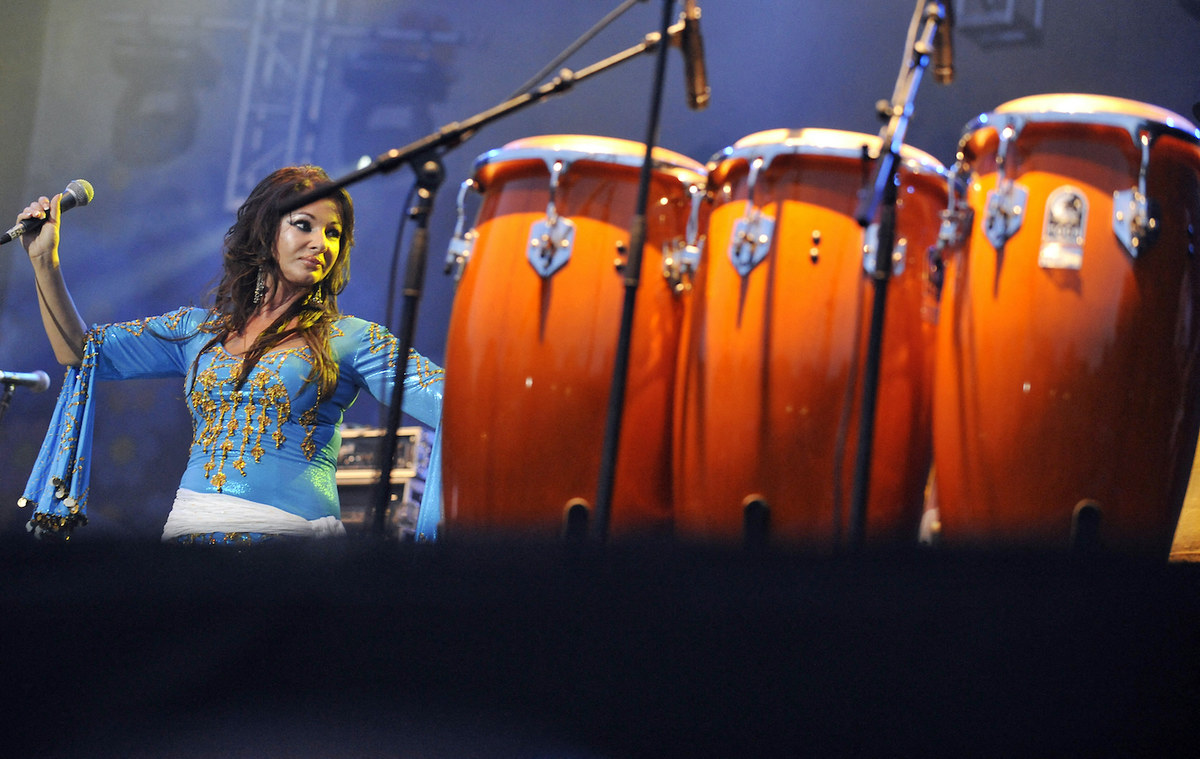


Natacha Atlas performing with Transglobal Underground in 2008. (Supplied)

For Jazzablanca, though, Atlas focused solely on jazz for 100 percent of her set. She is no stranger to the genre. Her intimate 2015 album “Myriad Road” was basically a jazz record, so it was no surprise that she opened her show with a track from that album, composed by the French-Lebanese jazz trumpeter Ibrahim Maalouf.

“At the time, Ibrahim had the idea of ​​doing a 1970s funk-jazz. He pushed me to sing in English with an oriental style, and it was great,” she tells Arab News. “He is a funny person who likes to do joyful things.” Jazz has remained one of her favorite musical styles.

It was present also (along with hip-hop, electronic music, and Arabic influences) in her 10-track 2019 album “Strange Days,” composed with Samy Bishai, her partner in life and music, which included a cover of “It’s A Man’s Man’s Man’s World” by James Brown, which Atlas performed in Casablanca.
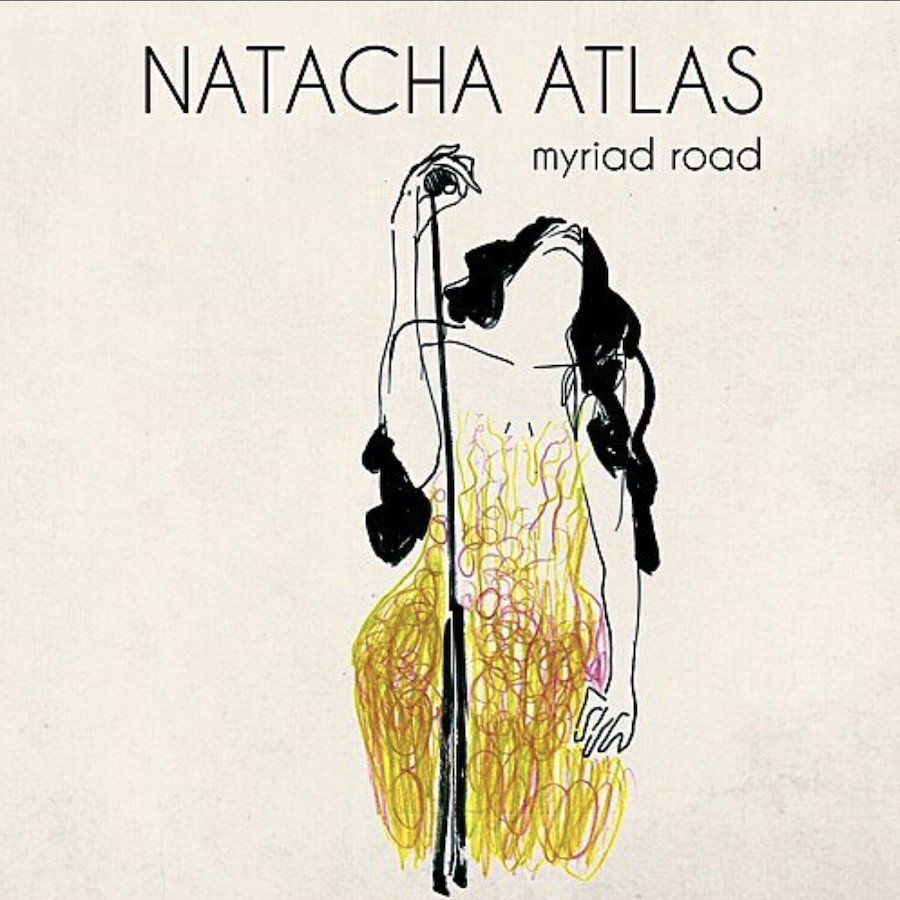


Myriad Road album cover. (Supplied)

Released just before the COVID-19 pandemic took hold, that record was a good fit with the anxiety-inducing climate that came with the pandemic.

“We’re experiencing ‘Strange Days.’ The album is a paradox between darkness and light. I think there is a part of shadow and light in humanity. However, despite the difficult times, we must show tenacity and go towards the light,” Atlas says. “We must wake up quickly, otherwise we are done.”

That’s a message that also runs through her latest work, “The Inner and the Outer,” a five-track EP composed during lockdown, that is a call for the awakening of consciousness.
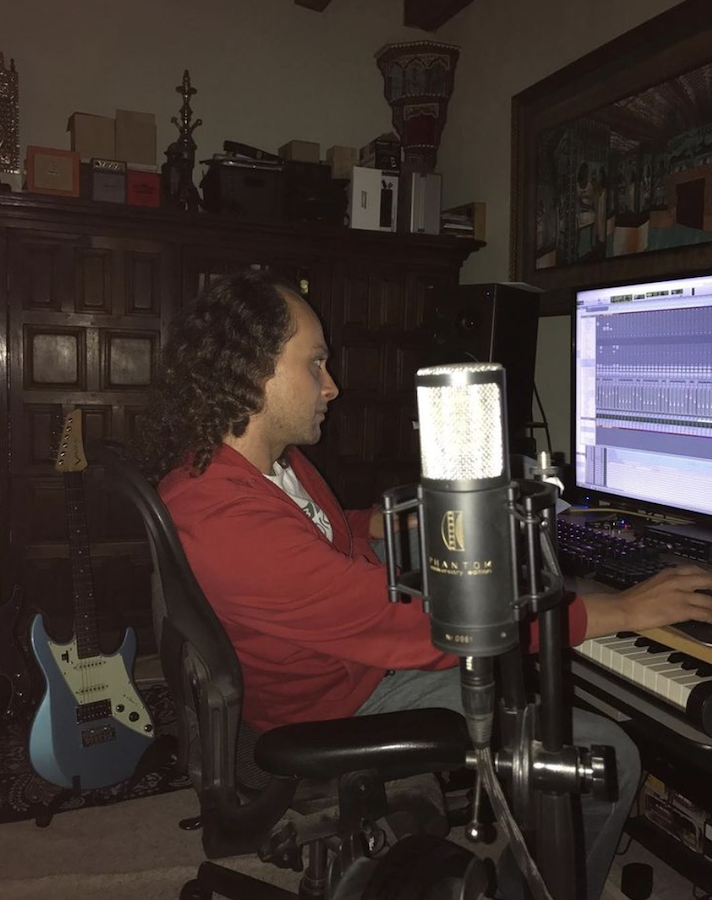


Atlas’ partner Sami Bishai in their home studio. (Instagram)

“We experienced this period full of anguish, Samy and I,” Atlas says. “That’s why (fourth track) ‘The Inner Dimension’ is a piece that calls for meditation.”

On the Casablanca stage, despite numerous requests from the audience, Atlas ultimately did not perform a cover of Françoise Hardy’s “Mon Amie La Rose,” the song that first made her famous in France back in 1999. (She explains to the crowd that her musicians are not familiar with the track.)

Following that success, Atlas decided to sing in both English and Arabic. “I tried to write in French, but it’s a bit difficult,” she says. “Moreover, one day, a Frenchman who had listened to one of my songs (“Le Printemps”) said: ‘It’s a beautiful song, but I didn’t understand it all.’”
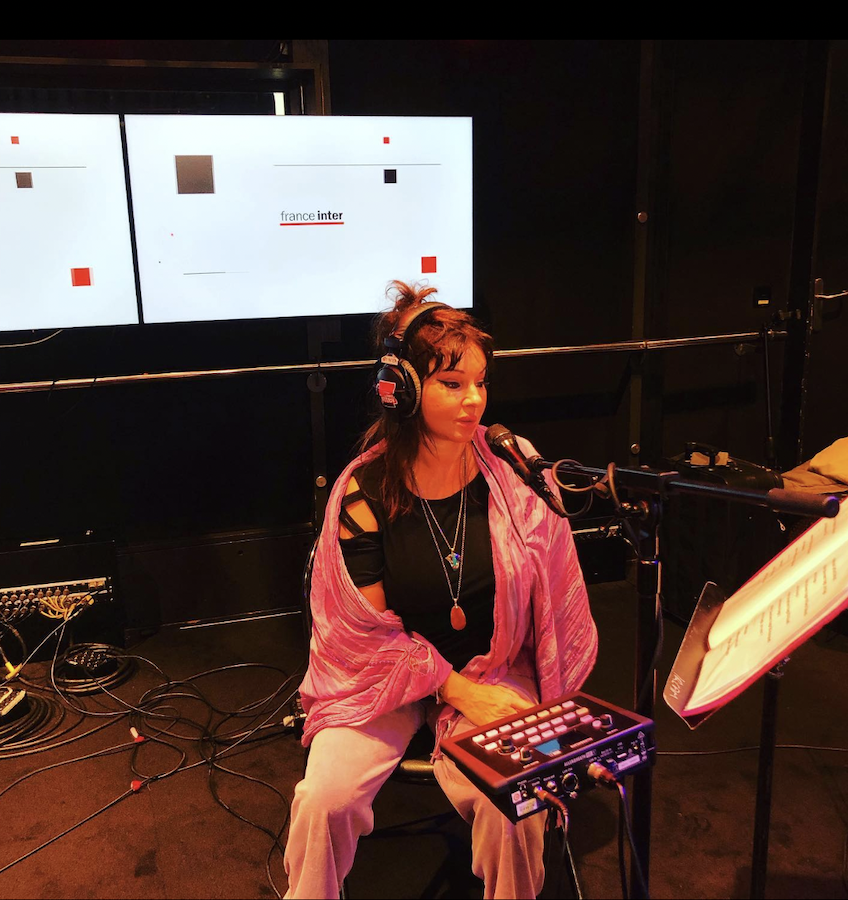


Launching the “Strange Days” album during lockdown. (Instagram)

Atlas is certainly making the most of the live music industry’s reopening this year. After the Jazzablanca festival she flew to Macedonia to meet up with the Dzambo Agusevi Orchestra, a group of Balkan musicians with whom she is set to perform several concerts, and even record an album.

She is also continuing her world tour providing vocals for the contemporary ballet “Odyssey,” composed by Atlas and Bishai and choreographed by Hervé Koubi, which will also be turned into an orchestral album, she says.


Yataghan boutique in Jeddah celebrates Saudi heritage

Updated 20 December 2025
Follow

Yataghan boutique in Jeddah celebrates Saudi heritage

JEDDAH: Yataghan, the contemporary Saudi jewelry house founded in 2008 by designer and entrepreneur Sarah Abudawood, has announced an expansion with its Riyadh debut at Kingdom Centre, alongside the relocation of its headquarters and flagship store to a street-front location on Jeddah’s Thalia Street.

The brand, known for blending Arabian heritage with modern minimalism, unveiled two boutiques designed as immersive experiences rather than mere retail spaces.

Every detail of the new Jeddah location has been carefully curated; brass accents inspired by the Yataghan blade evoke precision and luxury, while striped, gray onyx symbolizes continuity and progress, according to the brand’s founder. Vast windows, softened by Yataghan’s signature hexagonal motif, a symbol of harmony, order, and strength, flood the boutiques with natural light, creating an inviting environment for visitors.

Inspired by the Yataghan sword, with its distinctive, single-edged blade, the brand’s collections fuse minimalist design with Arabic calligraphy and tribal motifs.

“The name Yataghan draws its meaning from the two swords on the Saudi flag — a symbol that has always fascinated me for what it represents: conviction, protection, truth, and above all, balance,” Abudawood told Arab News.

“The Yataghan sword, known for its graceful curve and exquisite craftsmanship, embodies purpose and precision. It is drawn to defend what matters and to guard what is sacred. It sets boundaries and restores equilibrium, reminding us that strength is not only about force, but about knowing when to advance and when to stand still.

“That balance is reflected in every piece we create. Because, like the sword, Yataghan is more than an ornament; it is a statement of purpose, and identity.”

Abudawood explained the cultural inspiration behind the brand, highlighting pieces connected to Saudi identity. “This branch carries designs that are deeply connected to Saudi identity and cultural memory. Some pieces are exclusive, inspired by symbols, rhythms, and forms rooted in our heritage, interpreted through a modern lens … Jeddah, in particular, has a unique spirit: fluid, expressive, open, and layered with history. That essence subtly informs the designs you’ll find here.” 

The founder also spoke of the brand’s philosophy of minimalism and meaningful design.

“It comes from my belief that simplicity creates space for meaning. I have always been drawn to architecture and the principle that form must follow function. I design with intention; nothing is accidental. Every line has a purpose, every curve holds a story. Minimalism, for me, is not about removing emotion; it is about distilling it. I want each piece to feel timeless, personal, and quietly powerful.”

The label has been flaunted by high-profile clients — including Jennifer Lopez, Lady Gaga and Lama Akeel — but Abudawood emphasized the brand’s focus on connection over visibility. “Whether someone is a public figure or not, what moves me is when they feel seen by the jewelry. Yataghan has always been about resonance, about creating pieces that speak to identity, strength, and personal stories,” she said.

Looking ahead, 2026 will mark new chapters for Yataghan, including local and international expansion, innovative collections, and a stronger focus on storytelling and community collaborations. “Growth has never been about reach alone; it’s about depth, integrity, and lasting impact,” Abudawood added.

“Ultimately, what drives me is purpose. I’m motivated by the desire to create work that matters, to offer women something that reflects who they are, not who they’re expected to be. Design, for me, is a form of dialogue, a way to translate emotion into form. As long as I’m creating with honesty, intention, and heart, I know I’m exactly where I’m meant to be.”