

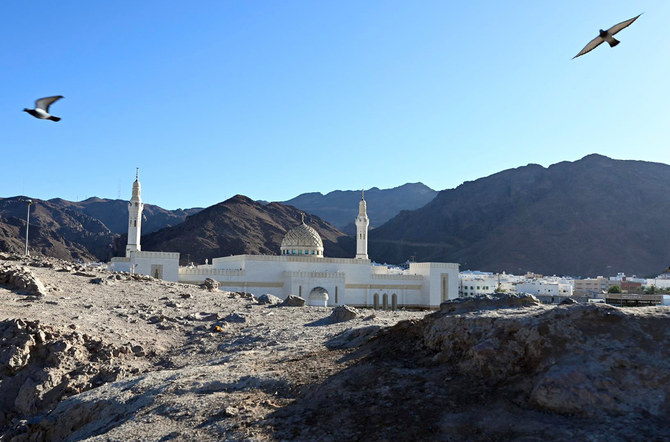
ThePlace: Sayed Al-Shuhada Mosque, a vital historic landmark in Madinah

Photo/SPA
Short Url
Updated 25 July 2022
Follow

ThePlace: Sayed Al-Shuhada Mosque, a vital historic landmark in Madinah

  • The mosque faces Mount Rumat, a small hill located to the west of Mount Uhud. The Uhud Martyr’s Square, along with the landmarks it contains, can be seen from the top of the hill

The Sayed Al-Shuhada Mosque is an important site in Islamic history as it tells the story of the Battle of Uhud, which took place during the third Hijri year.

It is also located next to the cemetery of 70 martyrs of Prophet Muhammad’s companions, about three kilometers away from the northern square of the Prophet’s Mosque.

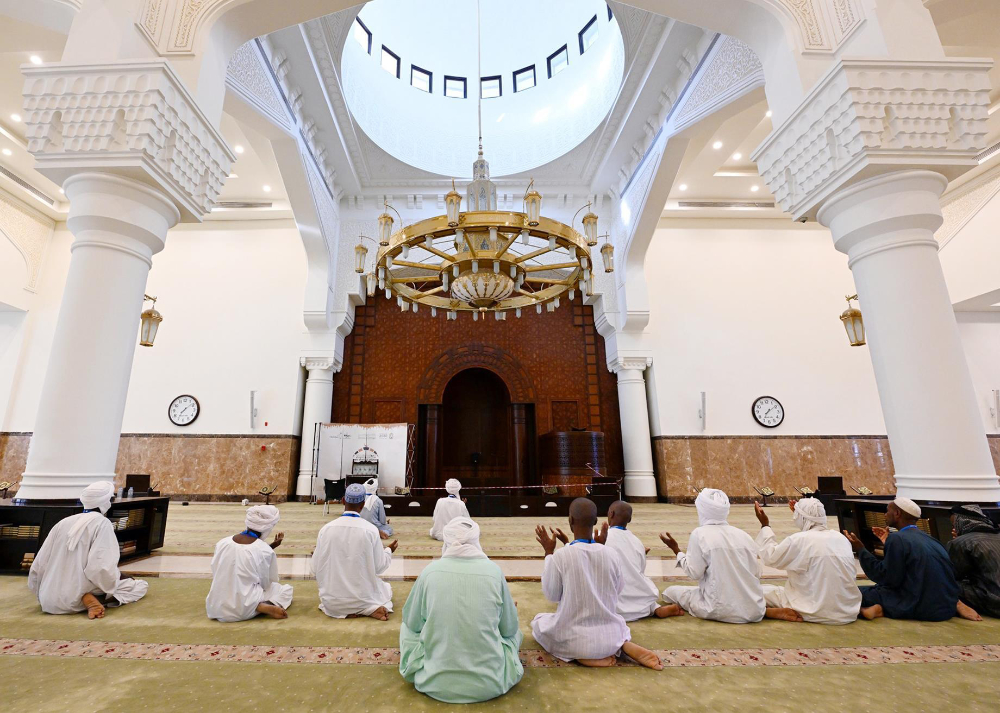
The mosque was completed in April of 2017 and features a unique architectural style. It covers an area of 54,000 square meters and can accommodate up to 15,000 worshippers. Supporting services and facilities can be found outside the site.
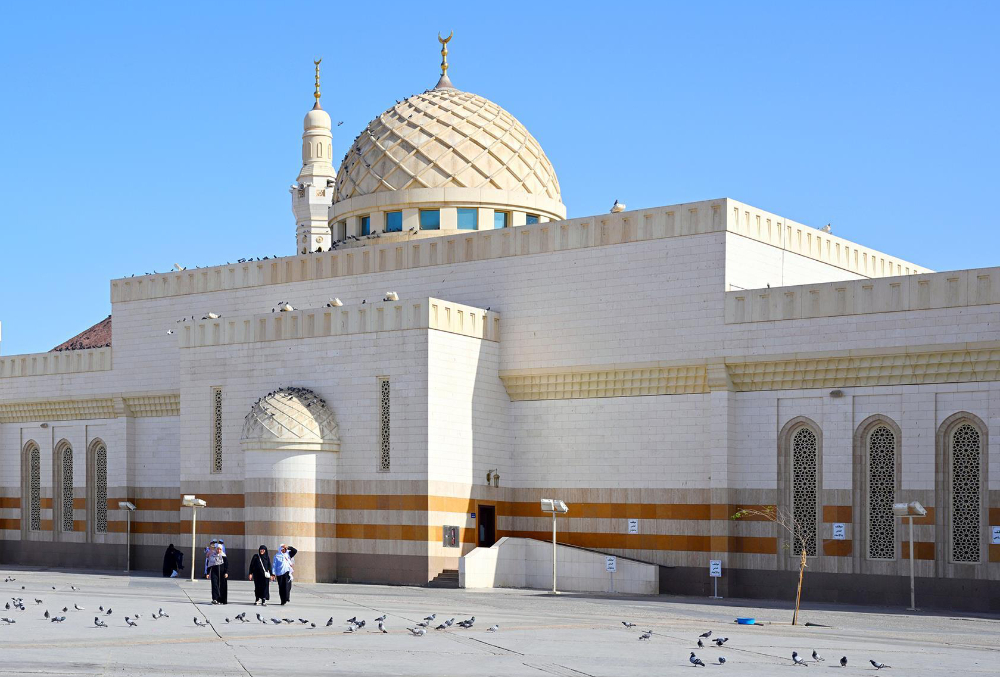
The mosque faces Mount Rumat, a small hill located to the west of Mount Uhud. The Uhud Martyr’s Square, along with the landmarks it contains, can be seen from the top of the hill.

Historical sources say that the army of the Quraysh tribe and its allies went to Madinah to kill Muslims and avenge those who died in the Battle of Badr, which took place in the second Hijri year.

Muslims confronted them, with the Prophet Muhammad deploying archers on Mount Rumat. He ordered the archers to stay in their posts unless told to move.

When the attackers began to flee, the archers thought the battle was over and that they had won. They came down the mountain, disregarding the Prophet Muhammad’s order.
The commander of the attackers, Khalid bin Al-Walid, who had not yet converted to Islam, surprised the descending archers, killed them, then attacked the other Muslims.

Seventy of the Prophet’s companions were killed, including his uncle Hamzah bin Abdul-Muttalib. They were buried at the battle site at the base of Mount Rumat.

Muslims visit their graves to this day, as the Prophet Muhammad once did. Worshippers also ascend the mountain to observe the site of the battle.


‘A goal scored. A performance seen. A moment shared.’: How ‘play’ is at the heart of Qiddiya City’s vision

Updated 7 sec ago
Follow

‘A goal scored. A performance seen. A moment shared.’: How ‘play’ is at the heart of Qiddiya City’s vision

  • Morgan Parker of Qiddiya Investment Company spoke to Arab News about the integrated city cenetred on sport, entertainment and culture

RIYADH: About 40km outside Riyadh, a new city is taking shape, guided by a long-term urban vision that places people, experience, and quality of life at its center.

Qiddiya City will span more than 360 square kilometres (three times the size of Paris) and is being developed as a fully integrated city centered on sport, entertainment, and culture. It will be home to more than 500,000 residents, welcome millions of domestic and international visitors annually, and support more than 200,000 jobs in leisure, tourism, creative industries, and business.

But for Morgan Parker, vice chair of the management committee at Qiddiya Investment Company, the ambition of the city is best understood through a single idea.

“At its heart, Qiddiya City is about play,” Parker said on the Flavors of Ambition podcast. “Not just entertainment but play as something deeply human, something that drives wellbeing, creativity, and connection.

“Some of the most powerful memories in life are experiences. A goal scored. A performance seen. A moment shared with others.”

Qiddiya City, he explained, is designed to create the conditions for those moments to happen at scale, and over generations.

“Imagine a whole city dedicated to facilitating those experiences,” Parker said. “That’s what we’re building.”

Six Flags Qiddiya City is now open, featuring 28 rides, including the world-record-breaking Falcon’s Flight, set dramatically against the Tuwaiq cliffs. Aquarabia, the region’s largest water theme park, is scheduled to open soon, alongside world-class film studios and the Sir Nick Faldo-designed Qiddiya City Golf Course, built around an inclusive “three sixes” format designed to lower barriers to participation.

Major sports infrastructure is also advancing. The Speed Park Track, a landmark motorsports facility, will host global racing events including a Formula One Grand Prix, while a state-of-the-art horse racing venue is under development.

The Prince Mohammed bin Salman Stadium will stage top-tier football and entertainment events, including matches at the 2034 FIFA World Cup. Elsewhere, a world-first gaming and e-sports district is set to redefine one of the fastest-growing global industries.

Beyond attractions, Qiddiya City is being developed as a real place to live. More than 20 neighbourhoods will offer apartments, townhouses, villas, and branded residences, supported by more than 30 educational facilities, world-class healthcare, 120-plus hotels, vibrant retail streets, and a connected business hub.

“This is the chance to do something that isn’t encumbered by legacy,” Parker said. “So many great cities around the world are constantly having to reinvent themselves around their own histories. Here, we can plan a city from scratch, using everything we’ve learned over millennia, and everything we’ve learned in the digital age, and bake that into the blueprint from day one.”

Rather than retrofitting solutions later, sustainability, smart-city technology, mobility, and lifestyle considerations are embedded from the outset. This includes future high-speed rail connectivity linking Qiddiya City to King Salman International Airport in about 30 minutes and to KAFD in 17 minutes, alongside a dedicated metro line with eight stations.

One of the most common questions Parker is asked reveals a basic misunderstanding of what the city is intended to be: when will Qiddiya City be finished?

“I always answer by asking where the person is from,” he said. “London? New York? Dubai? And then I ask: Is that city finished? They don’t finish. They reinvent themselves. They adapt to society’s needs.”

That thinking, for Parker, shapes how Qiddiya City is being built.

“This is not a project,” he said. “It’s an initiative. What I like to call a ‘giga-initiative’. Projects have an end date. Cities don’t. Qiddiya City is being designed to evolve over generations.”

Historically, cities were defined by geography — ports, rivers, trade routes — and built around the exchange of goods, services, or finance. Qiddiya City represents a different model.

“This is a new genre of city,” Parker said. “One that isn’t centered on trading goods or finance, but on trading experiences.”

As global mobility increases, Parker believes the most successful cities will be those that are deliberate about what they stand for.

“It’s OK not to be everything to everyone,” he said. “The places that thrive are the ones that double down on what they do best.”

For Qiddiya City, that focus is clear.

“New York is known for finance. Paris for art and culture. San Francisco for technology,” Parker said. “Qiddiya City is positioning itself around experiences. If you work in sport, entertainment, or culture, why wouldn’t this be a place where you create, innovate, or bring your team?”